


| Evidence type | Examples | Planning use |
|---|---|---|
| Original documents | Diaries, speeches, manuscripts, letters and interviews; excerpts or translations are acceptable | Start here when you want the voice of someone who was there. A translation is enough for a first pass. |
| Relics and artifacts | Furniture, clothing and buildings | Treat a standing building as evidence, so a site visit becomes a research step rather than a backdrop. |
| Architecture and landscapes | Pillars in the east colonnade of a mosque in Delhi; the U.S. Steel Building | Read layout and setting as well as the labels when you plan what to look at on site. |
| Later recollection | Memoirs and oral histories recorded after the events | Useful and still primary. Keep the gap between event and telling in mind. |
| Secondary sources | Summaries, analysis and interpretation of evidence drawn from primary sources | Use them to orient yourself before you work with the raw material. Do not mistake them for the evidence. |
These categories follow the Harvard Library primary sources guide and Chatham University Library’s summary of the American Library Association definition.
What are primary sources in history? They are first-hand testimony or direct evidence from people who witnessed or recorded events, from letters and diaries to buildings. Whether an item counts as primary depends on the topic and how you use it.
This guide connects historical periods to the evidence and places that still carry them. For a Norse-era chronology to read alongside it, see Viking History Timeline: From Raids To Kingdoms — Key Events (c. 700–1100) – Scanheritage.
Primary sources and how historians use them
Historians treat primary sources as raw material. The Harvard Library guide defines them as first-hand testimony or direct evidence concerning a topic under investigation. Chatham University’s library, citing the American Library Association, says these sources serve as the raw material for interpreting the past. Timelines, site guides and period surveys all rest on that material, so it pays to understand it before you plan a journey through any era.
What makes a source primary
The test is the relationship between the maker and the events. Harvard says primary sources are created by witnesses or recorders who experienced the events or conditions being documented. UMass Boston’s Healey Library puts the same idea as immediate, first-hand accounts from people with a direct connection to the topic.
Timing is a second consideration. Harvard notes that these sources are often created while the events are happening. The American Library Association definition, as cited by Chatham, adds that primary sources can also be created well after the events, as memoirs and oral histories are. A diary entry written the same evening and a memoir written later both qualify. They are not equally close to the moment, and a careful reader keeps that difference in view.
Primary or secondary depends on the question
The UMass Boston guide states that whether something is a primary or a secondary source often depends on the topic and its use. The same item can change category when the research question changes. Do not memorize a list of document types and stop there. Decide what you are investigating, then ask what counts as direct evidence for that question.
Secondary sources have their own job. Chatham’s library describes them as summarizing, analyzing and interpreting the evidence derived from primary sources. A sensible order for a newcomer is to read a secondary account for orientation, then go to the original material to see what the account is built on. When a summary makes a striking claim, look for the primary evidence behind it.
Three questions to put to any source
- Who made it? A witness or recorder carries a different weight from someone summarizing at a distance.
- When was it made? Material produced at the time sits differently from a recollection recorded later, even though both count as primary.
- What am I using it for? The topic decides whether the item is evidence or commentary.
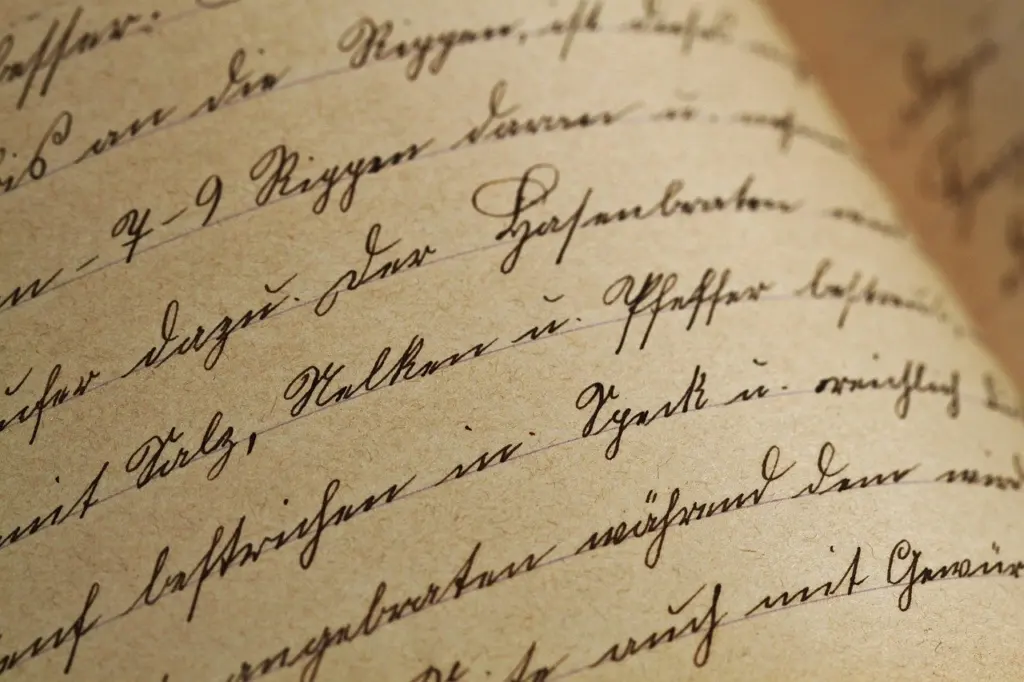
Documents are only one route into the past. The next section looks at timelines, which help you place every kind of evidence in order.
Historical timelines: choosing where to start
A timeline is a frame for sources, and a good one tells you where to look next. The Enoch Pratt Free Library’s guide to primary sources throughout history points to resources organized by broad period, and those divisions are a practical answer to the question of which key periods a world history timeline should cover. Ancient, medieval and modern material each have their own collections, and a few resources run across all of them.
| Period or resource | What it covers | Planning use |
|---|---|---|
| Internet Ancient History Sourcebook | Primary sources from ancient Egypt, Mesopotamia, Greece, Rome, Israel, Persia and the Hellenistic World | Choose it when you want original texts for several ancient civilizations in one place. |
| Internet Medieval Sourcebook | All aspects of medieval life and culture, with maps and full-text documents | Good for pairing a map with a document before you visit a medieval site. |
| Internet Modern History Sourcebook | Modern world history, with a special emphasis on Europe | Suits readers whose travel interests lean toward European history in the modern era. |
| The Vikings (BBC) | Viking-age material, including a helpful timeline | Use the timeline to sequence Norse-era reading. |
| Eyewitness to History | Eyewitness accounts of significant events from ancient times up to the present | A cross-period option when you want first-hand voices rather than a single era. |
The descriptions come from the Enoch Pratt Free Library’s primary sources guide.
Using a timeline well
Treat a timeline as a skeleton. An event listed on its own tells you little, but an event tied to a document and a place begins to explain something. For each entry that interests you, note the type of evidence that survives for it. Is it a written account, a building, an object? That habit turns a list of events into a reading and travel plan.
Pick one period and stay with it for a while. A reader who moves across all the ancient civilizations in a single afternoon rarely retains any of them. The sourcebook structure makes it easy to commit to a single civilization or region, then widen out once its sources feel familiar.
The Roman Empire: texts and places
The Roman Empire is one of the most useful periods to study through both documents and surviving places, because the ancient world’s primary sources include Rome alongside Egypt, Mesopotamia, Greece, Israel, Persia and the Hellenistic World. The Internet Ancient History Sourcebook, described by the Enoch Pratt Free Library, collects primary sources from all of these regions. Rome therefore sits within a wider ancient context, which helps when you want to see where Roman material overlaps with neighboring civilizations.
Reading Roman evidence in context
Start with the document, then ask what it was made for. Under the Harvard definition, a speech, letter or manuscript from the period is a primary source because it comes from someone who experienced or recorded the conditions it describes. A translation is acceptable for a first read, as the Harvard guide lists original documents as excerpts or translations. That means you do not need to read the original language to start working with evidence.
Treating Roman sites as evidence
Harvard’s list of primary sources includes relics or artifacts such as buildings, and Chatham’s library lists architecture and landscapes. Taken together, these make a surviving Roman-period structure evidence in its own right and not only an illustration of what a text says. The practical consequence is that a visit can test your reading. Compare what a document claims about a type of place with what the structure itself shows about scale, layout and materials.
Roman material suits readers who enjoy moving between text and object. If you prefer a single dominant voice, a narrower body of evidence such as one author’s letters may be easier to follow. If you want to see how a large political world left a physical mark, the combination of an ancient sourcebook and on-site structures gives the most rounded picture.
Medieval Europe: documents, maps and long memory
Medieval Europe is well served by online primary material that pairs documents with maps. The Internet Medieval Sourcebook was developed by the Fordham University Center for Medieval Studies, and the Pratt Library guide describes it as an extensive and colorful resource devoted to all aspects of medieval life and culture, including maps and full-text documents. Because it covers life and culture and not only politics, it supports the kind of context a traveler needs at a castle, a church or a town center.
Pairing a map with a document
A map from the period tells you how people understood space, while a document tells you what they did in it. Reading both before a visit gives you two questions to carry on site. What does the layout of the place suggest, and what do the written records say about the people who used it? This is more productive than reading a single guidebook narrative and then confirming it with your eyes.
Viking-age evidence
The Vikings site from the BBC, listed in the Pratt guide, includes a timeline. That makes it a convenient way to place Norse events in sequence before you move on to the deeper subjects. For the long arc of the Viking age, the Viking history timeline is already a natural companion; for the ships that carried Norse people across Medieval Europe, there is Viking Longships: How They Were Built, Sailed, and Feared Across Medieval Europe – Scanheritage. For a regional case where Norse settlement shaped England, see what was the danelaw.
Choose medieval material if you like layered evidence, with maps, texts and surviving buildings all pointing at the same communities. If your time is short, begin with the sourcebook’s maps and one full-text document, and let those questions guide what you look at when you arrive somewhere.
How civilizations shaped the places we visit
Civilizations shaped places through what they built and how they organized the land, and those physical traces count as evidence. Harvard lists buildings among relics and artifacts that qualify as primary sources. Chatham’s library gives architecture and landscapes as examples, including pillars in the east colonnade of a mosque in Delhi. The place you visit is therefore a record created by the people who lived and worked there, and it can be read alongside their words.
Reading a place alongside people’s accounts
The Pratt Library guide describes reading accounts by people who lived in a period as one of the best ways to get to know a historical place and time. It adds that researching how people lived can give a deeper understanding of a time period. Together, those two points suggest a workable routine: read what residents or witnesses recorded, then look at the setting that produced it.
Ancient Egypt as a worked source map
The British Museum’s ancient Egypt resource, as summarized by Pratt, concentrates on daily life, gods and goddesses, mummification, pyramids, time, trades and writing. That list is a useful template for any civilization. Daily life, belief, work, writing and monumental building are five lenses you can apply to a Roman town, a medieval city or a modern district. Each lens produces a different question to ask when you stand in a place.
A recent example from New York
Not every period is distant. The Lower East Side Tenement Museum’s online resource, noted in the Pratt Library guide, lets users discover the lives of immigrant families living in New York’s Lower East Side in the years 1870 to 1915. It shows that the same method of reading people’s lives alongside their setting works for recent history as well as for ancient history. Choose such a case when you want to practice on a manageable body of evidence before tackling an unfamiliar civilization.
Archives and museum collections
Archives and museums are where primary sources are gathered, and their online collections are the easiest place for most readers to begin. The Pratt Library guide points to several, and each suits a different purpose. The options below are grouped by what they help you do.
- National archive depth: The Library of Congress American Memory Project features more than 60 collections of primary resources, according to the Pratt guide. It suits readers with an interest in American history who want a wide range of original material.
- Museum-led themes: The British Museum’s ancient Egypt resource organizes material by topics such as daily life, writing and pyramids. It is a good fit if you prefer to browse by theme.
- A single community: The Tenement Museum resource follows immigrant families in one New York neighborhood across the years 1870 to 1915. It rewards close reading of a small world.
- Cross-period accounts: Eyewitness to History presents eyewitness accounts of significant events from ancient times up to the present. Use it when you want first-hand voices without committing to one era.
Pick by the shape of the question. A wide-ranging national collection suits browsing, a museum theme suits focused study, and a community resource suits readers who like detail. If you are unsure, begin with a single museum theme and a handful of documents, then widen once you know which kind of evidence holds your attention.
Planning a visit around the evidence
A visit becomes more informative when you prepare with evidence in mind. The steps below turn the earlier sections into a short routine.
- Choose one period. Use a timeline or a sourcebook division to decide whether you are working in ancient, medieval or modern history.
- Read one original document. A translation is acceptable. Note who made it and when relative to events.
- Add a secondary account. Let a summary or interpretation tell you how historians read the evidence you have just seen.
- Identify the physical evidence. Remember that buildings, architecture and landscapes are primary sources in their own right.
- Go to the place with questions. Compare what the document says with what the setting shows, and note where they agree or differ.
The routine works best when you hold the evidence loosely. A building and a document from the same period may tell different stories, and the disagreement is often where the interesting questions lie. Do not smooth it over; write it down and look for the explanation in a secondary account afterward.
Norse and Nordic starting points
For readers drawn to the north, Scanheritage has a growing set of guides that supply period context for Scandinavia and the Viking world. They are organized below by what each helps you understand.
Early Nordic and Indigenous history
- Before the Viking age: The nordic bronze age guide covers the earlier period and its key finds.
- Northern peoples: sami history introduces the Indigenous heritage of northern Scandinavia.
Writing and symbols
- Rune systems: Elder Futhark Runes: A Practical Guide To Origins, Meanings, And Use In 2026 – Scanheritage is a practical entry to inscriptions as a form of evidence, and Nordic Runes Meaning: A Practical Guide To Symbols, Origins, And Uses (2026) – Scanheritage widens the view to symbols and uses.
- Inscribed stones: Elder Futhark Rune Stones: A Practical Guide To Meaning, Use, And Care (2026) – Scanheritage looks at the stones themselves.
Myth and belief
- Gods: Norse Mythology Gods: A Compact Guide To Odin, Thor, Loki, Freyja & More (2026) – Scanheritage gives a broad overview.
- Goddesses: Norse Goddesses: 7 Powerful Figures From Myth, Magic, and Daily Life – Scanheritage covers the female figures of the tradition.
- The end of the world: Ragnarök: The End And Rebirth Of The Norse World — What Happened, Who Dies, And What Survives (2026 Guide) – Scanheritage follows the myth’s closing events.
- Cosmic geography: The Nine Realms Of Norse Mythology: A Clear Guide To Yggdrasil’s Worlds – Scanheritage maps the worlds of the myth.
Myths are a particular kind of evidence. Treat them as a record of what people told and believed, and keep them distinct from the documents and objects discussed earlier. Applying the three questions about who made a source, when and for what purpose is just as useful here as anywhere else.
Choosing your next step
Your best starting point depends on what kind of reader you are. If you like original voices, begin with a sourcebook and one translated document. If you prefer places, begin with a building or landscape and ask what it records. If you want orientation first, read a timeline and one secondary account. In each case the aim is the same: to connect a period to evidence you can read and, wherever possible, to a place you can see.
That aim ties together the Roman Empire, Medieval Europe and every other period in this guide. The civilizations differ, but the questions you ask of their records stay constant.
Frequently asked questions
Do translations count as primary sources?
Yes for most purposes. The Harvard Library guide lists original documents, such as diaries, speeches, manuscripts and letters, and says excerpts or translations are acceptable.
Is a memoir a primary source if it was written years later?
Yes. The American Library Association definition, as cited by Chatham University’s library, includes records created well after events, such as memoirs and oral histories. The later date is a point to weigh when you read it.
Are buildings really primary sources?
Yes. Harvard lists buildings among relics or artifacts, and Chatham’s library lists architecture and landscapes. They are evidence created by the people who lived in a period.
What do secondary sources add?
They summarize, analyze and interpret evidence derived from primary sources, according to Chatham University’s library. They help you see how historians read the evidence you are about to examine.