

| Aett | Runes and glosses | Planning use |
|---|---|---|
| First aett | Fehu (cattle), Uruz (aurochs), Thurisaz (thorn, giant or hammer), Ansuz (god or message), Raidho (road or journey), Kenaz (torch), Gebo (gift), Wunjo (joy) | Dedicated to Freyr, god of peace. Reach for it first when a question concerns possessions, travel or a new start. |
| Second aett | Hagalaz (hail), Nauthiz (needs or hardship), Isa (ice), Jera (year or harvest), Eihwaz (yew or ash tree), Perthro (meaning unknown, possibly pear tree or luck), Algiz (elk, protection), Sowilo (sun) | Dedicated to Heimdall, watchman of the gods. Suits questions about hardship, timing and protection. |
| Third aett | Tiwaz (Tyr), Berkana (birch or birth), Ehwaz (horse), Mannaz (man), Laguz (lake or water), Ingwaz (Ing, a fertility god), Othala (inheritance or legacy), Dagaz (day) | Dedicated to Tyr, god of war. Suits questions about inheritance and legacy; handle Othala with care. |
Rune names, glosses and aett groupings follow Two Wander’s guide to the Elder Futhark, which splits the 24 letters into three sets of eight.
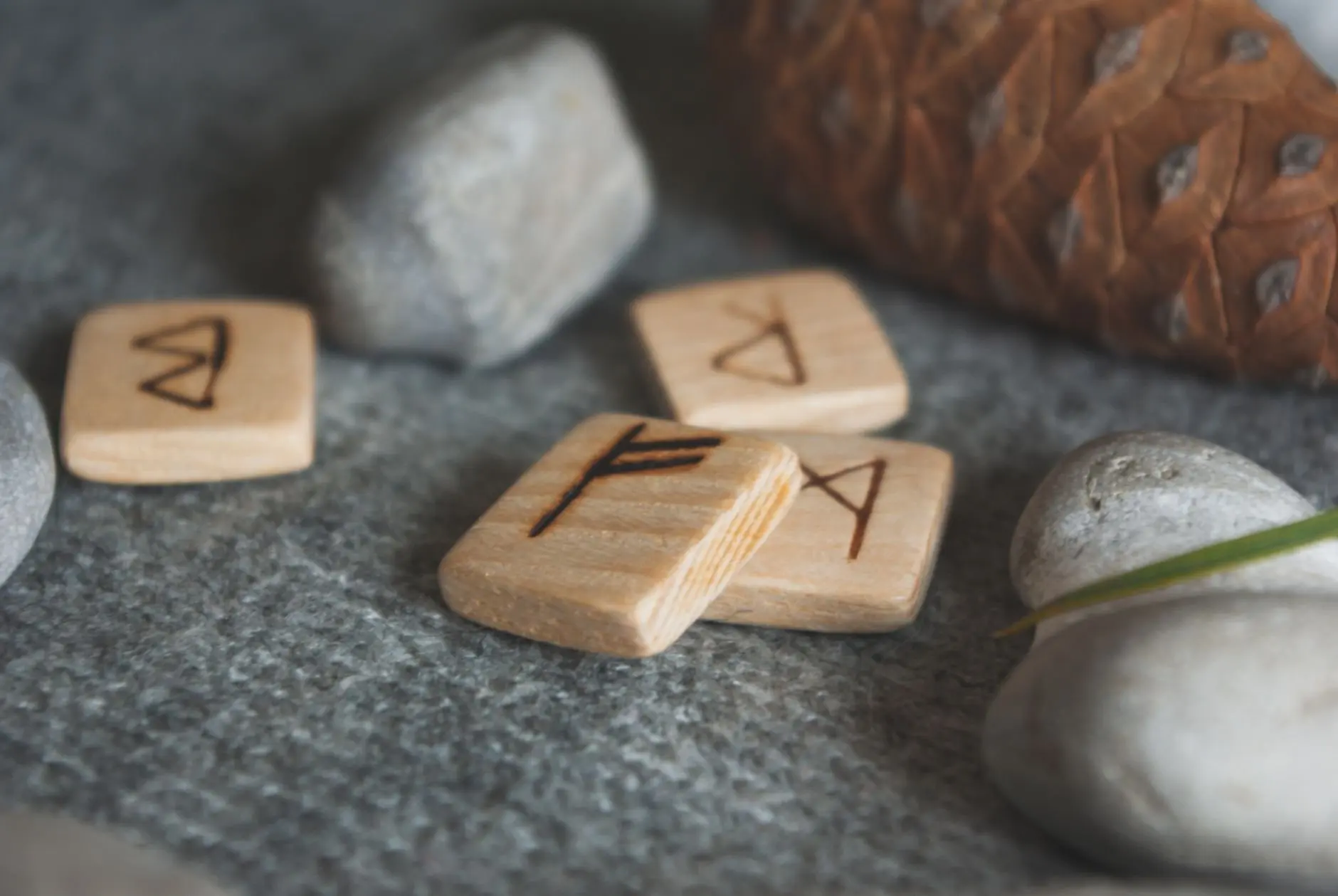
Elder Futhark rune stones are modern sets of stones, each marked with one of the 24 runes of an early Germanic alphabet. People use them for divination today, although the original runes were a writing system.
Inscriptions are evidence that historians weigh by context, and our explanation of what are primary sources in history sits on the Historical Periods and Sites hub. The sections below show how that distinction changes the way you buy, read and store a set.
Historical runic writing versus modern rune-stone practice
The Elder Futhark was used across Germanic Europe and early Scandinavia from around 150 CE to around 800 CE, according to the College of Psychic Studies. It consists of 24 runes based on a Proto-Germanic language, an ancestor of later Germanic languages. What survives from that period is writing, and the writing sits on many kinds of object.
Runic inscriptions have been found on stones, wood, bones, tablets and other objects, and their uses included commercial, legal and magical purposes, as Two Wander explains. The same source says runes were no more special, and no more likely to be chosen, than a Latin or Greek letter. A carved stone bearing runes was therefore, first of all, a text.
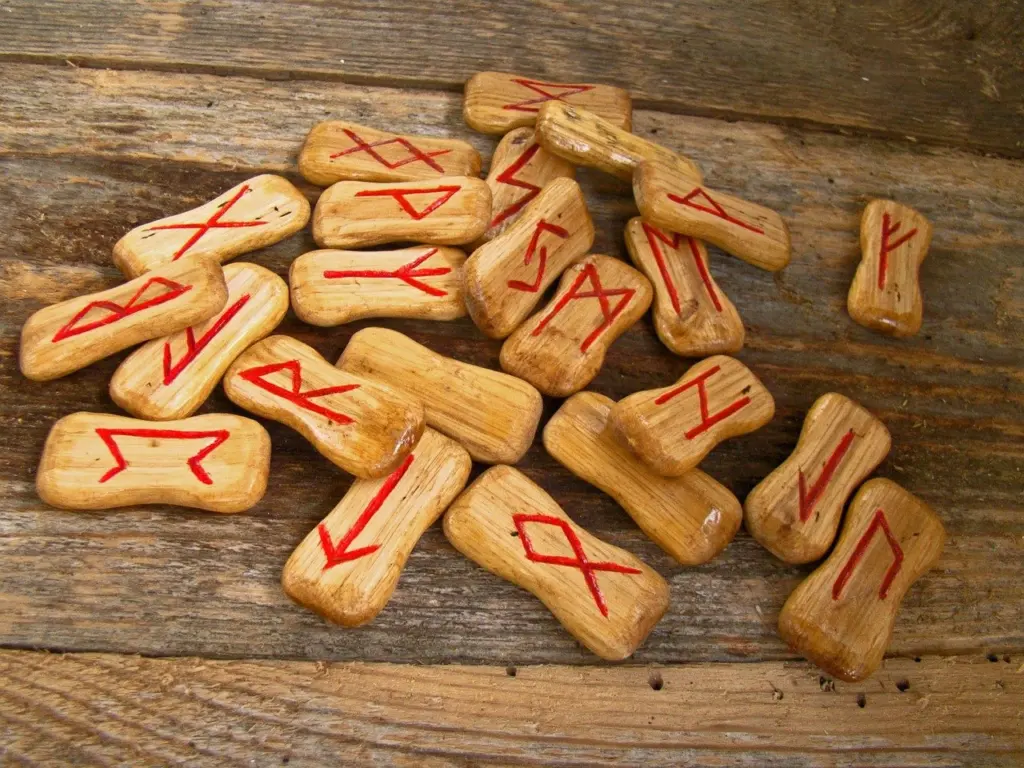
Whether ancient peoples used rune stones for divination therefore has a cautious answer. The documented use is as an alphabet for practical and magical inscriptions. Drawing loose stones to answer a question is described as a present-day method: Two Wander says that today rune stones serve as a form of divination, similar to tarot.
What this means for how you talk about a set
- Describe history as writing. When you mention the Elder Futhark period, present runes as an alphabet carved on many materials, not as a fortune-telling kit.
- Label meanings as modern. A keyword such as wealth and abundance for Fehu is a reading convention listed by the College of Psychic Studies, not a record of what the carvers meant.
- Keep the two uses apart in your notes. A journal entry about a draw and a note about an inscription belong in different columns, because one is personal reflection and the other is evidence.
Reading the three aettir
An aett is one of three sets of eight runes into which the 24 letters of the Elder Futhark are divided. Each belongs to a Nordic deity and, in the traditional framing, traces a journey through life from birth and possessions towards legacy. Treat that framing as a way to organise a reading rather than a rule: it tells you which part of a story a rune belongs to, and the table above lists the full membership of each aett.
First aett: Fehu to Wunjo
The first aett is dedicated to Freyr, the Nordic god of peace. It opens with Fehu, glossed as cattle, which modern readers associate with wealth and abundance. Because cattle were movable wealth, the gloss and the modern keyword point the same way, which makes Fehu a sensible first rune to learn.
Thurisaz is glossed as thorn, giant or hammer. If the hammer reading interests you, the myth behind it is covered in Mjolnir: Thor’s Hammer — Origins, Meaning, And Legacy In Norse Mythology (2026 Guide) – Scanheritage. Ansuz (god or message), Raidho (road or journey), Kenaz (torch), Gebo (gift) and Wunjo (joy) complete the group. They make this aett the natural choice for questions about belongings, journeys and relationships.
Second aett: Hagalaz to Sowilo
The second aett is dedicated to Heimdall, the watchman of the gods. Its glosses lean towards hardship and endurance: hail, needs, ice, year or harvest, yew or ash tree, and the sun. Algiz, glossed as elk, is associated with protection or defence, which is why it is the rune most readers reach for when a question is about safety.
Perthro deserves a lighter touch. Its meaning is unknown, though it may translate as pear tree or luck. Any confident keyword for Perthro is a modern choice, so hold it loosely and avoid building a reading on it.
Third aett: Tiwaz to Dagaz
The third aett is dedicated to Tyr, the god of war. It runs through Tiwaz (Tyr), Berkana (birch or birth), Ehwaz (horse), Mannaz (man), Laguz (lake or water) and Ingwaz (Ing, a fertility god). It ends with Othala, glossed as inheritance or legacy, and Dagaz, glossed as day.
Take care with Othala. Two Wander notes that its symbol has been co-opted by neo-Nazis, so caution is needed when displaying or sharing it. Using the rune privately in a reading is a different matter from posting it publicly, where its associations may be misread.
Choosing a set
Decide first whether you want a set to read with or to display. Retailers market rune sets as suitable for divination or decoration, and the two purposes ask for different things. For reading, you need clearly marked stones you can handle often. For display, finish and presentation matter more than how easily the symbols can be told apart by touch.
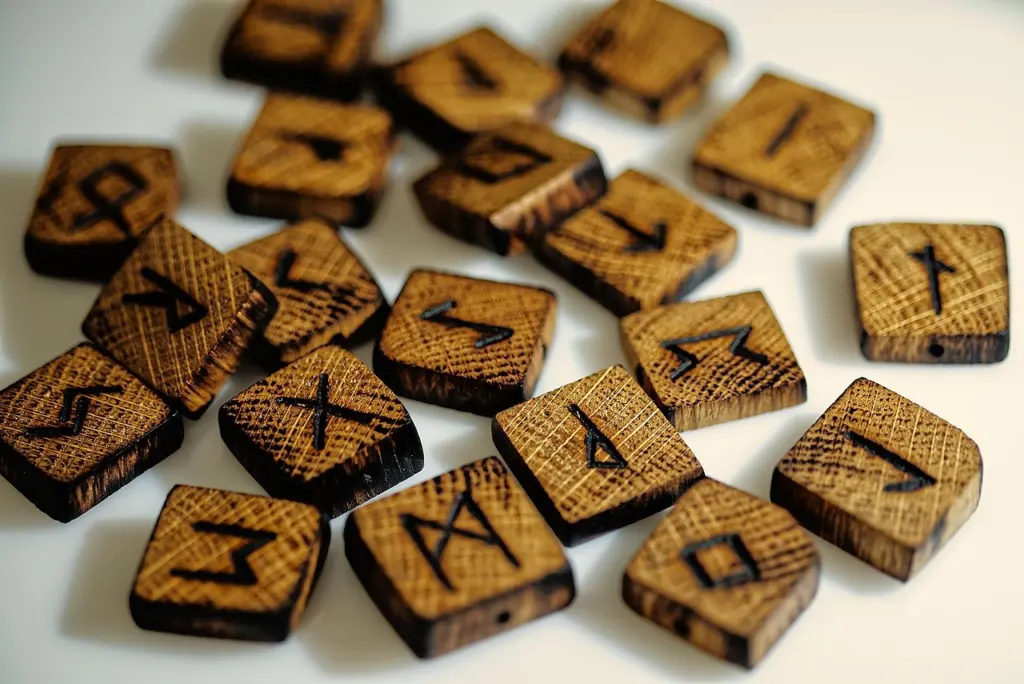
- Check the rune list. A set for the Elder Futhark should offer all 24 runes, so confirm that every name in the table above is represented.
- Look at the material. Sets are made of stone, wood and other materials; one example is a moonstone set with handcarved runes. Handcarving suits readers who want visible tool marks, and it is a modern craft choice rather than a historical standard.
- Look for storage. A set supplied with its own pouch saves you buying one, and the same moonstone listing includes a velveteen pouch.
- Treat vendor descriptions as marketing. Retailers describe rune sets as ancient artifacts, but a modern stone set is a modern object that borrows an old alphabet.
Care and storage
Care splits into two kinds: physical protection and ritual cleansing. Physical protection is simple: keep the stones together and covered. Many readers wrap them in a cloth and keep them in a bag or special box, as the College of Psychic Studies describes. A pouch keeps loose stones from scattering and keeps them together as a set.
Ritual cleansing is a matter of personal practice rather than conservation, and the methods described differ in how much they ask of the material:
- Rinsing. A vendor of stone sets, Child of Wild, recommends rinsing stones in filtered water before first use. That advice is written for stones, so ask the maker before wetting wooden tiles.
- Sun or moonlight. Two Wander lists placing stones under the sun or moonlight as one cleansing method.
- Salt or smoke. The same guide mentions burying stones in salt or smoke cleansing them. These are the more demanding options, so use them only if you are sure your set tolerates them.
If you are unsure, choose the gentlest option. Covering the set in cloth and keeping it in its pouch or box needs no assumptions about the material.
Using a set respectfully
Use a set as a prompt for reflection, not as a source of fixed answers. The College of Psychic Studies puts the limit plainly: runes can provide guidance, not absolute answers. That makes the set most useful for framing a question you are already thinking about.
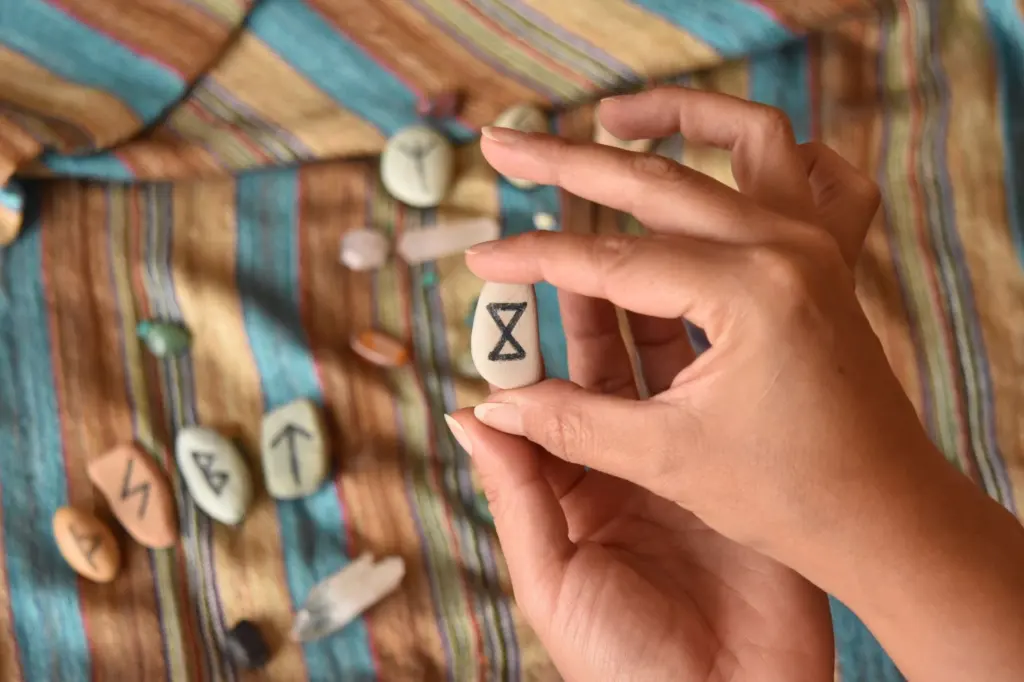
- Draw one stone at a time. A single rune gives you one name and one keyword to think about, which is easier to record than several at once.
- Start with names you can trace. Fehu (cattle) and Algiz (elk, protection) have clear glosses, so they make better starting points than Perthro, whose meaning is unknown.
- Write down the modern keyword separately. Note the gloss, then the reading keyword such as wealth and abundance, so you can see where history ends and interpretation begins.
- Do not present readings as history. When you share a reading, say it is a modern practice, and when you describe the Elder Futhark period, speak of writing.
Frequently asked questions
What does the word rune mean?
Two Wander gives the meaning as whisper, secret or mystery. That is the word’s own sense, and it is separate from the use of runes as an everyday alphabet.
How large are rune stones?
It depends on the maker. One commercial set lists stones of roughly 1/2 to 3/4 inch round, according to its vendor, which is small enough to hold several in one hand.
Why do some sets have 25 stones?
The extra stone is blank. One moonstone set has 25 Elder Futhark stones, which are the 24 runes plus a blank stone.
Which rune set is most popular for divination?
The 24 Elder Futhark runes are the most popular today, the College of Psychic Studies says, which is why most commercial sets follow them.