

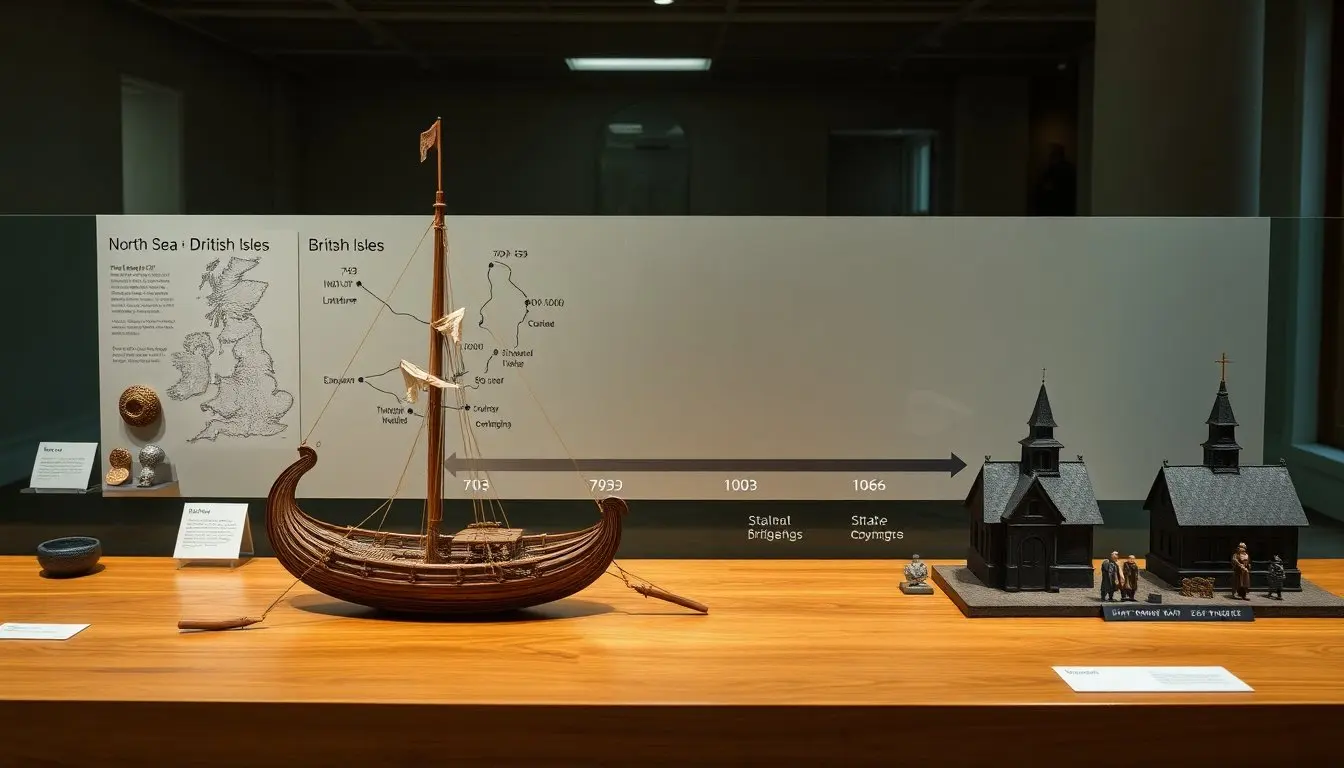
Viking history timeline maps major events from early Norse life to the end of raiding. The Viking history timeline shows when raids began, where settlers moved, and how kings rose. The timeline helps readers place battles, trade, and conversion into order. It frames causes and effects in simple terms, and connects archaeological finds, saga literature, and contemporary chronicles so readers can see how local incidents fit into wider regional developments over several centuries.
Key Takeaways
- The Viking history timeline begins around 793 AD with early Norse society setting the foundation through farming, craftsmanship, and seafaring skills.
- Viking raids started with the attack on Lindisfarne in 793, evolving from quick hit-and-run strikes to more organized wintering bases and expanded campaigns.
- From 850 to 1000, Viking kings consolidated power, expanding into the North Atlantic and Eastern Europe, marking a shift from raiding to governance and settlement.
- Trade networks and cultural exchanges thrived, exemplified by the Danelaw in England, Dublin, and Normandy, where Norse law blended with local customs.
- Christianization and changing political dynamics between 1000 and 1100 led to the decline of Viking raiding, emphasizing diplomacy and regional stability.
- The 1066 Battle of Stamford Bridge marked the end of major Viking invasions, but Norse legacy continues through language, law, and cultural influences.
Origins And Society Before The Viking Age (c. 700–793)
Norse communities lived across Scandinavia in a variety of landscapes — the fjorded coasts of western Norway, the river and lake regions of Sweden, and the mixed farmland and heath of Denmark. Small-scale agriculture supported dense kin-based communities: farmers raised livestock (particularly cattle and sheep), cultivated hardy grains, and practised seasonal husbandry. Boatbuilding and ironworking were highly developed crafts; smiths produced tools and weapons, and woodworkers made household and ritual objects.
Socially, Scandinavian society before the Viking Age was organized around kinship groups, local chieftains, and assemblies (things) that mediated disputes and upheld custom. Wealth and status were measured in cattle, land, and portable goods rather than fixed titles, but some ambitious leaders accumulated followers through redistribution, marriage ties, and control of trade. Religion and ritual — offerings at bogs, ship burials, and household rites — provided community cohesion and justified elite authority. Seafaring skills derived from fishing and coastal trade, and the technological evolution of clinker-built longships gave communities the capacity to travel rapidly along coasts and rivers; this maritime competence is a critical precursor on any viking history timeline.
Early Viking Raids And Expansion (c. 793–850)
The raid on the Lindisfarne monastery in 793 is the traditionally cited starting point for the viking history timeline in written sources, but archaeological evidence suggests raiding and small-scale maritime violence had earlier roots. Early raids were usually seasonal and opportunistic: small, highly mobile bands in longships struck undefended coastal settlements and monasteries to seize portable wealth — silver, liturgical objects, and food supplies.
As these expeditions increased in frequency, tactics evolved. Raiders began to overwinter in favorable locations, establish fortified camps, and use rivers to penetrate inland. The shift from isolated attacks to sustained presence in places such as the Irish Sea region and northern England transformed interactions with local populations: some communities paid protection money or negotiated alliances, while others adapted by building stone churches, fortified burhs, and improved coastal watch systems. Contemporary annals, place-name evidence, and hoards of silver all help chart this phase on a viking history timeline, showing the geographical spread from Shetland and Orkney to the coasts of Francia and the Irish Sea.
Peak Expansion, Kingship, And State Formation (c. 850–1000)
Between c. 850 and 1000 the nature of Norse activity shifted markedly. Prominent leaders consolidated followers into larger retinues, controlled territory, and began to exercise functions associated with kingship — judicial roles, taxation, and diplomatic marriage alliances. In Scandinavia, strong chieftains such as those who later appear in saga tradition and in foreign annals transformed regional power structures into early kingdoms in Norway, Denmark, and Sweden.
Expansion during this period was multi-directional. To the west Norse settlers colonized islands and marginal lands, founding permanent communities in the Faroes, Iceland, and Greenland. To the east Viking traders and mercenaries travelled along river systems into the Baltic and the lands of the Rus’, where Norse activity fed into emerging state formations and trade centers on the Volga and down to Constantinople. In the British Isles and Francia, Norse leaders established territorial bases, sometimes converting and integrating into local noble hierarchies. These processes — military, economic, and administrative — are central entries on a viking history timeline showing the transition from raiding groups to rulers and settlers.
Trade, Settlement, And Cultural Exchange — Danelaw, Dublin, And Normandy
Trade networks linked Scandinavia to the wider world: from the marketplaces of Birka and Hedeby to the workshops of Constantinople and the Abbasid caliphates. Norse merchants carried amber, furs, walrus ivory, and slaves in exchange for silver, textiles, and luxury goods. Trading hubs often developed into towns; Dublin, York (Jórvík), and other urban centers became multicultural places where Norse, Gaelic, Anglo-Saxon, and Frankish influences met.
In England the areas under sustained Norse influence gradually took on distinct legal and cultural features later described as the Danelaw: a mix of Norse and Anglo-Saxon law, hybrid place names, and administrative practices adapted to a multi-ethnic population. In Normandy a Viking leader accepted land in return for service and conversion, creating a polity that blended Scandinavian warrior culture with Frankish feudal structures. Material culture — brooches, combs, runic inscriptions, and decorated metalwork — alongside linguistic traces in place-names and loanwords provide tangible evidence for these exchanges and are key markers on the viking history timeline of interaction and assimilation rather than simple conquest.
Decline, Christianization, And The End Of Viking Raiding (c. 1000–1100)
From around 1000 onwards several interrelated developments reduced the scale of independent Viking raiding. Conversion to Christianity among Scandinavian elites changed ideological incentives: kings supported ecclesiastical institutions and sought legitimacy through baptism and church patronage, which encouraged more settled, court-based rule. Conversion also opened new diplomatic and dynastic pathways with Christian Europe.
At the same time, the growth of stronger centralized polities in England, France, and the Holy Roman Empire increased coastal defenses, organized naval patrols, and made risky raids less profitable. Economic shifts — including the monetization of economies and deeper integration into continental trade networks — rewarded rulers who prioritized stable revenue and landholding over seasonal plunder. These changes are visible on a viking history timeline as declining frequency of recorded raids, the expansion of settlement and urban life, and the gradual absorption of Norse elites into medieval European aristocracies.
Case Study: The Battle Of Stamford Bridge And The Viking Legacy (1066)
King Harald Hardrada’s invasion of England in 1066 culminated at Stamford Bridge, where English forces dealt a decisive defeat to the invading Norwegian army. While Stamford Bridge is often treated as a symbolic end to the era of large-scale Scandinavian invasions of England, the broader viking history timeline shows a more gradual contraction of raiding activity and a continued Norse presence in place names, law, and material culture.
Archaeological finds, runic inscriptions, and linguistic survivals attest to a lasting Norse contribution to the societies they once raided or settled. Local legal customs, maritime technology, and artistic motifs persisted and were adapted into medieval institutions. The viking history timeline therefore ends one chapter of mobility and violence but continues into later medieval developments where Norse influence is woven into the fabric of northern European history.