

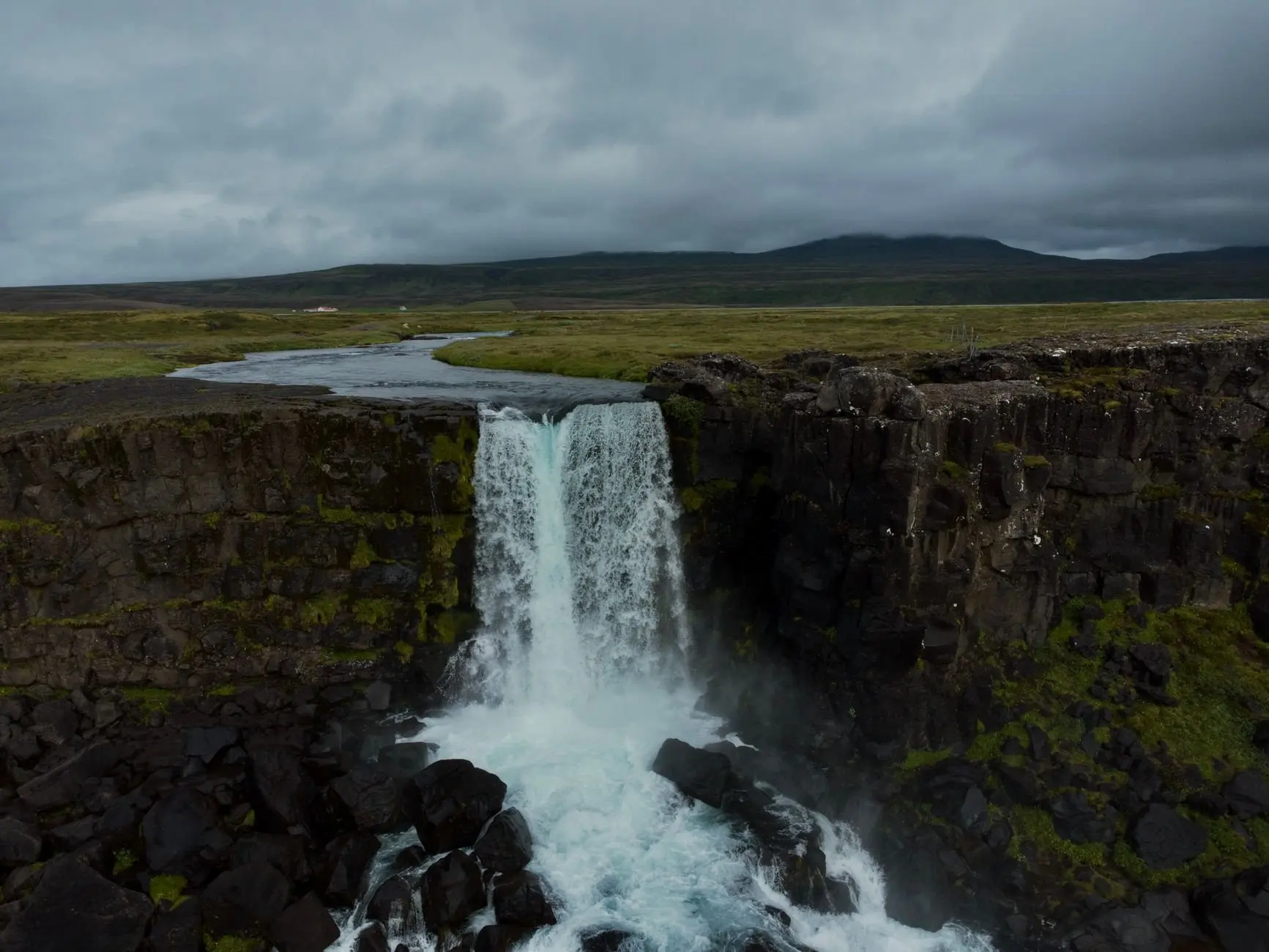
Wondering whether a long weekend covers an iceland road trip itinerary? No: allow no less than 7 days for the Ring Road, about 30 hours of driving, and a two-wheel-drive car unless you cross the interior Highlands.
For the wider planning approach, read how to plan a cultural heritage trip alongside this route.
Ring Road myths that distort the plan
Most planning mistakes on the Ring Road begin with a wrong assumption about the road itself, so the table sets common beliefs against what the evidence supports.
| Common assumption | What is supported | Planning use |
|---|---|---|
| The Ring Road is a special route separate from the main road | It is the nickname of Route 1, Iceland’s main motorway | Treat “Ring Road” and “Route 1” as the same road when comparing guides and maps |
| A few days is enough to see the loop | No less than 7 days is recommended for the best experience | Use a week as the minimum, not the comfortable target |
| You need a four-wheel-drive vehicle | A two-wheel-drive car handles the entire route and the most appealing detours; 4WD is for crossing the interior Highlands | Skip the 4WD upgrade on a Ring Road-only trip |
| It is mostly rough gravel | The vast majority of Highway 1 is paved two-lane road, with a few brief unpaved stretches; the speed limit on most of it is 90 km/h (55 mph) | Plan drive times around 90 km/h, not around motorway speeds |
The descriptions come from Nordic Visitor’s Ring Road guide and Rick Steves’ Iceland Ring Road article.
The practical upshot is that a Ring Road trip is a week of ordinary paved driving with a few special stops, not an expedition. The real constraint is time and beds, which the next sections address.
How long the Ring Road takes
Distance and driving hours
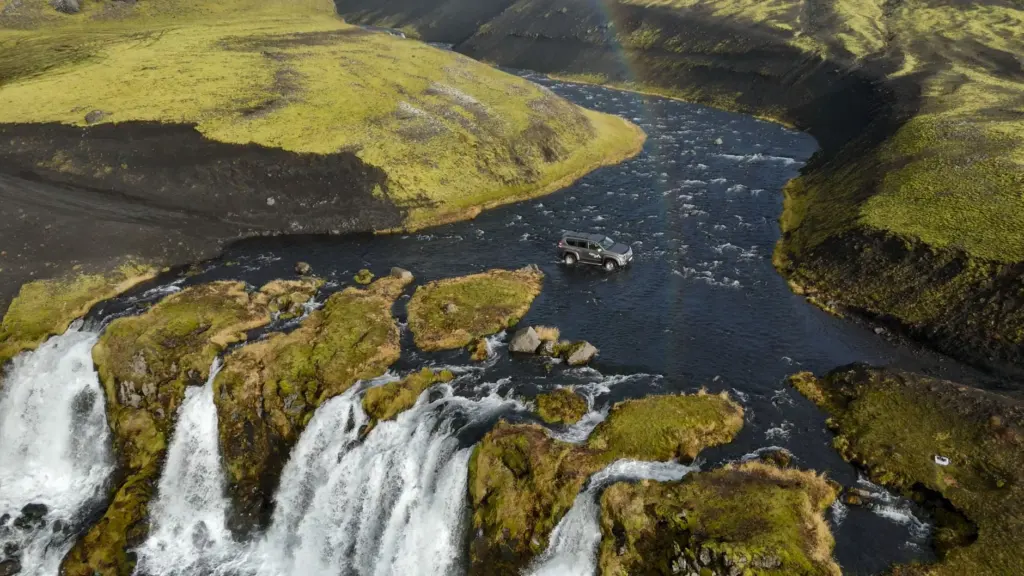
The Ring Road is 1,328 km (825 miles) long, according to Nordic Visitor. Rick Steves rounds it to an 800-mile loop and advises planning on about 30 hours of driving at a reasonable pace. Both figures describe the loop itself, and the gap is rounding rather than a disagreement worth worrying over.
Three misunderstandings cause most of the trouble when people turn those numbers into a schedule:
- “The driving hours are the whole trip.” The 30 hours is time at the wheel. Waterfalls, lagoon viewpoints and meals sit on top of it, which is why a week is the practical floor and not a generous allowance.
- “Every day should be a Ring Road day.” The Golden Circle day near Reykjavik is 225 km (140 miles) and 3 hours of driving excluding stops, according to Full Suitcase. That is a light driving day by design, and it leaves room for the heritage stops it contains.
- “Rushing recovers lost time.” Most of the route has a 90 km/h (55 mph) limit, so a late start cannot be recovered by driving faster. Shorten the next day’s list of stops instead.
Pacing a driving day
Rick Steves suggests breaking up the drive with overnights spaced about five hours apart. Treat that as a marker for the longest sensible day on stretches with few sights, not as a daily target. On days with a lagoon, a glacier area or a long waterfall stop, a shorter leg leaves room for the stops themselves. Check road conditions and weather with the Icelandic Road Administration and Safetravel.is each morning, and be ready to reorder the stops.
A seven-day route with heritage stops
Full Suitcase recommends driving the Ring Road anticlockwise, which keeps the ocean side of the road beside you. The outline below follows that direction and gives each day one main theme so the heritage and landscape stops are not squeezed together.
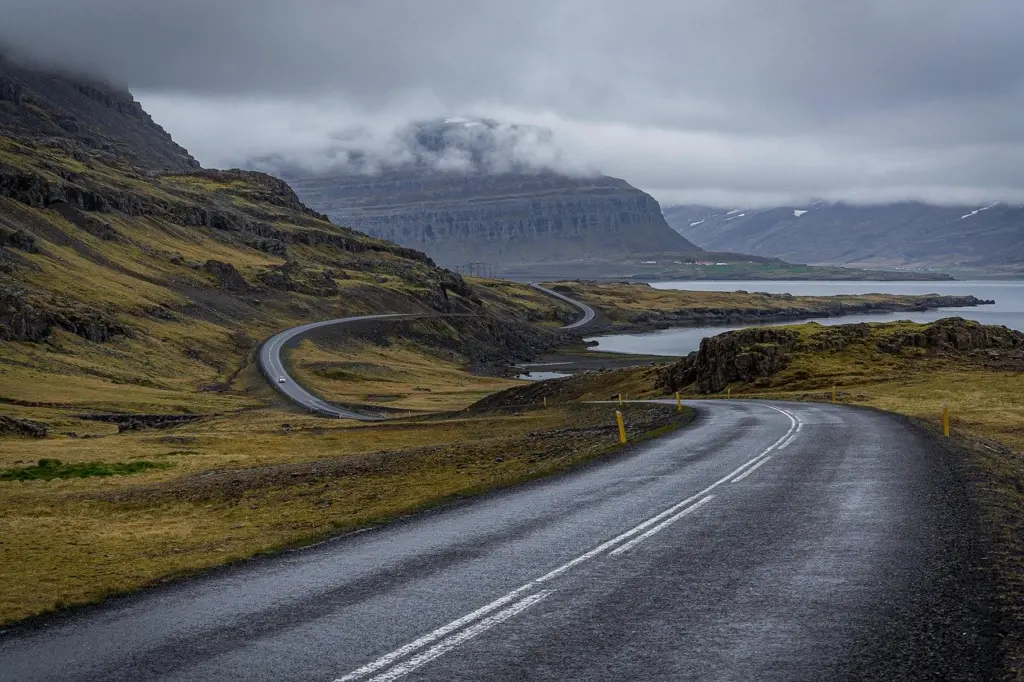
- First day: Reykjavik and Thingvellir. Thingvellir National Park is the natural first stop. Guide to Iceland describes it as a UNESCO World Heritage Site, and Full Suitcase notes it is where the mid-Atlantic Ridge can be seen, with the North American and Eurasian tectonic plates meeting. Because this is the lightest driving day, give the park the longest slot.
- Second day: the south coast waterfalls. The Ring Road passes the Seljalandsfoss and Skógafoss waterfalls and the Dyrhólaey cliffs, as Nordic Visitor lists. Skógafoss has a staircase leading to a panoramic view, so allow time to climb rather than only photographing it from the base.
- Third day: Vatnajökull glacier country and Jökulsárlón. Massive icebergs float in the Jökulsárlón lagoon. This is the most bed-constrained part of the loop, because Rick Steves says glacier country in the Southeast has an especially limited number of beds, and Full Suitcase calls hotels near the lagoon among the most sought-after. Secure this night first and build the rest around it.
- Fourth day: the long eastern stretch. Use this day mainly for driving toward Mývatn, keeping the overnight within the roughly five-hour spacing noted earlier.
- Fifth day: Mývatn and Húsavík. Hotels around Mývatn and Húsavík are among the most sought-after, so book early. Lake Mývatn also has limited beds according to Rick Steves, which makes it the second night to lock in.
- Sixth day: Akureyri. Rick Steves says Akureyri would rank as a tiny town in most countries. It is still a sensible place to stop for a night before heading west.
- Seventh day: back to Reykjavik. Work backwards from your flight or rental return time, and keep the day free of optional detours.
The Mývatn and Jökulsárlón nights are the fixed points. If either is full, shift the neighbouring day’s stop instead of dropping the night, because there is little alternative lodging nearby.
Choosing a vehicle
A two-wheel-drive car is enough for the whole route and the most appealing detours, and Rick Steves advises against paying for four-wheel drive unless you want to trailblaze across the interior Highlands. That settles the most common rental question: for a Ring Road trip in the warm months, spend the savings on lodging near Jökulsárlón or Mývatn instead.
A campervan is a separate decision. According to Rick Steves, several companies rent campervans for roughly the cost of a car rental plus basic accommodation. Given the limited beds in the Southeast and around Mývatn, it is worth pricing as a way to avoid fixed lodging, although it does not change how many days the loop needs.
When to go and what the seasons change
The self-drive loop is best done between May and September, extending to early October, according to Full Suitcase. The same source does not recommend a self-drive road trip in winter, because Icelandic weather is really unpredictable.
- Summer suits first-timers. Guide to Iceland notes that summer offers extended daylight for sightseeing, which gives a seven-day plan more usable hours per day.
- Winter suits a different trip. The same guide says winter brings the northern lights, ice caves and frozen landscapes. Those reward travellers who accept a less predictable driving plan, or who do not self-drive the whole loop.
- Peak weeks need earlier booking. Rick Steves identifies peak season as mid-June to mid-September, and that is when the limited beds around Mývatn and glacier country are hardest to find.
For a first trip, the sensible window is the part of May to early October that falls outside mid-June to mid-September if you want easier lodging, and inside it if daylight matters most.
Budget and bookings
Guide to Iceland’s comparison of self-drive tours found median daily prices of about 260 USD per person in June, compared with about 180 USD in April. These are tour prices, so use them as a seasonal benchmark rather than a quote for an independent trip, whose cost depends on the car or campervan and the lodging you choose. The direction is clear, though: the same trip costs noticeably more in June than in April.
The bigger budget risk is availability. Because beds near Jökulsárlón and Mývatn can sell out months ahead, book those nights before flights are fixed to your dates, then fill in the other nights around them.
Pairing Iceland with other Nordic heritage stops
A week on the Ring Road leaves little room for side trips, so treat it as the centrepiece of a trip rather than a stop within one. Travellers adding a city break can compare pacing with Things To Do In Stockholm: The Essential 2026 Weekend Itinerary For English-Speaking Visitors – Scanheritage. Those drawn to medieval timber architecture can read Inside Borgund Stave Church: Exploring Norway’s Best-Preserved Medieval Interior – Scanheritage.
Frequently asked questions
| Question | Answer |
|---|---|
| How far is Thingvellir National Park from Reykjavik? | About 45 minutes by car, according to Full Suitcase, which makes it an easy first stop of the trip. |
| How long is the transfer from Keflavik airport to Reykjavik? | About 30-45 minutes, according to Chelsey Explores, so an arrival-day check-in in the capital is realistic. |
| How big is Akureyri, and how far is it from Skagafjörður? | Akureyri has about 18,000 residents. The quickest way to continue the Ring from Skagafjörður is an hour east on Highway 1, as Rick Steves describes. |