

| Factor | Verified value and condition | Planning use |
|---|---|---|
| Day-trip duration | 6 to 8 hours as a day trip | Reserve a full day. Do not add a second major excursion. |
| Loop distance | About 230 km (140 miles) for the loop; about 250 km (155 miles) from and back to Reykjavík, with 1-3 days listed for the route | Treat distances as approximate and measure from your own start point. Allow more than one day if you want longer walks. |
| Reykjavík to Thingvellir | About 45 km (28 miles) northeast on Route 36; about 1 hour of driving | The first stop is close, so an early departure puts you at the history stop before the day fills up. |
| Thingvellir to Geysir | About 61 km (38 miles) east on Routes 36 and 37 | This is the longest leg between sights, so plan it as a rest and meal break. |
| Return from Gullfoss | About 1 hour 40 minutes back to Reykjavík | Leave Gullfoss with this drive in mind, especially when daylight is short. |
| Parking | Thingvellir entry is free, with parking 1,000 ISK (7 USD) per passenger car per day; Geysir parking is 1,000 ISK per car; Gullfoss parking is free | Expect two parking charges. Carry a card or cash for them. |
| Strokkur eruptions | Every 8-10 minutes, up to 30 m (98 ft) high | You rarely need to wait long, so Geysir can be a short stop. |
Figures are drawn from Guide to Iceland and Visit Iceland.
An iceland golden circle itinerary fits a full day from Reykjavík if you visit Thingvellir, Geysir and Gullfoss in that order and treat driving as the smaller part of the day. Winter daylight and road conditions are the main limits.
For wider preparation before you book, read our guide on how to plan a cultural heritage trip, then use the timed plan below.
Time budget and the decisions it drives
The Golden Circle is short on driving and long on stopping. Nordic Visitor puts the loop at around 230 km (140 miles) and just over 3 hours of driving, and says the entire route can easily be completed in one day. Guide to Iceland gives 6 to 8 hours as a day trip. The gap between those two figures is time on foot, in queues and at viewpoints, and that is where your choices matter.
- Full-day loop: this suits visitors who want all three headline stops and are happy with a brisk walk at each. Expect to spend your time at the sights, not in the car.
- Slower, longer visit: Visit Iceland describes the route as suited to a multi-day visit. This suits walkers, because Thingvellir alone has an extensive network of marked hiking trails according to Guide to Iceland.
- History-first split: if the parliamentary and UNESCO story is your priority, give Thingvellir the largest share of the day and keep Geysir short. Strokkur’s frequent eruptions make that trade easy.
Which of these suits you depends on daylight and on how much you want to walk. The order of stops is the next decision.
Best order of stops
The standard order is Thingvellir, then Geysir, then Gullfoss, then back to Reykjavík. Guide to Iceland says the route typically begins at Thingvellir, about 45 km northeast of Reykjavík on Route 36 and about an hour’s drive. Geysir lies about 61 km east of Thingvellir on Routes 36 and 37. The return from Gullfoss takes about 1 hour 40 minutes.
This order has a practical logic. The history stop comes first, when you are fresh and the walk is longest. The visually dramatic stops follow, and the longest drive home comes last, so you can decide at Gullfoss whether you have the daylight for it. A simple timed sketch looks like this:
- Morning, Thingvellir: walk between the plates and take in the parliamentary history.
- Midday, Geysir: watch several Strokkur eruptions and eat.
- Afternoon, Gullfoss: view the falls from the paths, then start back with the return drive in mind.
Thingvellir: the history stop
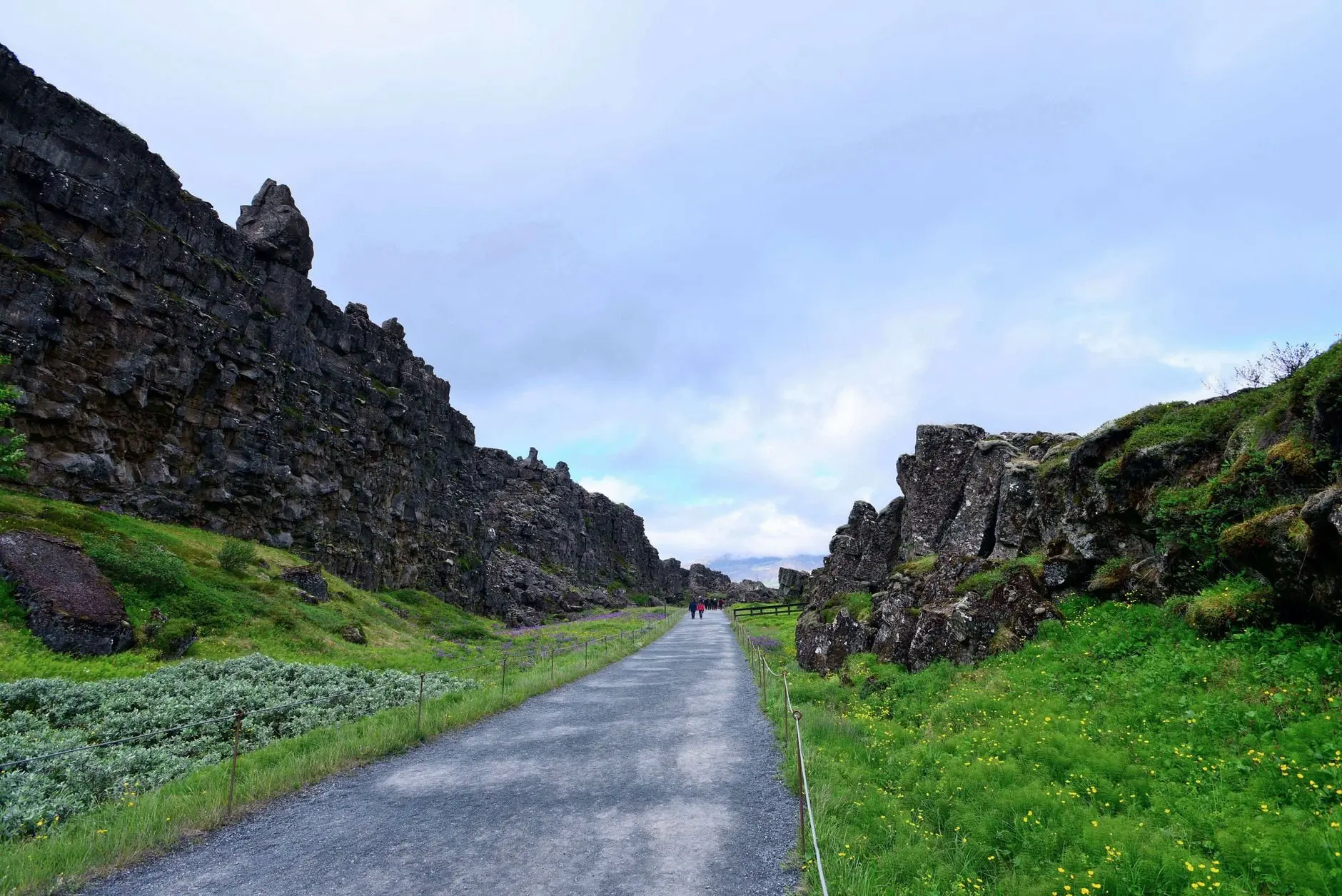
Thingvellir National Park is both a geological and a political landmark, and it is where the Golden Circle makes most sense as a heritage trip. Guide to Iceland notes that you can walk between tectonic plates here. Visit Iceland records that Iceland’s first national park was established here in 1928 and that Þingvellir has been a UNESCO World Heritage site since 2004.
The Althing, Iceland’s parliament, met at this site from 930 AD until 1789, and Iceland proclaimed its independence from Denmark here on 17 June 1944. Guide to Iceland also gives 930 as the Althing’s founding year. Few places on the loop connect landscape and national history so directly. Spend your reading time here, since the later stops are about scenery.
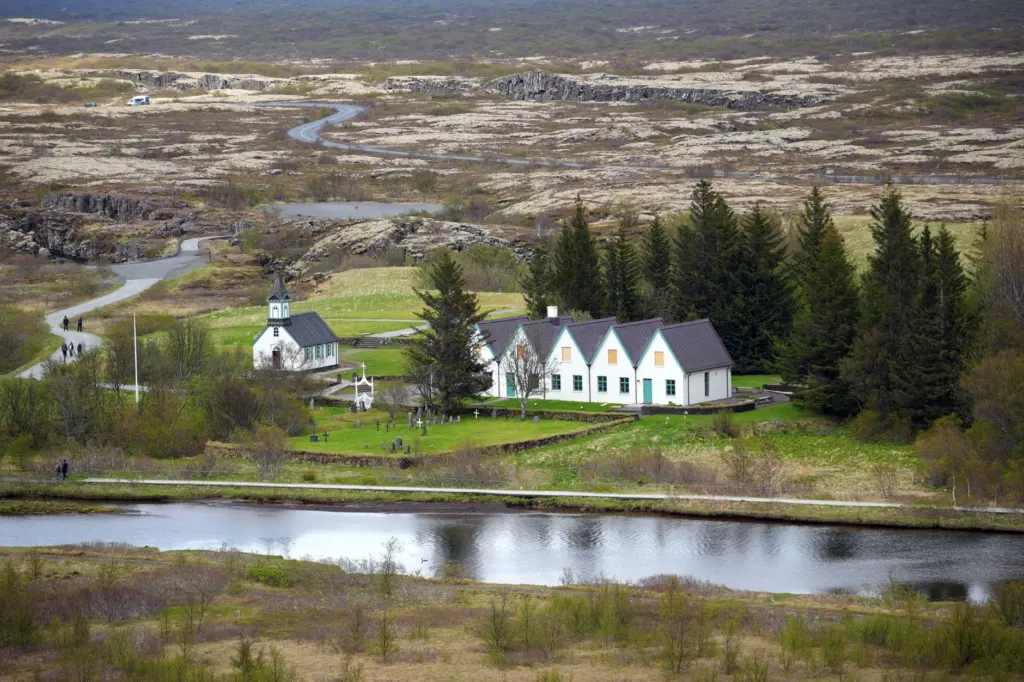
Summer visitors have one more reason to arrive on time. Guide to Iceland reports free ranger-led tours in English every day in summer, starting at 10 AM from Thingvellir Church and at 2 PM from the Visitor Center. A ranger tour is the quickest way to learn the site’s history without researching it yourself. If you arrive after the morning tour, the afternoon departure is the fallback, but it will push the rest of the day later.
Geysir and Strokkur: short stop, high return
Geysir is the middle of the loop and the easiest stop to over-schedule. Visit Iceland describes it as one of the few geyser fields where active geysers can be observed easily, and says Strokkur gushes boiling water every 8-10 minutes up to 30 m (98 ft) into the air. That regularity lets you watch more than one eruption without a long wait.
Visit Iceland’s practical advice is to keep your camera ready and stay on the upwind side of the geyser. The geothermal field itself is free to walk, according to Guide to Iceland, with the parking charge covered in the table above. Geysir is also a natural place for a meal, since it sits at the longest gap between sights.
Gullfoss: the final stop
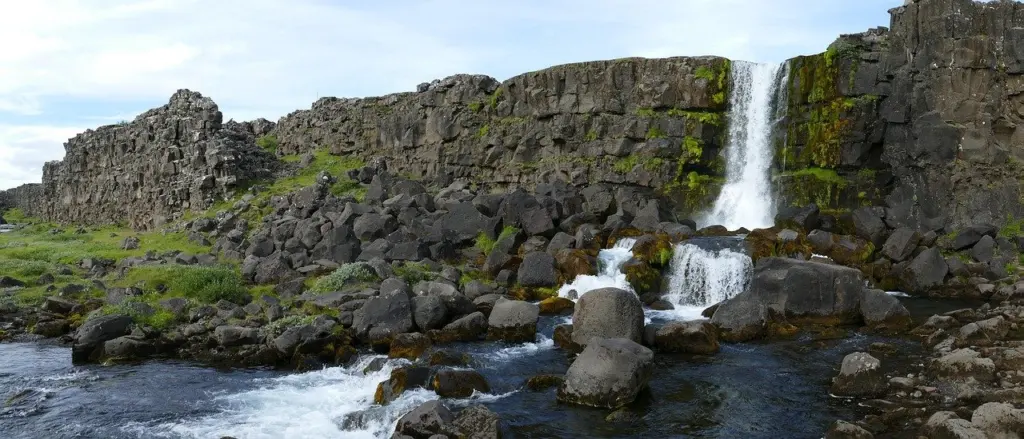
Gullfoss closes the loop, and its scale justifies saving it for last. Visit Iceland says that on average about 100,000 litres of glacial water per second from the river Hvítá plunge 31 m (100 ft). Gullfoss parking is free, per Guide to Iceland, which is welcome after two paid stops.
Gullfoss is open all year, but Visit Iceland warns that in winter the trails to the lower viewing platforms are sometimes closed because of icy and snowy conditions. If you are visiting in the cold months, plan on the upper views and treat the lower platforms as a bonus. With the return drive of about 1 hour 40 minutes ahead, keep this stop efficient once the light begins to fade.
Winter and daylight
Winter is the main reason to change this plan. Guide to Iceland says winter daylight is limited, with the trade-off being the chance to see the northern lights. Because the source gives no daylight figures, check sunrise and sunset for your dates and work backwards from sunset, so the final drive is not in the dark.
Vehicle advice differs slightly between sources. Guide to Iceland recommends a 4×4 SUV in winter for snow, ice and crosswinds, and says a standard two-wheel-drive car is sufficient from late spring to early autumn. Visit Iceland says a 4×4 is not required and rates the route as a year-round destination. These fit together if you read them as general suitability versus conditions on the day. In winter, a larger vehicle gives a margin, and checking road conditions before leaving matters more than the car badge.
- If you prioritise light: drop Geysir to a short visit and keep Thingvellir and Gullfoss as the anchors.
- If you prioritise the northern lights: accept shorter sightseeing and a later return, and choose your driver or tour operator accordingly.
- If conditions are poor: shorten the walks and avoid the lower Gullfoss platforms.
Related Nordic heritage reading
Thingvellir’s wooden-church-and-parliament setting pairs well with other Scandinavian heritage topics. For a landmark of a different kind, read Heddal Stave Church: Norway’s Majestic Wooden Landmark — A Visitor’s Guide (2026) – Scanheritage. For living customs in the same region, see Norwegian Wedding Traditions: Timeless Customs, Lively Celebrations, and What To Expect in 2026 – Scanheritage.
Frequently asked questions
Can I do the Golden Circle without a car?
The route is built around driving between spread-out stops, so the practical car-free option is an organised day tour from Reykjavík that covers the same sights. Before booking, check how much time the tour allows at Thingvellir and whether it includes a ranger-led walk.
Can I swim in the pools at Geysir?
No. A travel blog reports that the geothermal pools are not for swimming and run at 100 °C (212 °F). Keep to the paths and stay upwind of the eruptions, as Visit Iceland advises.
Can I snorkel at Thingvellir?
Yes, at Silfra. Guide to Iceland describes it as a fissure now filled with exceptionally clear glacial meltwater, and calls it one of the world’s top snorkelling and diving sites. Treat it as a separate activity, because it will not fit comfortably inside a single day of sightseeing.