

Invited to a wedding in Norway and unsure whether to wear a bunad? Norwegian wedding traditions blend church or city hall ceremonies, bunad, kransekake and toasts, and guests often wear bunad themselves.
Most confusion comes from assuming a single fixed script. This guide separates custom from assumption, and travellers who want to see the heritage behind it can start with how to plan a cultural heritage trip.
Ceremony customs and the Norwegian church
A traditional Norwegian wedding is held either in a church or in a civil ceremony at city hall, according to a Scandinavian-heritage wedding overview. Both count as traditional, so a city hall wedding is not a departure from custom. Check which venue the invitation names before you plan travel or clothing, because the church route carries the processional and music described below.
Processional and music
In the same overview, fiddle or violin players lead the bride and groom down the aisle. Behind the couple come their parents, the bridesmaids, the ring bearer and the flower girls, and the guests follow last. That order makes the entrance a communal walk rather than a solo moment for the couple.
Whether the lead instrument is a Hardanger fiddle or an ordinary violin is the couple’s choice, so do not assume either. A couple who want a folk sound can ask a fiddler; others will be content with a violin. As a guest, you only need to be seated and ready before the procession starts.
Misunderstandings that trip up visitors
Three assumptions cause most of the surprises for visitors: that everyone wears bunad, that every wedding happens in a church, and that the guest list is large. The table sets each against what the sources support.
| Common assumption | What is supported | Planning use |
|---|---|---|
| Everyone arrives in bunad | The groom and groomsmen traditionally wear bunad and guests commonly do too. The groom may instead wear a woollen suit or a tuxedo, and the bride usually wears a white gown or a Norwegian bridal gown with a bridal crown. | Bunad among guests is welcome but not a requirement. Ask the hosts before buying or borrowing one. |
| A wedding means a church | The ceremony is held in a church or as a civil ceremony at city hall. | Read the venue on the invitation and plan the day around it. |
| Weddings are huge parties | Norwegian weddings are traditionally a small affair attended by the closest friends and family. | Treat an invitation as a sign of closeness and reply promptly. |
The attire and ceremony details come from a Vogue Scandinavia guide to Scandinavian wedding traditions and the Scandinavian-heritage overview cited above.
Bunad and wedding attire
Bunad is the traditional Norwegian folk costume, and it is worn by both men and women. The men’s version is described as a hand-made woollen suit made up of a silk shirt, short pants, stockings, a vest and a top coat. It is traditionally worn by the groom and his groomsmen on the wedding day, and other guests commonly wear their own bunads as well.
The bride’s look is more varied. She usually wears either a white gown or a Norwegian bridal gown, together with a bridal crown. The crown is silver, worn over a long veil, and has medieval roots; it is meant to represent the bride’s purity on her wedding day. Jangling bangles on the crown make a sound said to ward off evil spirits. Treat that as a folk belief attached to the crown rather than an established fact, and enjoy it as part of the heritage.
The groom has options. Vogue Scandinavia lists a bunad, a traditional woollen suit or a tuxedo, so a modern suit on the groom does not signal a break with tradition. For a guest, the decision is simple. If you own a bunad that belongs to you, wearing it is in keeping with the occasion. If you do not, dress to match the invitation and let others carry the costume.
How customs differ by region
The clearest regional marker is the bunad. There are more than 400 different variations, all with their individual history, and traditionally a bunad represents the family home and the area people come from. Two guests in bunad can therefore look entirely different, and each is wearing a record of where their family belongs.
This matters for how you read a wedding. Do not expect a uniform look, and do not treat a bunad as a generic costume or compliment it as one. Asking a guest which district theirs comes from is a polite way to start a conversation, since the garment is tied to home and family. The ceremony and reception customs in this guide are described as general patterns, so a family may add its own local touches. If you are invited, ask the hosts what is typical for their side.
Reception timeline and kransekake
The overviews describe a sequence rather than a clock schedule. Treat the order below as a pattern and ask the hosts for a running order if you need exact timings.
- Procession. Fiddle or violin players lead the couple, followed by parents, attendants and guests.
- Ceremony. The wedding takes place in a church or as a civil ceremony at city hall.
- Exit. The couple is escorted out to music.
- Meal. Speeches are spread across the course of the meal.
- Cake. Kransekake is the traditional centrepiece.
Kransekake is an almond-based ring cake stacked in layers to form a pyramid, and icing holds the rings together. Because it is built from rings rather than cut like a sponge, it reads as a display piece as much as a dessert. Expect it to be shown before it is eaten.
Guest etiquette at a Norwegian wedding
Etiquette follows from a few supported customs. These are the points that change what you do on the day.
- Toast with eye contact. Norwegians toast with “Skål!” (cheers) and make eye contact to show sincerity. Look at the person you are toasting when you raise your glass.
- Be ready for several speeches. Speeches from close family and the best man are spread out over the course of the meal. Plan to stay seated and attentive through the meal rather than waiting for one block of speeches.
- Join the kiss prompt. Guests who want the couple to kiss can clink a fork or knife on a wine glass. Do it only in that spirit, and let others start it if you are unsure.
- Choose attire with care. Bunad among guests is common, but it is a family-and-place garment. Wear it only if it is yours to wear, and otherwise follow the invitation.
- Respect the small circle. Since the traditional wedding is small, an invitation signals closeness. Reply promptly and keep gifts and plans to what the hosts have asked for.
Seeing wedding heritage on a trip
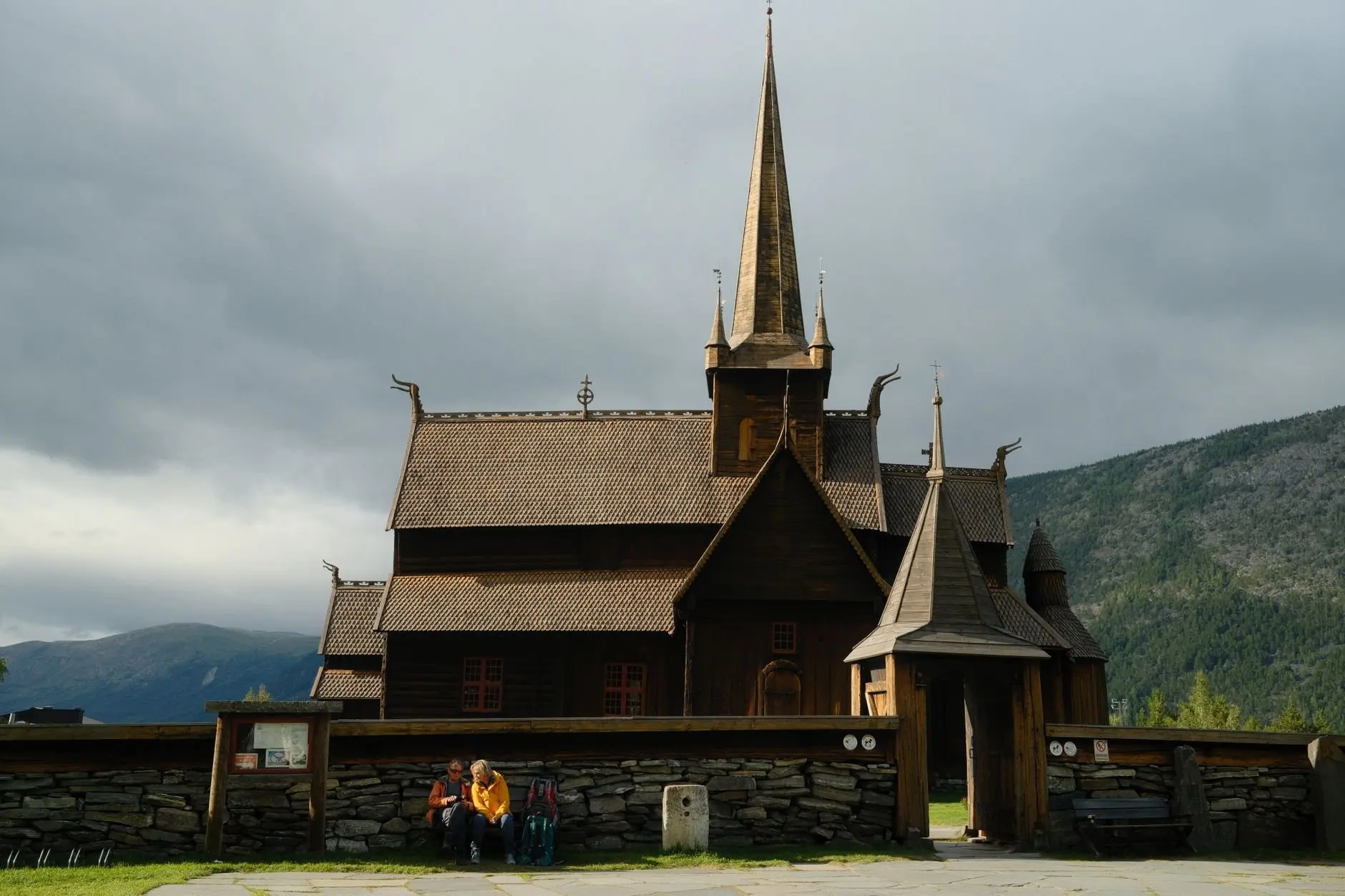
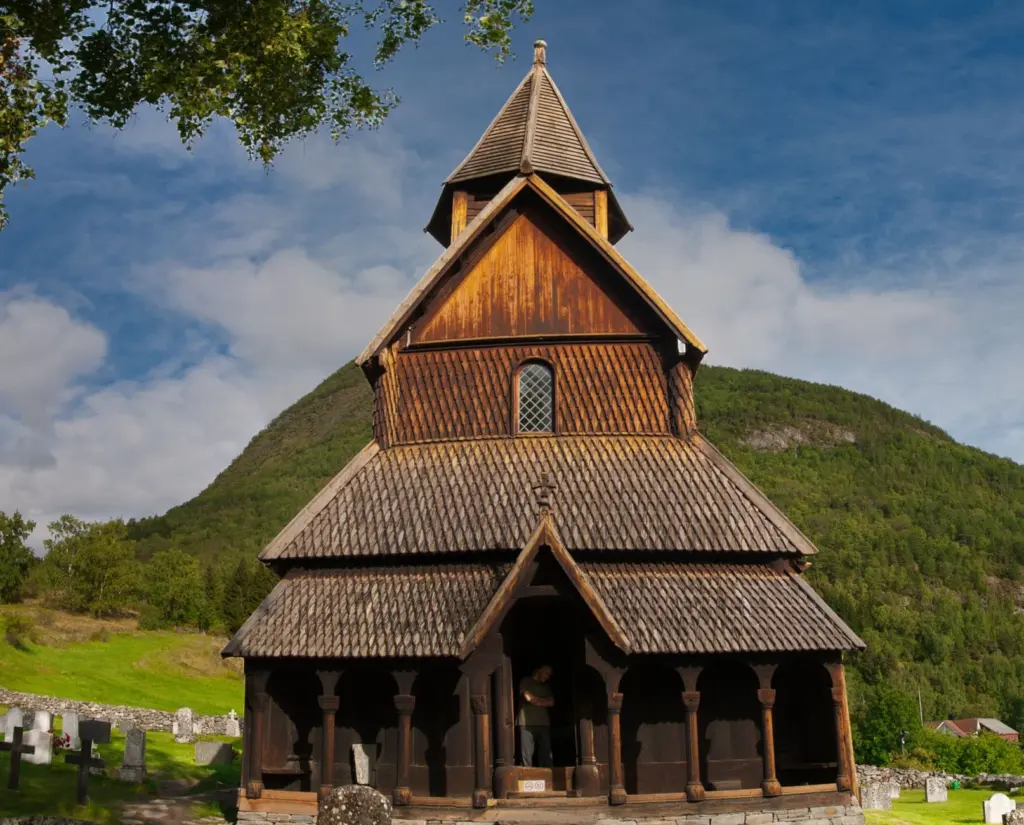
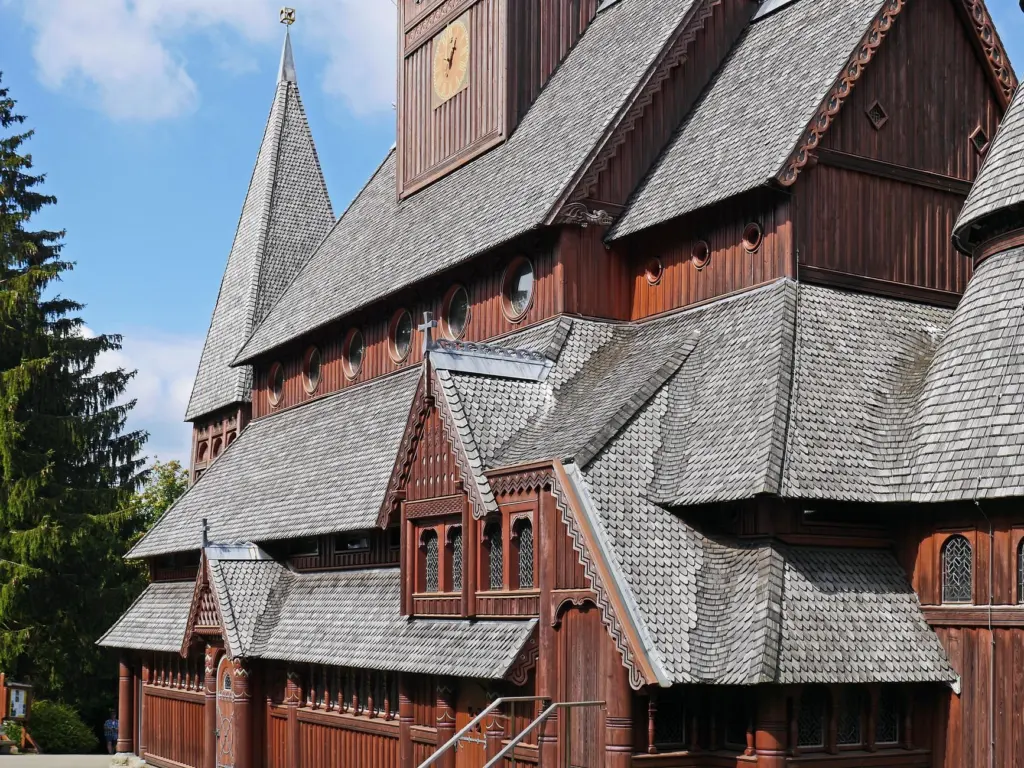
You can see much of this heritage without attending a wedding. Wooden churches are the setting for the ceremony, and folk museums are natural places to ask how a district’s costume and customs developed. Opening times and access vary, so confirm them locally before you go. Treat a visit as context for the customs above and not as a guarantee that you will see a ceremony.
Travellers building a longer Nordic route can compare road-trip plans in South Coast of Iceland: The Perfect 2–4 Day Road Trip Itinerary (With Must-See Stops & Practical Tips) – Scanheritage and Iceland Golden Circle Itinerary: The Perfect 1‑Day Route With Timing, Tips & Maps (2026) – Scanheritage.
Frequently asked questions
| Question | Answer |
|---|---|
| Which hand do Norwegian couples wear wedding rings on? | Couples wear their wedding rings on the ring finger of the right hand, according to Vogue Scandinavia. |
| What is thrown at Norwegian newlyweds? | Rye and barley grains are thrown at the newlyweds. |
| What cake is served if not kransekake? | Blotkake is an alternative: a sponge cake filled with cream and topped with icing and fruit. |
| What music escorts the couple out of the church? | “Come to the Wedding”, played on accordion, is used to escort the couple out of the church after the ceremony. |