

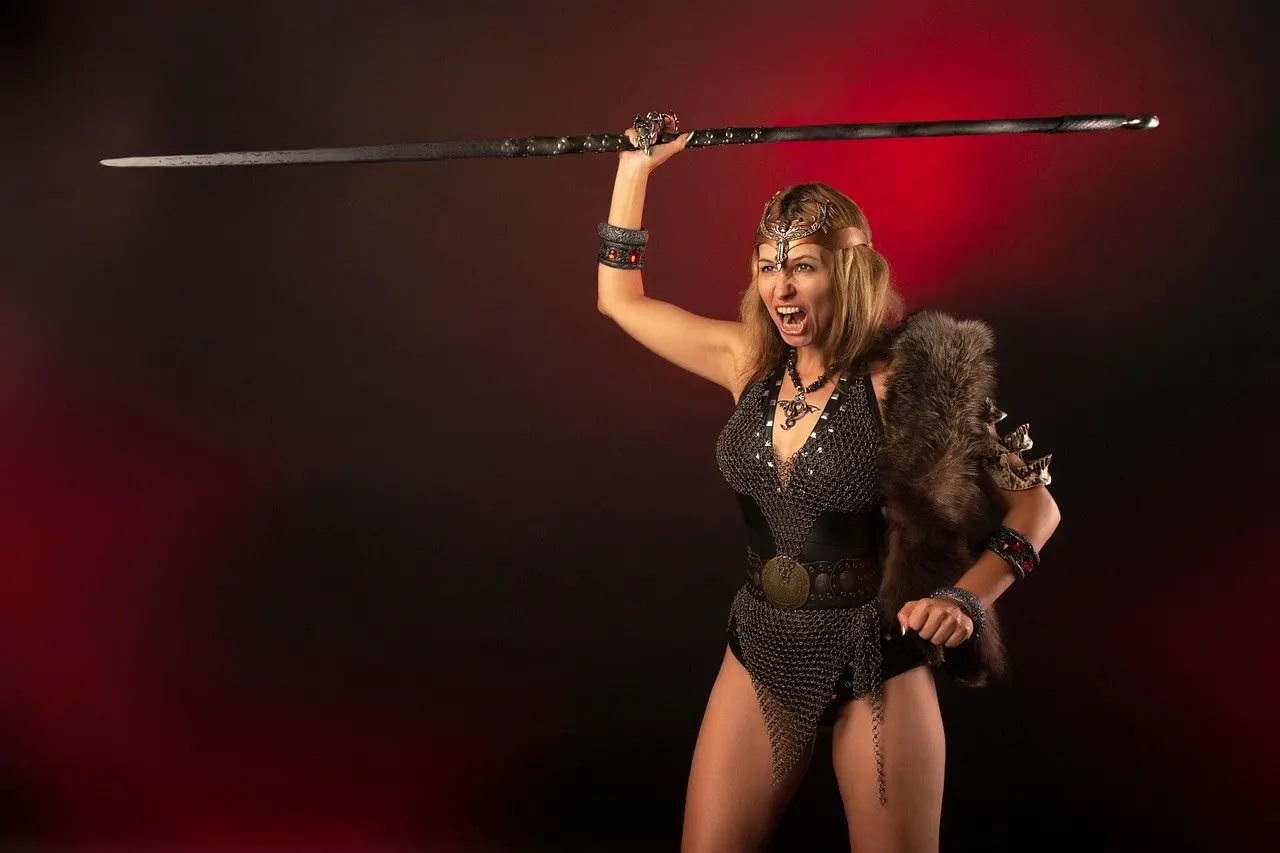
In valkyrie norse mythology, a valkyrie is a female helping spirit of Odin who chooses the slain and escorts the bravest warriors to Valhalla. The evidence is mostly literary; material traces are harder to read.
Because the Eddas were written down long after the beliefs they preserve, it helps to know what are primary sources in history before weighing poems against objects. The sections below separate what the texts say from what inscriptions and burials can support.
What a valkyrie is
A valkyrie is, in the words of a Norse mythology overview, a female helping spirit of the god Odin. The name means “choosers of the slain”. It covers more than choosing who gains admittance to Valhalla: the same source says it also refers to choosing who dies in battle. Davidson, cited in a study-based discussion of the valkyries, translates the word directly as “elector of the fallen”.
The idea was not confined to Scandinavia. The same overview notes that the Anglo-Saxons had parallel figures under the Old English words wælcyrie and wælcyrge. A valkyrie is therefore a recognisable Germanic type of death-linked female spirit, not a single literary invention.
How the role works, stage by stage
The valkyrie’s job is a sequence that runs from Odin’s command to the end of the world. Each stage is attested in a different kind of source.
- Odin dispatches them. In Gylfaginning, part of the Prose Edda, Odin sends them to every field of battle to make choice of those who are to be slain.
- They ride and choose. Medieval Nordic accounts describe them as equipped like warriors and skilled horsemen, according to the study-based discussion.
- They escort the bravest. They ride over battlefields to bring the souls of the bravest warriors killed in battle to Valhalla, as the Pantheon entry puts it.
- The chosen join Odin’s horde. In Valhalla the warriors become members of Odin’s horde, the Einherjer.
- They fight at Ragnarök. The Norse mythology overview says the valkyries will fight by Odin’s side during Ragnarök.
The practical point is that choosing and escorting are one function seen from two ends. A valkyrie does not merely carry the dead; her choice decides who falls.
Named valkyries and where the names come from
Valkyries are named in the sources, and the names cluster in a few text types. The table shows which text gives which kind of name, and what each tells you.
| Text | What it gives | Planning use |
|---|---|---|
| Grímnismál, stanza 36 (Poetic Edda) | A list including Hrist, Mist, Skeggöld, Skögul, Hildr and Þrúðr, among others | The quickest starting point for core names in the Poetic Edda |
| Skáldskaparmál (Snorri’s book on skaldic art, Prose Edda) | Name lists reaching up to 29 names in some manuscripts | Expect the count to vary by manuscript; compare editions before quoting a total |
| Skaldic kennings | Valkyrie names used as poetic substitutes, such as “Tents of Hlökk” for shields | A valkyrie name in skaldic verse may mean a battle object, not a person |
| Heroic legends | Human women such as Brynhildr and Sigrún endowed with valkyrie qualities | Treat these as valkyrie-like heroines, separate from the list-names |
The names and counts come from the Pantheon valkyrie entry and a discussion of the manuscript lists.
Brynhildr deserves a separate note. The Pantheon entry says human women of heroic legends were endowed with the qualities of both valkyries and swan-maidens. Brynhildr is one of its examples, so she is best read as a heroine who carries valkyrie traits, not simply another entry in the Grímnismál list. Skaldic poetry matters for a different reason: it shows valkyrie names working as part of a poet’s vocabulary, which is why a name in verse can point to a shield as easily as to a being.
Literary evidence: what the texts can and cannot show
The Eddas are late witnesses to earlier belief. According to the study-based discussion, the Old Edda was written down in Iceland on the basis of pre-Christian sources. That makes it valuable but not a neutral record of how people in the heathen period pictured these figures.
Warrior escorts or something darker
The picture of a noble armed rider is only part of the evidence. The Norse mythology overview states that in heathen times valkyries were far more sinister, using malicious magic. Rudolf Simek, cited in the study-based discussion, has suggested they were originally a demonic entity that claimed the dead of the battlefield. On that reading, the Valhalla escort of the later poems is a refinement of an older, harsher figure.
Weavers of fate
The poem Darraðarljóð shows twelve valkyries at a loom before the Battle of Clontarf, according to the same overview. This is the clearest supported link between valkyries and the weaving of fate. Use it when a source claims weaving is central to the figure: it rests on one named poem, not on every text.
A fair working rule follows from this. Use the poems for what valkyries did in narrative, and treat claims about original belief as scholarly interpretation. Odin’s wider mythic circle is explored in Baldur: The Radiant God Whose Death Shaped Norse Myth (A Clear Guide) – Scanheritage, which is a useful companion if you want to see how Norse myth handles death at the divine level.
Archaeological and material evidence
Material evidence for valkyries is real but limited, and it needs the texts to be understood. Several rune inscriptions referring to valkyries are known from pre-Christian times, the study-based discussion reports, but they are hard to interpret alone. A short inscription rarely tells you whether it names a being, a protective idea or a poetic image. For how inscriptions are read in general, see Nordic Runes Meaning: A Practical Guide To Symbols, Origins, And Uses (2026) – Scanheritage.
Two further points shape how far the material record can be trusted:
- Who made the images. Steinsland points out that the representations of valkyries that survive generally originate from an aristocratic milieu. They show how elite patrons saw the figure and may not reflect wider belief.
- A written account of a burial. Ibn Fadlan, describing a burial on the Volga, calls a woman present there the “Angel of Death”. This is a travel text, not an excavated object, but scholars set it beside valkyrie traditions as an outside view of a death-linked female figure.
The sound approach is to avoid labelling any object a valkyrie from appearance alone. Where an image of an armed or mounted woman survives, its meaning is strongest when a named text or inscription supports it.
Frequently asked questions
Are valkyries named in the sources?
Yes. Grímnismál stanza 36 lists names such as Hrist and Mist, and Skáldskaparmál carries longer lists in some manuscripts.
What archaeological evidence exists?
Pre-Christian rune inscriptions mention valkyries, though they are hard to interpret alone. Surviving representations also tend to come from an aristocratic milieu.
Were valkyries always benevolent?
No. The Norse mythology overview describes them as far more sinister in heathen times, and Simek links them to an original demonic death spirit.
How are valkyries related to swan-maidens?
Heroic legends endow human women with the qualities of both valkyries and swan-maidens, as the Pantheon entry notes. Brynhildr is among the women it names.