

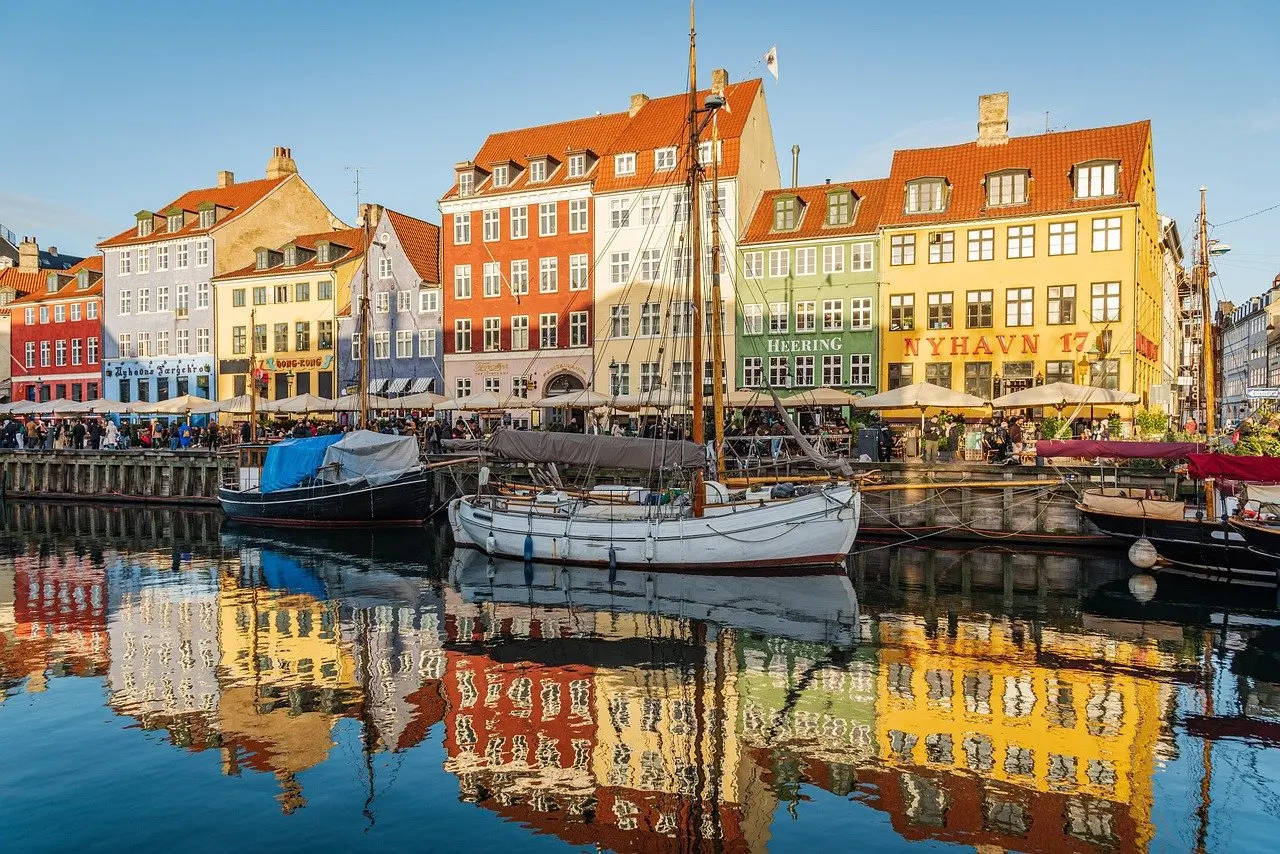
The best things to do in Copenhagen for a heritage-minded visitor are Nyhavn, Kastellet, Rosenborg Castle and Tivoli Gardens. Order them around Monday hours, timed castle entry and Tivoli’s seasonal calendar, not just distance.
The same logic runs through how to plan a cultural heritage trip: fixed entry rules come first, and the flexible walking stops fill the gaps around them. This guide applies that approach to Copenhagen.
What shapes a Copenhagen itinerary
Three rules decide how a Copenhagen visit should be sequenced: opening hours that shift on Mondays, castle tickets issued as timed slots, and Tivoli’s separate seasons. The Copenhagen Card’s official attractions page warns that opening hours change on Mondays and offers an Open on Mondays filter. Check that filter before you assign any museum to a Monday. Frederiksborg Castle is the exception, because it is open every day of the year.
Timed entry matters most at Rosenborg Castle. The castle does not offer online pre-booking, so the practical plan is to go to the ticket office and let the timed slot you receive set the rest of the day. Walking stops such as Nyhavn, the harbour front and Kastellet need no ticket and can fill the time before and after.
Tivoli is the third constraint. It is open in distinct seasons and closed between them, so a visit in the wrong week can find the gates shut. The table below compares what the Copenhagen Card covers and which entry conditions affect planning.
| Option | What is verified | Planning use |
|---|---|---|
| Copenhagen Card DISCOVER | Includes public transportation and 80+ attractions | Best when you will use trains and the Metro as well as several paid sights |
| Copenhagen Card HOP | Includes the Hop On-Hop Off buses and 40+ attractions | Suits a bus-based sightseeing plan with a shorter attraction list |
| Rosenborg Castle | Card is scanned at the ticket office on arrival for a timed entry ticket; online pre-booking is not available | Make the timed slot the fixed point of the day |
| Tivoli Gardens | Card covers one visit per card; same-day re-entry needs a stamp at the main entrance | Decide before entering whether you will leave and return for dinner |
| Frederiksborg Castle | Open every day of the year; about 35 minutes by S-train line A from Copenhagen | A dependable fallback for a Monday |
These details come from the official Copenhagen Card attractions page.
The card is worth the most when your itinerary is dense with paid castles and museums and you will also ride public transport. If you plan to spend most of your time on free harbour and street stops, the card’s value shrinks, and paying per entry is likely the sounder choice. Ticket prices vary by operator, so check each operator’s own page before buying.
First day: Nyhavn, the Little Mermaid and Kastellet
A harbour-first opening day works because none of its stops need a ticket. It also leaves the timed and seasonal sights for days when you can plan around them.
Nyhavn
Nyhavn is the canal-side waterfront whose painted townhouses and moored boats define the city’s postcard image. It is more than a backdrop: the oldest house in the area is No. 9 Nyhavn, dating back to 1681. Walk the quay with that in mind and look at the facades as working harbour architecture, not only as colour. The waterfront cafes are the obvious place to stop, but the walk itself is the heritage experience.
The Little Mermaid statue
The Little Mermaid statue has perched on a rock by the harbour since 1913 and was inspired by Hans Christian Andersen’s tale. Treat it as a short stop on a longer harbour walk. It is a small statue, and it is best seen as part of the waterfront route, not as the day’s main event.
Kastellet
Kastellet suits visitors who want a quieter heritage stop after the waterfront. It is described as a perfectly preserved star-shaped fortress dating back to the 1600s. Its geometry is easiest to appreciate on foot, and it sits naturally on the route between the harbour and the Little Mermaid.
- Start at Nyhavn while the quay is quieter, and look for No. 9 among the facades.
- Follow the harbour front toward the Little Mermaid statue.
- Finish inside Kastellet for a calmer walk before lunch.
Second day: Rosenborg Castle and museum choices
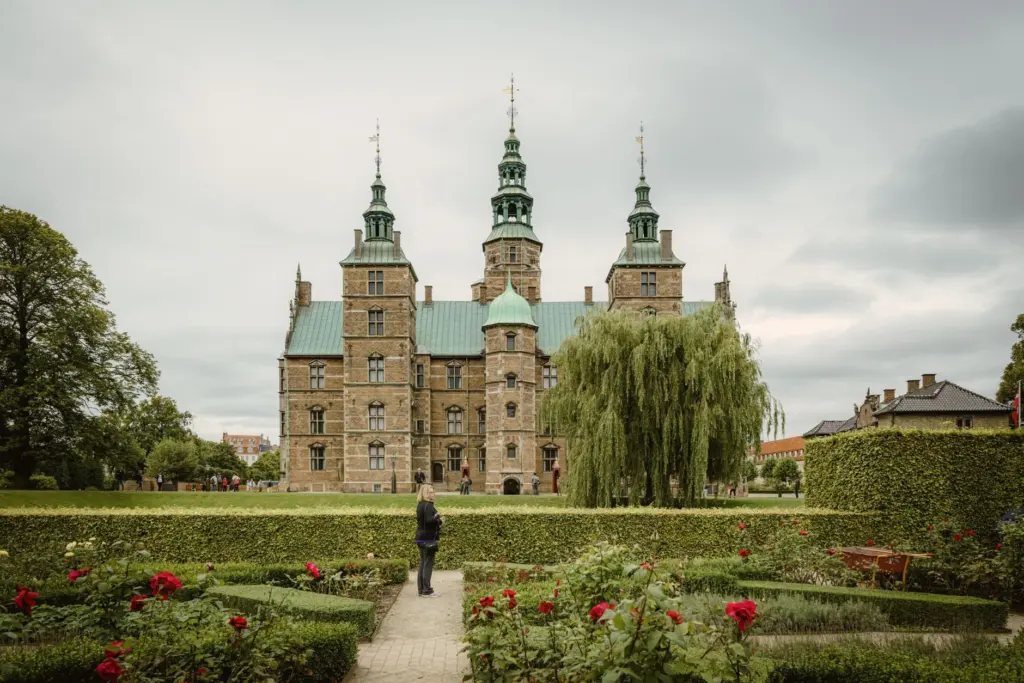
Rosenborg Castle is the strongest single heritage anchor for a Copenhagen visit, so build the second day around its timed entry. It was built by Christian IV in the early 17th century, which places it in the same era as Kastellet’s fortress. The two stops therefore link well across a trip.
The crown jewels are the main reason to prioritise it. They are described as living treasures, being the only ones in the world both on display to the public and still in royal use. That distinction makes the collection different from a conventional museum display of retired regalia. Go to the ticket office first, collect the timed slot, and use the gap before it for the castle’s garden or a coffee.
Which museums are worth adding
Choose by theme and by what you can reach, not by trying to cover every collection. Frederiksborg Castle is the most substantial museum option in the verified material. It houses the Museum of National History and the National Portrait Gallery, which makes it a natural companion to Rosenborg for anyone interested in Danish royal and national history. It is in Hillerød and not in the city centre, so it works best as its own half-day outing and not as a quick add-on.
For any other museum you add, check its Monday hours first. The Open on Mondays filter on the Copenhagen Card page is a quick way to do this if you hold the card. Pairing one large museum with a free outdoor stop gives a better day than stacking indoor venues back to back.
Third day: Tivoli Gardens and food stops
Tivoli is best treated as an evening destination at the end of a trip, once the timed and fixed-hours sights are done. It was founded in 1843 and has since become a national treasure as well as an international attraction. Its age gives it a heritage dimension, not just a ride-park role.
The Copenhagen Card covers the entrance and lets you buy a discounted Ride Pass, so you can enter on the card and add rides only if you want them. If you are visiting for atmosphere and gardens, you may not need the Ride Pass at all. Seasonal dates matter more than ticketing here: check them before you commit, because the gates are closed between the three periods.
Where to eat
Food can sit between the heritage stops without needing its own day. The Tivoli Food Hall, on the corner of the main entrance, has 15 hand-picked stands. It is open year round with free street access, so it is the safe choice when the park itself is closed.
For a larger market, Reffen has over 30 different food and drink vendors. It suits groups who want to choose separately, because everyone can order from a different stand. Its winter schedule is in the FAQ below.
Getting around Copenhagen
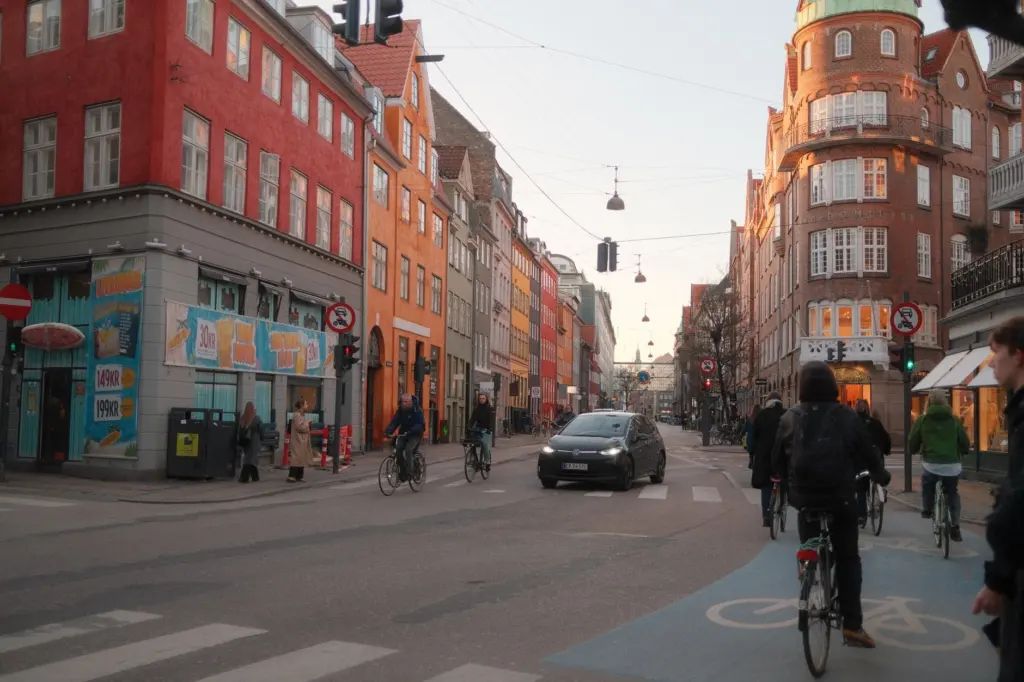
The simplest approach is to walk the harbour and centre, then use trains, Metro or bike for longer links. Copenhagen is one of the most bike-friendly cities in the world, so cycling is a realistic way to cover distances between the harbour, the castle gardens and the city centre. It suits confident riders; if you would rather not share lanes with local commuters, walking and public transport cover the same ground.
The Metro is the useful option for crossing the city. One visitor guide recommends taking the Metro a few stops from DR Byen to reach the centre, towards Kongens Nytorv or Nørreport. If you hold the DISCOVER card, public transportation is already included, which makes spontaneous short hops cost nothing extra. Fare and zone details are not covered here, so confirm them with the transport operator before you buy single tickets.
For Frederiksborg Castle, plan the journey as a separate outing. The castle is in Hillerød, about a 35-minute train ride via S-train line A from Copenhagen, followed by a walk from Hillerød station. Because the castle is open every day, it is the best use of a Monday when city museums may be changing hours.
Extending the plan to other heritage trips
The planning habits above carry over to other destinations: check which sights need timed entry, which have seasons, and which stay open on difficult days. How to visit Newgrange shows how booking conditions can shape a heritage visit elsewhere, while the neighbouring Nordic capital is covered in 27 Best Things To Do In Oslo, Norway: Compact Guide For English-Speaking Visitors (2026) – Scanheritage. Combining the two cities works best when you treat each as a separate timed-entry plan and not as a single loose itinerary.
Frequently asked questions
Can I leave Tivoli and come back on the same Copenhagen Card?
Yes, with a stamp. The card covers one visit, but same-day re-entry is possible if you have it stamped at the main entrance before leaving.
When is Tivoli open in 2026?
Tivoli runs in three periods: Summer from 27 March to 20 September 2026, Halloween from 2 October to 1 November 2026, and Christmas from 13 November 2026 to 3 January 2027. It is closed on 24 December 2026 and between the periods.
Is Frederiksborg Castle open on Mondays?
Yes. The museum is open every day of the year, which makes it a reliable Monday option.
Is the Reffen food market open in winter?
Not necessarily. It closes during some winter months, so check its website before a winter visit.