

| What you see | What it tells you | Planning use |
|---|---|---|
| Borgund: built around 1180, never rebuilt or expanded, with a pulpit from the late 1500s and an altarpiece from 1620 | A medieval structure that still stands as built, with later furnishings added over time | Choose Borgund when you want to separate original medieval fabric from later additions |
| Rune inscriptions on the walls of Borgund | Writing survives on the building itself, not only in carvings | Look at wall surfaces as well as at the posts and portals |
| Grip: likely built in 1470, among Norway’s simplest and smallest stave churches | Plain construction with little ornament | Suits visitors who want to understand the structure before comparing it with richly carved churches |
| Gol: built around 1200, now in the Norwegian Museum of Cultural History at Bygdøy, Oslo | A relocated church, displayed in a museum rather than at its original site | The easiest way to see a stave church interior on a city-based trip |
| Borgund Visitor Centre with an exhibition on the history of stave churches in Norway | Background that explains what you are about to see | Visit the exhibition before entering the church |
These details come from the Grip tourism site’s overview of Norway’s stave churches and the Borgund page on stavechurch.com.
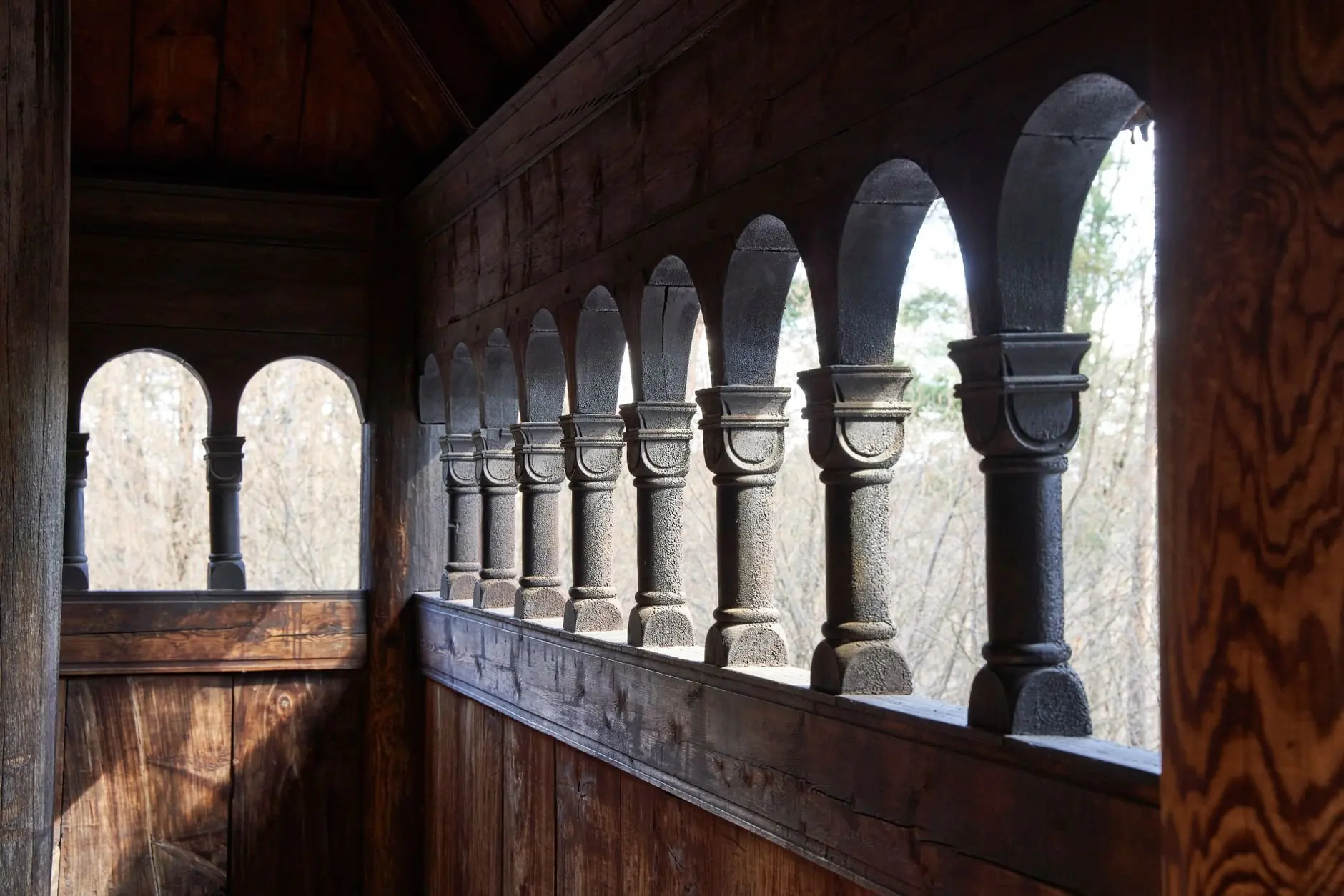
A stave church interior is dark, warm and vertical: tall wooden pillars, carved details and furnishings added over the centuries. Expect painted and carved surfaces to be partly worn, and choose churches by what you want to read inside.
The sections below explain what each feature means for your visit. For the wider logistics, start with our guide on how to plan a cultural heritage trip.
What the interior looks like and how that shapes a visit
Inside a stave church you see timber pillars, carved ornament and a low, dim light, and each of these changes how you should spend your time. One visitor account of Urnes describes an interior that was warm and dark, with huge stave pillars stretching up to the ceiling. The same account notes Viking decoration on the tops of the pillars and Christian sculpture above the cross-timber.
That mix is the key to reading the room. The carvings in these churches depict both Christian imagery and Viking motifs, so a single pillar can carry two traditions at once. Looking up from the floor, rather than straight ahead, is where the most informative detail usually sits.
Colour is the other thing to adjust for. According to Living a Nordic Life, much of the carving inside the churches and inside the portal would have been painted. Some of that paint survives. The dark, mostly monochrome wood you see today is therefore not the whole original effect, and the faint pigment that remains deserves a closer look than the bold shapes do.
Some interiors add a later layer of folk decoration. The same source describes rosemaling and hand-painted pews in the churches it covers, which means a single building can combine several periods of decoration.
- Give your eyes time. A warm, dark interior rewards a slow first minute before you begin photographing or reading details.
- Look up first. Pillar tops and the zone above the cross-timber carry the carved decoration described at Urnes.
- Treat remaining paint as evidence. Pigment traces mark where carvings were once coloured, so check recesses and portal surrounds as well as the open surfaces.
- Separate wood from furniture. Pews, pulpits and altarpieces are fittings; the posts and walls are the building.
Choosing which stave church to visit
Which stave church is worth visiting depends on whether you want preservation, age or simplicity. The choice is real, because the number of survivors is small. More than 1,300 such churches would be built before the Black Death, yet 28 are left, and 25 of those are preserved where they were built. The other 3 have been relocated.
Borgund for preservation and context
Borgund is the usual first choice for a visitor who wants to understand the type. The Grip site says it has never been rebuilt or expanded, and that it has served as a model for restoring several other stave churches, such as Fortun and Gol. The site also has a visitor centre, so you can place the interior in context before or after you go in. Pair it with the portals and roof carvings described on stavechurch.com.
Urnes for age and atmosphere
Urnes is believed to be the oldest of the remaining stave churches and is listed as a World Heritage Site by UNESCO. A travel account puts its construction in the 12th and 13th centuries. Choose it if the dark, pillar-filled interior described earlier is what draws you. The journey is part of the visit: you can drive, or cross the Sogn fjord by ferry from Solvorn and walk up the hill.
Grip and Gol for contrast
Grip is a useful counterweight to Borgund and Urnes. Because it is among Norway’s simplest and smallest stave churches, it shows the construction with far less ornament competing for attention. Gol is the practical choice when your trip is based in Oslo, since it now stands within the Norwegian Museum of Cultural History at Bygdøy. A relocated church cannot show you its original landscape, but you can still study the interior.
Reading carvings, portals and dragon heads
Carving is the most readable feature of a stave church, and dragon heads are its signature. The best way to use them is to treat each one as a clue to where Christian and Norse traditions meet.
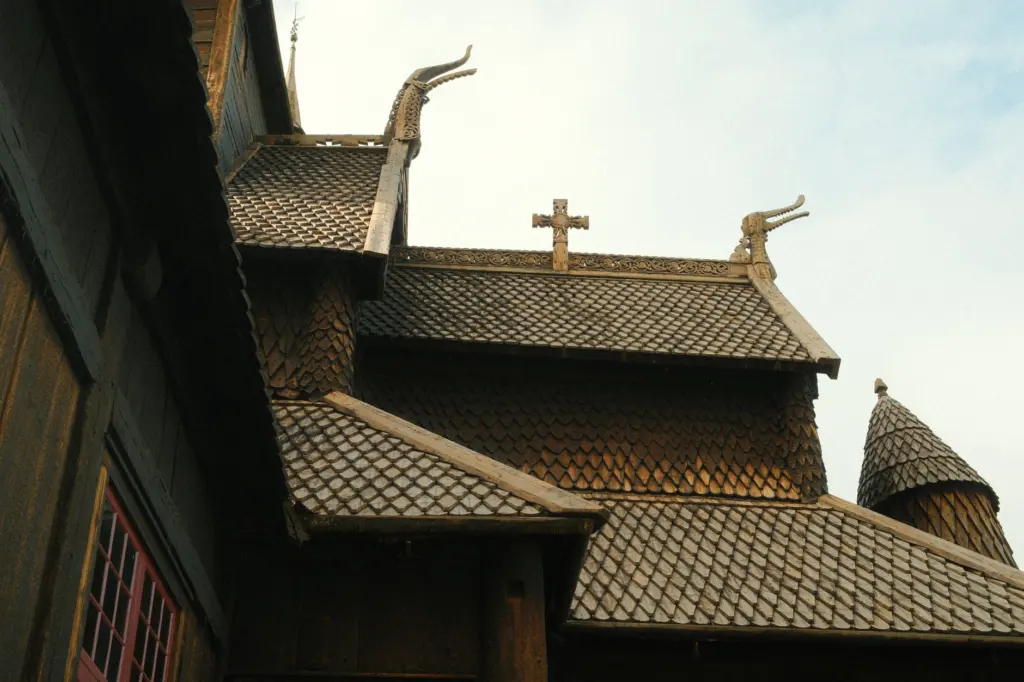
Dragons are easiest to spot outside. According to Living a Nordic Life, many stave churches are decorated on the outside with elaborate dragon heads and scrolls. At Borgund, the lavishly carved portals, crosses and dragon-head carvings on the roofs form a single design. When you cross the threshold you move from that exterior vocabulary into the interior one.
Use these habits when you step inside:
- Start at the portal. It is often the most ornate element, and its carving sets up the motifs you will meet again on posts and capitals.
- Compare pillar tops with the upper zone. At Urnes, Viking decoration appears on the pillar tops and Christian sculpture above the cross-timber, so the vertical sequence is itself a way of reading the church.
- Scan the walls. Borgund has several rune inscriptions on its walls, which are easy to miss if you only look at the carved focal points.
- Do not assume a motif is purely one tradition. The combination of Christian imagery and Viking motifs is the norm, not an exception.
Layers of time inside the building
A stave church interior is rarely the work of a single period. Borgund was built around 1180 and dedicated to the Apostle Andrew. Its pulpit dates from the late 1500s and its altarpiece is from 1620, according to the Grip overview. The medieval timber frame and the post-medieval fittings therefore sit together, and a visitor can tell them apart by style and finish.
Survival also depended on rescue. Borgund was purchased in 1877 by the National Trust of Norway, Fortidsminneforeningen, which saved it from demolition. Its later role as a restoration model for other churches means the care taken at Borgund influenced how churches such as Fortun and Gol were treated. When you stand in a surviving interior, you are looking at the result of both medieval carpentry and later conservation decisions.
The practical lesson is to read for sequence. Ask which element belongs to the original frame, which came later, and which has been repaired. That habit makes even a plain interior such as Grip’s, which was likely built in 1470, informative.
How the structure shapes what you see
The structure explains why the interior feels as it does. Gol is described as built around 1200, with stave construction as the supporting element. At Urnes the pillars climb to the ceiling. Taken together, this means the tall posts you notice first are doing structural work, and the carving on them is added to a load-bearing frame rather than standing on its own.
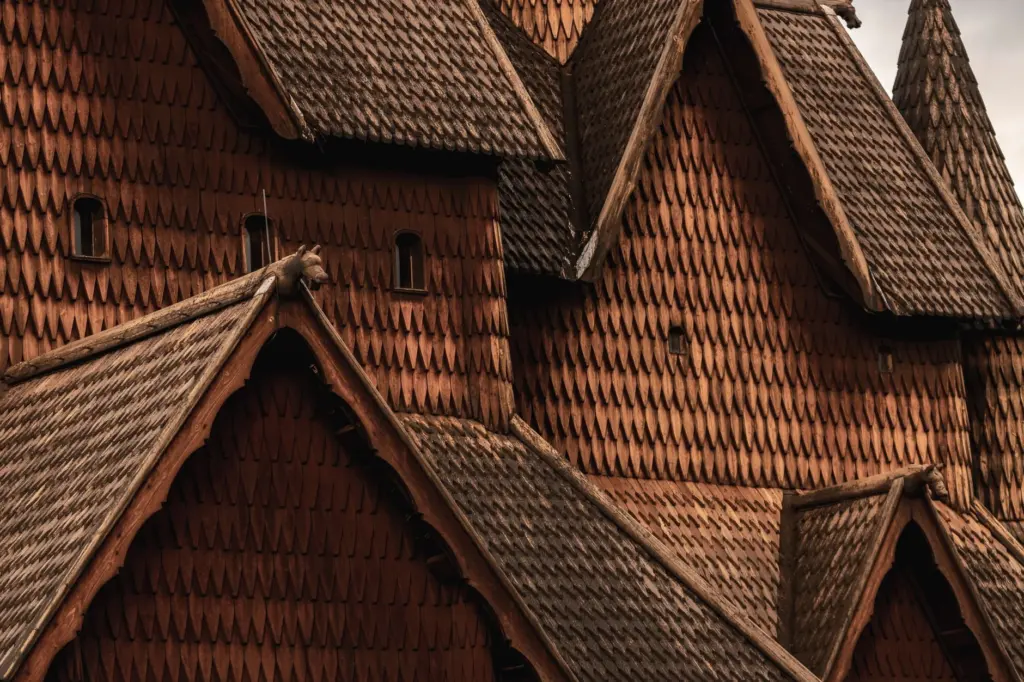
The roofs outside tell the same story. Layers of wooden shingles and steep gables are the visible shell, while the posts inside carry the building. That is a good reason to walk around the exterior before entering: it prepares you to read the interior as a single timber system.
Planning the visit
Plan around access, not just the building. Urnes needs a drive or a ferry crossing from Solvorn followed by a walk uphill, so it suits a day built around the journey. Borgund fits a visit where you want the exhibition and the church together. Gol suits a city stay.
- Check opening arrangements. Several surviving stave churches remain operating churches, so confirm visiting conditions with the site before you travel.
- Combine two contrasting churches. Pair an ornate church such as Borgund with a plain one such as Grip to see how much carving changes the experience.
- Follow the site’s own rules. Conservation conditions inside old timber buildings vary, so use the site operator’s guidance for photography and access.
If your Nordic travel also includes Iceland, our guides to the Iceland Winter Itinerary: A 5–7 Day Adventure Plan For Northern Lights, Glaciers, And Hot Springs (2026) – Scanheritage and the 4-Day Iceland Itinerary: See Waterfalls, Glaciers, And Northern Lights In A Long Weekend – Scanheritage cover that leg of the journey.
Frequently asked questions
Which stave churches are worth visiting if I only have time for one?
Borgund suits most visitors because it has never been rebuilt or expanded and has a visitor centre with an exhibition. Choose Urnes if age and a World Heritage setting matter more than convenience.
Are stave churches still used for worship?
Yes, several remain operating churches, so check visiting conditions before you go.
Can I see a stave church without leaving Oslo?
Yes. Gol, built around 1200, is now part of the Norwegian Museum of Cultural History at Bygdøy in Oslo.
Was the carving inside originally painted?
Yes, much of the carving inside the churches and inside the portal would have been painted, and some of that paint survives today.