

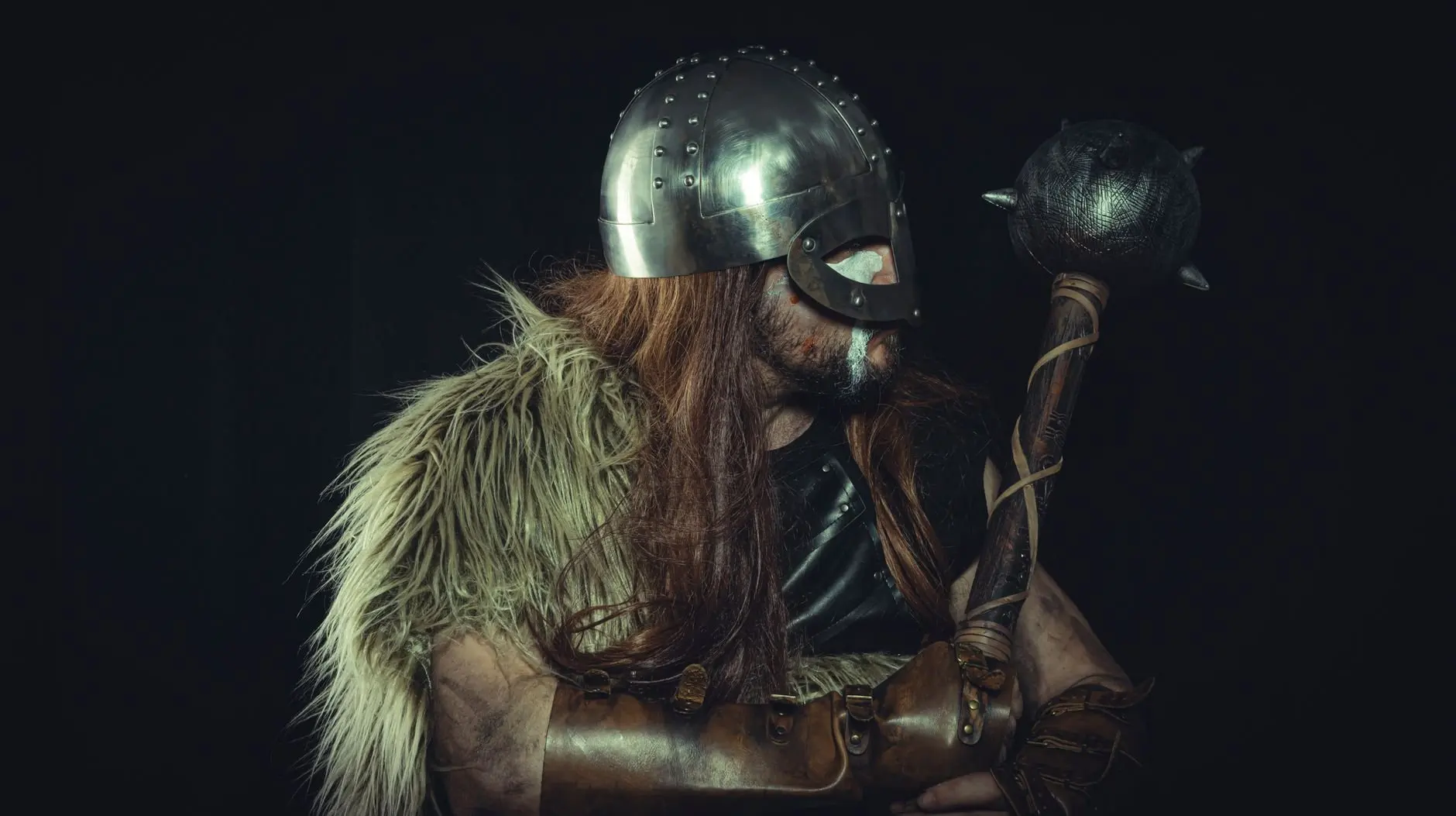
Odin in Norse mythology is the leader of the gods, linked with war, wisdom, magic and poetry. His best-known stories, the winning of the runes and the ravens that report to him, survive in medieval texts. Artefacts offer only possible images of him.
Every Odin story reaches us through later writers, so it helps to know what are primary sources in history before weighing the evidence below. The sections run in the order the evidence works: the texts, the god they describe, the myth of the runes, his symbols, and the traces of his cult.
Where Odin’s stories come from
The written record of Norse myths largely comes from Icelandic manuscripts created in the 13th century, after Christianization had begun, according to an academic-style overview of Norse mythology. The same overview dates the Viking Age to roughly the 8th to 11th centuries. The Poetic Edda is likewise described as a thirteenth-century collection of older Norse myths.
That gap shapes how to read everything else. The texts show how medieval Icelandic writers preserved and arranged older beliefs. They are not a transcript of what worshippers said during the Viking Age. Objects and place-linked traditions help fill the gap, and the cult section below shows how far they can go.
Who Odin is
Names and role
Odin is the leader of the Norse pantheon, and his name appears as Odinn, Woden, Godan, Wodan and Wotan across languages. His domain is debated among scholars. Descriptions usually include war, wisdom, magic, poetry and heroic acts. That mix explains why he suits both a warrior audience and a poet’s audience.
Appearance and family
He typically appears as an older man, tall and bearded, and always with one eye. Common retellings make him the husband of Frigg and the father of Thor and Balder. The missing eye is not a decorative detail. It is the visible cost of the knowledge-seeking myths described next.
How Odin won the runes
The runes are the clearest case of Odin buying wisdom through suffering. The accounts differ in detail, so the useful way to read them is as a sequence of sacrifices rather than one fixed script.
- Seeking knowledge at the well. During his search for knowledge, Odin gave one eye to the well of Mimir. Another retelling sends him to the well of Urd at the base of Yggdrasil, the tree of life.
- Hanging on the tree. He hung himself from Yggdrasil, the great ash tree at the centre of the world. One account adds that he impaled himself with his spear Gungnir, and that he hung there for nine whole days.
- Receiving the runes. On the ninth day the runes were revealed to him. Another retelling says he hung for nine days and nights and then gained knowledge of the nine worlds and the runes.
- Gaining the script. Odin’s visions revealed secret wisdom, including how to write in runic script.
The practical reading is that Odin’s wisdom is earned, not inherited. The eye and the hanging are the price, and the runes are the return. Mimir and Yggdrasil frame the story as a journey to the cosmic centre. This is why Odin is a god of knowledge as well as war, and why runic writing carries his association.
Odin’s ravens, spear and horse
Odin is typically depicted with his ravens, and the ravens are his most common symbol. Huginn and Muninn are a pair of crows that fly around the world, Midgard, and carry information to Odin. Their names point to mental faculties: Huginn means “thought” and Muninn means “memory” or “mind”. They are best read as extensions of his intelligence-gathering rather than as pets. The medieval texts mention them in several places:
| Text | What it says about the ravens | Planning use |
|---|---|---|
| Prose Edda, Gylfaginning chapter 38 | Huginn and Muninn sit on Odin’s shoulders and return at dinner time | Cite for the image of the ravens as his close companions |
| Poetic Edda, Grímnismál | They fly daily over Midgard | Cite for their role as daily scouts of the human world |
| Heimskringla | Odin gave them the ability to speak | Cite for how they report back to him |
These details come from a survey of Huginn and Muninn in the Edda tradition and Heimskringla.
His other attributes are practical tools. His weapon of choice was the spear Gungnir, crafted by dwarves and said to strike any target. His horse Sleipnir has eight legs and is said to run over air and water. The spear suits his warrior side and the horse his travelling side. The one eye, the ravens and the spear together are the quickest way to recognise him in later retellings.
Evidence for Odin’s cult
Direct evidence of how Odin was worshipped is thinner than the myths suggest, and what survives points more to royal ideology and naming than to detailed ritual. Three kinds of evidence carry the weight.
- Royal descent claims. Many kings throughout Viking Age Scandinavia claimed to be descendants of Odin. This suggests the god was tied to rulers’ prestige, not only to private belief.
- The weekday name. Old English wōdnesdæg meant “Woden’s day”, and Old Norse Óðinsdagr gave Danish, Norwegian and Swedish onsdag. The modern English word “Wednesday” descends from the Old English form, so his name survives in everyday speech.
- Possible images on objects. Artefacts that might depict Odin with one of the crows include migratory stage golden bracteates and a Vendel era helmet plate, among other objects.
The wording of the artefact evidence matters. These objects are named as possible depictions, so they support the idea that Odin and his raven imagery were known visually. They do not prove a specific rite. The best use of the evidence is to match a myth motif, such as a bird beside a figure, to an object, and to state the match as a likelihood rather than a certainty.
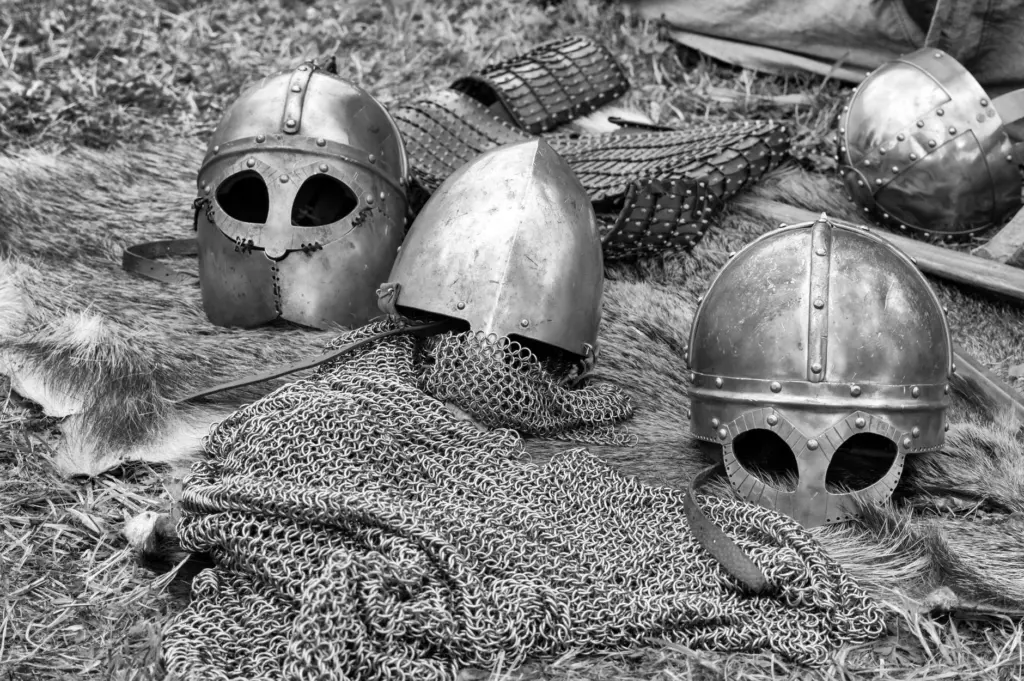
Because the written myths were set down only after Christianization had begun, a helmet plate or bracteate is an earlier witness than any manuscript. When a text and an object appear to agree, the object is the stronger sign that the image was in circulation before the manuscripts were written.
Reading Odin alongside other figures
Odin shares his mythic world with gods and giants whose stories complete the picture. For the Vanir side of that cosmos, see Freya: The Fierce Vanir Goddess Of Love, War, And Magic — Who She Really Was In Norse Mythology – Scanheritage. For a figure from the opposite end of the mythic story, see Surtr: The Fire Giant Of Norse Myth — Ragnarök’s Burning Force (2026 Guide) – Scanheritage.
Frequently asked questions
Who is Odin?
Odin is the king of the Norse gods, usually associated with war, wisdom, magic and poetry, and shown as a one-eyed, bearded older man.
Is “Allfather” an original title for Odin?
He is popularly called The Allfather, but this might have been a later title.
What do Huginn and Muninn mean?
Huginn means “thought” and Muninn means “memory” or “mind”. They are the two ravens that carry information to Odin.
How was Odin worshipped?
The evidence points to kings claiming descent from him, weekday names such as Wednesday, and objects that may depict him. Detailed rites are harder to establish because the written myths date from after Christianization had begun.