

| Creature | Tradition and setting | Function in the stories | Planning use |
|---|---|---|---|
| Näcken | Sweden; lakes, rivers and streams | Water spirit that lures people with violin music | Best starting point for water-themed stories and festivals |
| Huldra | Sweden; forest | Beautiful woman with long flowing hair and a hollowed back | Suits forest themes and folk music or dance |
| Skogsrå | Sweden; the woods | Guardian of the woods; travellers ask her permission before going further in | Suits stories about respect for wild land |
| Tomte | Sweden; the homestead | Household spirit and guardian of homesteads; small, with a long white beard and pointy red hat | Suits home-based and seasonal traditions |
| Vittra | Sweden; beneath the earth | Invisible nature spirits living in hidden realms | Suits hidden-world and underground themes |
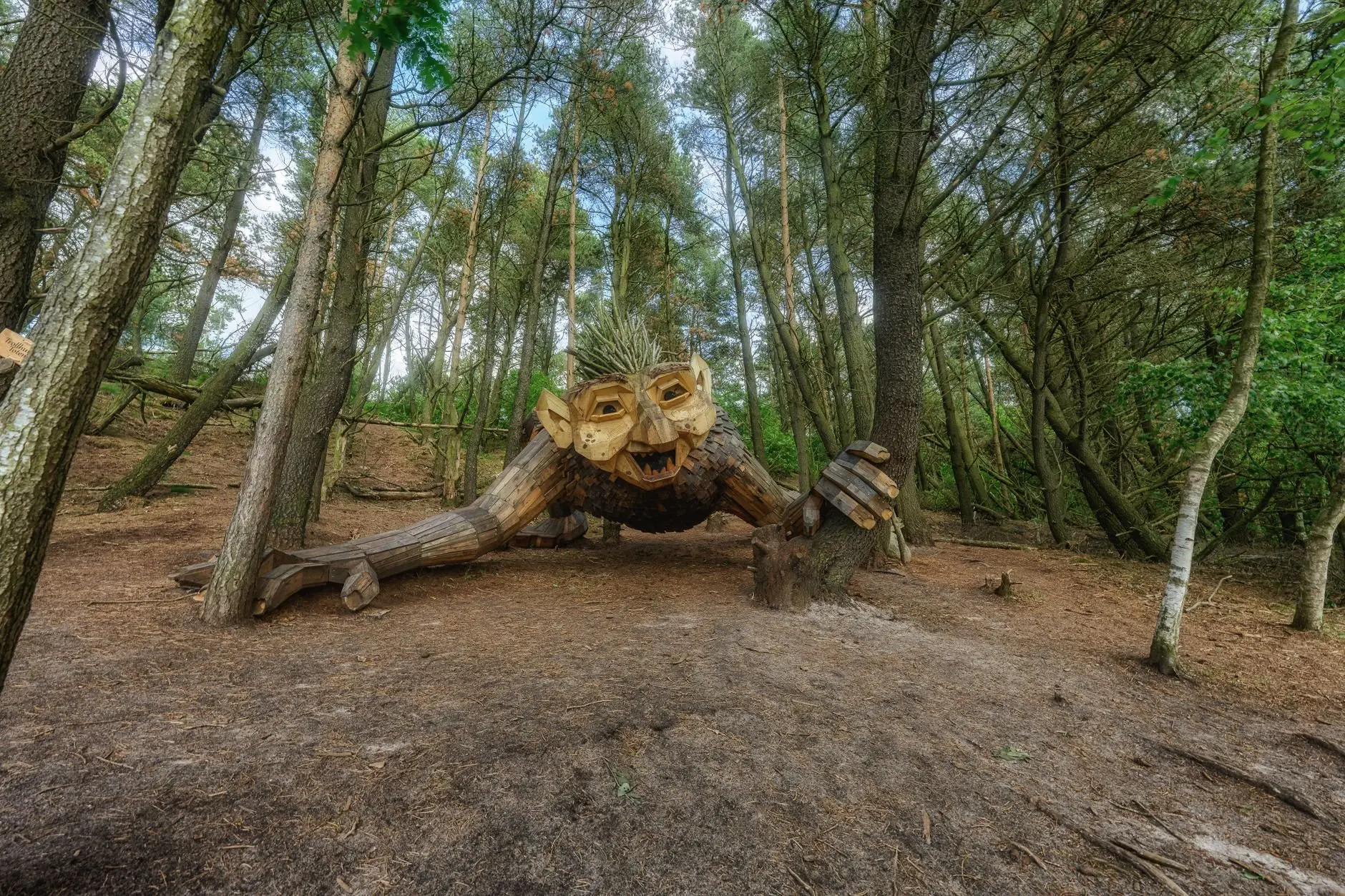
| Troll | Swedish folklore, named beside forest figures such as Skogsrå | Mischievous figure of folklore | General-purpose figure for trickster tales |
| Draken | Sweden | Dragon often shown guarding treasure, tied to tales of valor | Suits adventure and treasure stories |
| Elves and dwarves | Norse mythology | Elves are light, beautiful, demigod-like beings; dwarves are master craftspeople who live underground | Use for myth rather than local folk belief |
| Norns and Valkyries | Norse mythology | Norns are powerful female entities whose whims become the fate of all beings; Valkyries are female helping spirits of Odin who influenced battles and bore some of the dead to Valhalla | Use for fate, war and the afterlife in myth |
Creature descriptions in the table come from a Swedish folklore overview and the reference pages at norse-mythology.org.
Scandinavian folklore creatures sort most usefully by place: water has Näcken, the forest has Huldra and Skogsrå, the home has Tomte, and the underground has Vittra. Norse mythology adds elves, dwarves, Norns and Valkyries.
Folk tales reach us through retellings, so it helps to know what are primary sources in history before treating any single account as settled. The sections below start with the practical question of which creature belongs where, then move to how the tradition lives on.
Matching each creature to its landscape
The Swedish accounts tie almost every creature to a specific kind of place. That makes landscape a practical way to decide which figure to read about first, and it shows what each being was for.
Water: Näcken
Näcken is a water spirit that lurks in lakes, rivers and streams and is known for luring people in with enchanting violin music, according to a Swedish folklore guide. The danger is carried by a sound rather than a visible monster. If you want a creature whose story hinges on music and open water, begin here.
Forest: Huldra and Skogsrå
The Huldra is often described as a stunning woman with long, flowing hair and a hollowed back that recalls the trunk of an ancient tree, as the same guide puts it. She is not inherently malicious. Her actions often stem from loneliness and a wish for companionship, which makes her a more complicated figure than a simple forest monster.
The Skogsrå, guardian of the woods, adds a rule of conduct: a traveller must ask her permission before venturing further into the forest. Read together, the two figures present the woods as a place with a host and with manners, not as empty ground. Huldra suits readers drawn to character and ambiguity, while Skogsrå suits those interested in how stories shape behaviour outdoors.
Home: Tomte
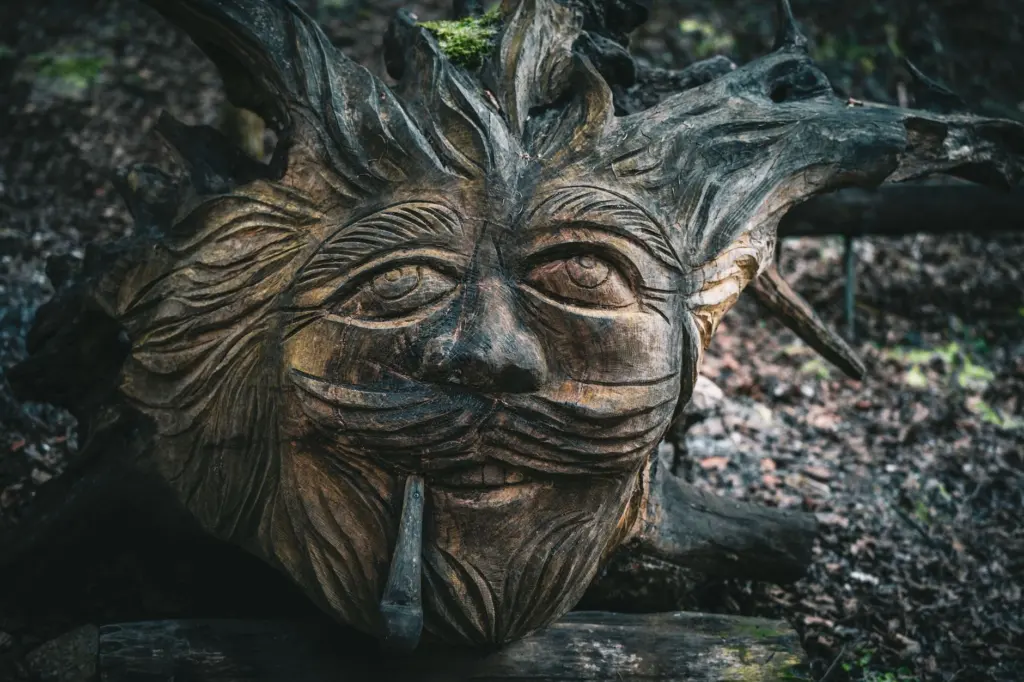
The Tomte is the household member of the cast. The Swedish guide describes a diminutive creature with a long white beard and a pointy red hat who guards the homestead, and it says every homestead has one. Where Näcken and Skogsrå belong to the outdoors, the Tomte belongs to the farmstead and the family, so it is the natural choice for anyone interested in domestic and seasonal custom.
Underground: Vittra and dwarves
The Vittra are invisible nature spirits believed to dwell in hidden realms beneath the earth. Norse mythology places the dwarves underground as well, as master craftspeople, according to norse-mythology.org. The shared setting should not blur the two: Vittra come from the Swedish folk tradition, dwarves from the mythological one.
Trolls and Draken: mischief and treasure
Trolls are described in the Swedish guide as the mischievous figures of folklore, and they are named in the same breath as the Skogsrå. Unlike Näcken or Tomte, the account gives them no single home, so assign a troll to a particular mountain, forest or stone only when a specific local tale does so. Their reliable trait is mischief.
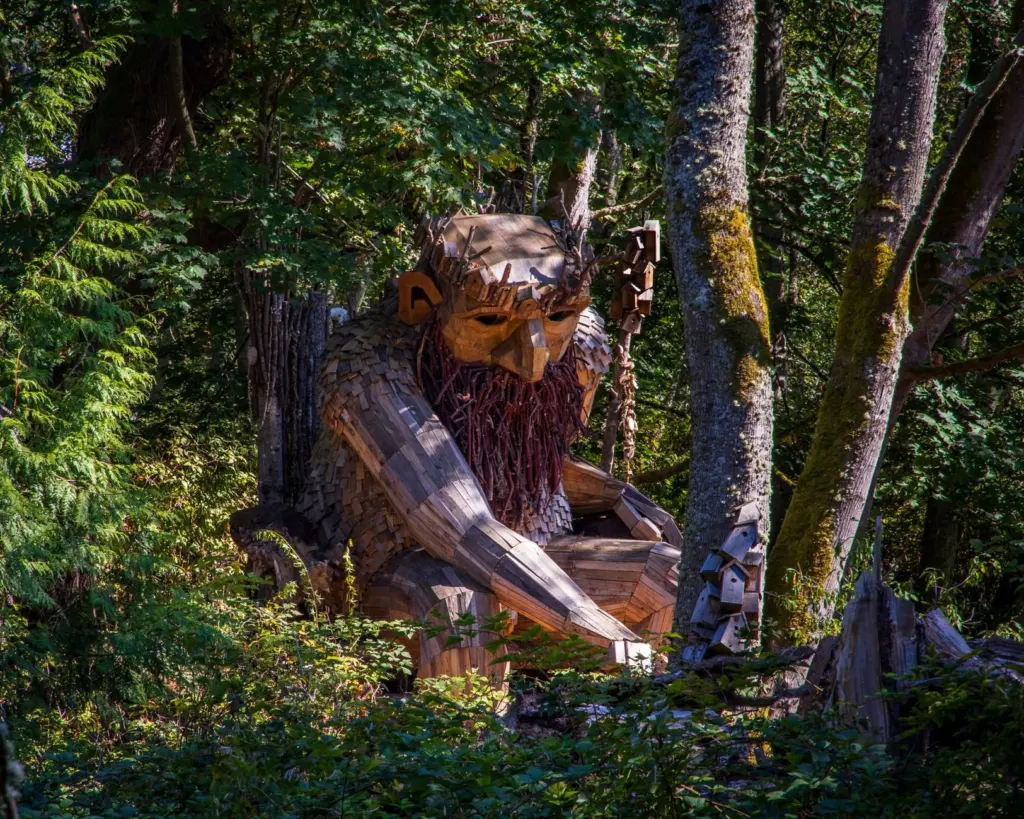
The Draken, Sweden’s dragon, is often depicted guarding treasure and belongs to tales of valor and adventure, per the Swedish folklore guide. Where the troll is a nuisance, the dragon is an obstacle and a test. That gives storytellers a clear choice: trolls for trickery, Draken for heroism.
Norse mythology’s wider cast
The mythological figures work on a different scale from the folk spirits. The Norns are described by norse-mythology.org as extremely powerful female entities whose whims become the fate of all other beings. Valkyries are female helping spirits of Odin who influenced the outcome of battles and bore some of the dead away. Elves are light, beautiful, demigod-like beings. A Norn governs fate for everyone, whereas a Tomte watches one farm and a Näcken one stretch of water.
Death and the underworld belong to the same mythology but deserve their own treatment; Hel In Norse Mythology: The Dark Goddess Who Rules The Underworld – Scanheritage covers the goddess who rules it. For the historical period in which Norse myths circulated, the Viking History Timeline: From Raids To Kingdoms — Key Events (c. 700–1100) – Scanheritage sets out the sequence of events.
Do these beliefs survive today?
Yes, as living custom and cultural reuse. The Swedish guide reports that families across Sweden still keep the age-old tradition of leaving a bowl of steaming porridge out for the Tomte on Christmas Eve. It also says Swedish folk music and traditional dances often draw inspiration from Huldra tales, and that in regions across Sweden Näcken is celebrated in festivals that blend tradition with artistic expression.
The visible forms are therefore domestic ritual, music and festival. Whether any individual holds the belief literally is a separate matter, and the practices do not depend on it. How you engage depends on what you want:
- For household custom: follow the Tomte, since the porridge tradition belongs to Christmas Eve in the home and is best understood through family practice.
- For music and dance: follow Huldra, whose tales inspire Swedish folk music and traditional dances.
- For festivals: follow Näcken, who is celebrated in regional festivals that mix tradition with artistic expression.
Using these accounts without blurring them
Most mistakes come from merging categories that the descriptions keep separate.
- Keep myth and folk belief apart. Norns, Valkyries, elves and dwarves come from Norse mythology, while Näcken, Tomte, Huldra, Skogsrå and Vittra are described as Swedish folklore. Mixing them produces a flattened picture of one uniform “Nordic” cast.
- Keep the detail Swedish. The fullest descriptions here are Swedish, so check a local source before carrying a Swedish description across a border.
- Match the creature to the job. Skogsrå is about permission, Näcken about the pull of music, Tomte about the guarded home. Choosing by function keeps comparisons honest.
Frequently asked questions
How can Sleipnir be recognised?
Sleipnir is identified by his eight legs, and he is described as the fastest horse in the nine realms, according to a guide to Norse magical animals.
Are these creatures always dangerous?
No. The Tomte guards homesteads, Valkyries are described as helping spirits of Odin, and elves are light, beautiful beings. Näcken, with its lure of violin music, is the clearer threat.
Are elves and dwarves the same as Vittra?
No. Elves and dwarves belong to Norse mythology, with dwarves living underground as master craftspeople. Vittra are invisible Swedish nature spirits in hidden realms beneath the earth. The settings overlap, but the traditions and descriptions differ.