

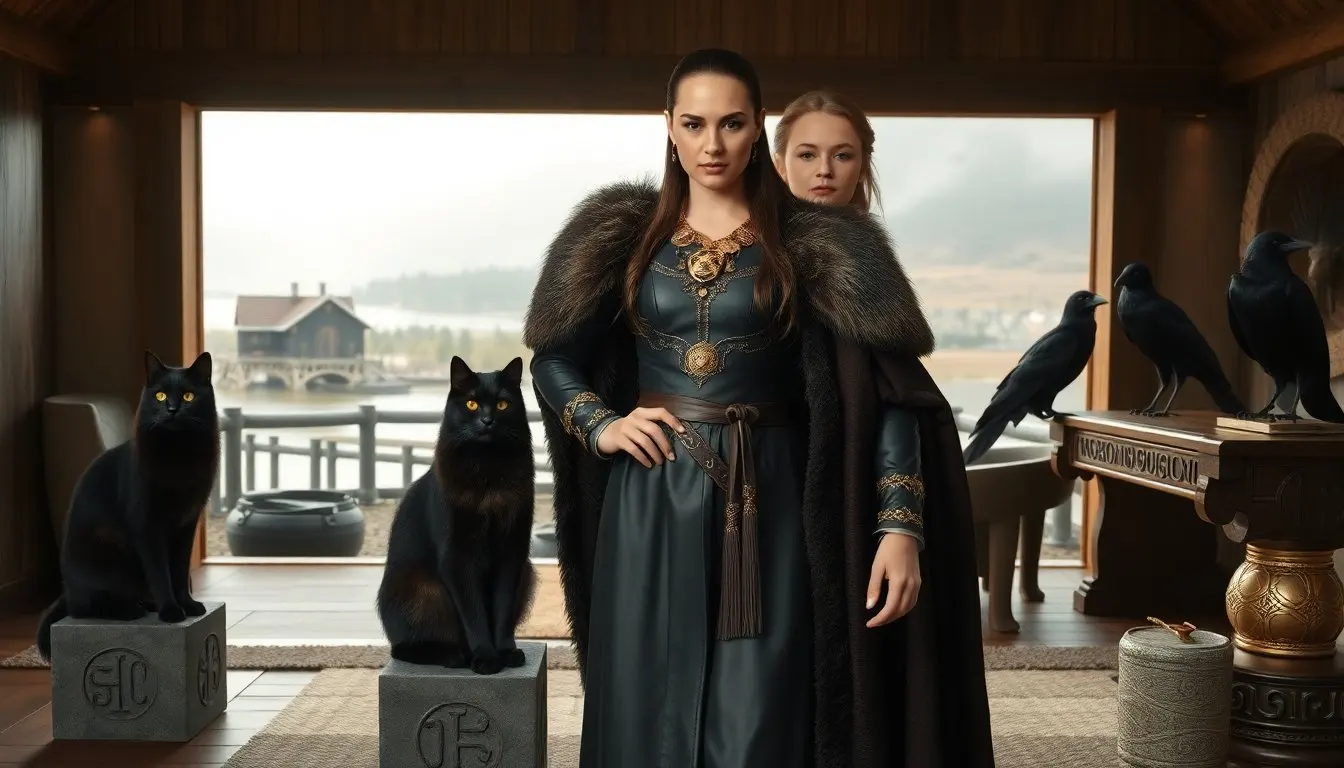
Who is Freya in Norse mythology is a common question among readers. She appears as a powerful goddess who rules love, war, and magic. Scholars link her to the Vanir tribe of gods. Poets describe her with beauty and force. This article states who Freya is, what she does, and why people honored her across Scandinavia.
Key Takeaways
- Freya is a powerful Vanir goddess in Norse mythology who governs love, war, and magic.
- She plays a crucial political role by bridging the Vanir and Æsir gods after their war through diplomacy and family ties.
- Freya is famously associated with the Brísingamen necklace, cats, and seiðr magic that shapes fate and alters events.
- Major myths highlight her influence on peace, war, justice, and love, showcasing her as both tender and fierce.
- Worship of Freya was widespread across Scandinavia, evidenced by archaeological finds and place names honoring her.
Who Freya Is: Role And Key Characteristics
Freya is a Vanir goddess. She governs love and desire. She also affects war outcomes. Poets call her both tender and fierce. She receives half of those who die in battle. She teaches seiðr, a form of magic that shapes fate. People depict her as generous and proud. She speaks with clear authority. She blends beauty with power in many stories.
Beyond those headline traits, Freya is a multifunctional deity whose attributes cross conventional categories. In surviving Norse sources—primarily the Prose Edda, the Poetic Edda, and skaldic verse—she appears as an interlocutor between gods and humans, a patron of fertility and erotic love, and a practitioner of magic often described as otherworldly. Her temperament in stories ranges from compassionate protector to an implacable seeker of restitution; this duality helps explain why she remained central in both aristocratic and popular religious contexts.
Origins, Family, And Relationship To The Vanir And Æsir
Freya descends from the Vanir line. She is the daughter of Njord. She has a brother named Freyr. She marries Óðr, who sails far and long. The Vanir exchange hostages with the Æsir after a war. She acts as a bridge between the two groups. The Æsir accept her and her kin. She keeps Vanir customs and Æsir ties in equal measure.
The Vanir–Æsir conflict and its resolution are central to Freya’s identity in the sagas and eddic poems. As a Vanir, Freya comes from a tradition associated with fertility, seafaring wealth, and prosperity; through marriage and political exchange she becomes integrated into the Æsir-focused narratives of power and honor. Her family connections—her father Njord, a sea- and wealth-associated god, and her brother Freyr, linked to fertility and kingship—help position Freya as a mediator whose loyalties and functions span households of gods. Her relationship with Óðr, elusive and frequently absent, is often used to explain her tears and longing, giving her a poignant human dimension in mythic accounts.
Attributes, Symbols, And Magical Items Associated With Freya
Freya uses several key items. She wears Brísingamen, a bright necklace prized by many. She rides a chariot pulled by two cats. She owns a cloak that changes shape and allows travel. She commands seiðr magic to foresee and alter events. Ravens and falcons appear near her in some tales. Artists show her with jewelry, animals, and a steady gaze. These symbols mark her authority over love and fate.
These attributes function as narrative shorthand in myth and as ritual markers in worship. Brísingamen, for example, is more than jewelry in the poems: it signals status, desire, and a connection to craftsmanship and the subterranean world of dwarves. The cat-drawn chariot and shape-changing cloak (sometimes described as a falcon cloak) emphasize mobility, liminality, and transformation—traits appropriate to a goddess who moves between realms. Seiðr, the magical practice she is most associated with, ties Freya to prophetic and manipulative arts often viewed ambiguously in medieval sources; the practice could be both prized and stigmatized, depending on context. Visual and material culture—pendants, figurines, and amulets—frequently pick up these motifs, suggesting how followers imagined and invoked her power.
Major Myths Involving Freya
Freya appears in many central myths. She negotiates peace between gods. She fights to recover lost treasures. She seeks justice when others wrong her. Her actions affect kings and commoners. Her choices shape war and peace in stories. Her quests often include travel, bargains, and sacrifice. These myths highlight her role as a mover of events and a figure who commands respect.
Several well-known narratives illustrate the range of her involvement: disputes over Brísingamen and its recovery, her role in the hostage exchange after the Vanir–Æsir war, and episodes in which she demands compensation or retribution for slights. In heroic and legendary cycles, Freya’s favor or anger can determine the success of warriors and the outcome of conflicts. Her interventions sometimes have legal overtones—upholding oaths, punishing deceit, or restoring rightful lovers—so she functions as a moral as well as supernatural authority in many stories preserved by medieval Icelandic authors and oral tradition.
The Vanir–Æsir Exchange And Freya’s Political Role
The Vanir and Æsir war ends with an exchange of hostages. Freya plays a key political part in this exchange. She helps make the peace terms acceptable. She uses her status to protect Vanir interests among the Æsir. She keeps ties with Njord and Freyr after the move. She acts with calm strength in council scenes. Her role shows that gods used diplomacy and family to hold power.
Read against the broader social backdrop, this political dimension reflects how Norse myth conceives of power as negotiated and familial rather than simply martial. Freya’s presence among the Æsir after the exchange suggests an intentional blending of divine functions: fertility and seafaring wealth were integrated into the Æsir world of kingship and warfare. Mythic sources portray her as someone whose influence in assemblies and councils is persuasive; she is both a representative of Vanir concerns and an independent actor who advances her own aims, making her an unusually multifaceted figure in the Norse pantheon.
The Necklace, Love Stories, And Freya’s Pursuit Of Justice
Brísingamen forms the heart of several tales. Freya values the necklace for its beauty and meaning. Dwarves craft Brísingamen, and Freya negotiates and pays for it. Thieves steal the necklace in some stories. Freya pursues recovery with determination. She also intervenes in human love disputes. She punishes false oaths and rewards sincere love. These stories show her as a guardian of desire and fairness.
The narratives around Brísingamen and Freya’s interpersonal interventions underline two recurring themes: the personal cost of desire and the public ramifications of private slights. When Freya pursues thieves or demands restitution, the stories emphasize her agency and the cultural weight of honor. Her involvement in human love affairs, not merely divine ones, illustrates how closely the sacred and the everyday were intertwined in Norse belief—people could call on gods like Freya to restore balance in matters of the heart as well as politics.
Worship, Cult Practices, And Archaeological Evidence
People worshiped Freya across Scandinavia. Offerings of jewelry and animals appear in graves and bogs. Place names include her name in Sweden and Norway. Poetic names and kennings link her to everyday life. Excavations show pendants and cat figurines that may honor her. Skaldic poetry preserves rituals and praise for her. Scholars read laws and charms to find her cult traces. These finds suggest that she held steady influence among common folk and elites.
Archaeological and onomastic evidence together paint a picture of a widely venerated goddess whose cult left tangible traces in material culture and landscape. Finds such as ornate jewelry in graves, votive deposits in wetlands, and amuletic imagery interpreted as feline or necklace motifs align with literary references and place-name survivals. Legal texts, medieval chronicles, and later folklore sometimes preserve echoes of rites associated with love, fertility, and divination that scholars cautiously link to Freya. While the exact rituals and organized priesthoods cannot be reconstructed in full, the convergence of multiple types of evidence indicates that devotion to Freya was a significant strand in pre-Christian Scandinavian religion.