

| Topic | Supported detail | Planning use |
|---|---|---|
| Identity | A fire giant from Muspelheim, the extreme southern region of heat and fire | Treat him as an elemental figure tied to one realm, not as a hero with a life story. |
| Ragnarok role | Leads his kin against the Aesir and Vanir and razes the world with a burning sword before it sinks into the sea | Use him as the marker of the cosmic ending when you summarise Ragnarok. |
| Personal fate | Kills the god Freyr and is slain by him in turn | Follow this duel when you need the named fight inside the larger catastrophe. |
| Poetic Edda | Völuspá stanza 52; Vafþrúðnismál stanzas 50-51 | Start here for the earliest, most compressed wording. |
| Prose Edda | Gylfaginning chapters 4 and 51, with brief mentions in chapters 18 and 75 | Use chapter 4 for his guard post at Muspelheim and chapter 51 for the Ragnarok sequence. |
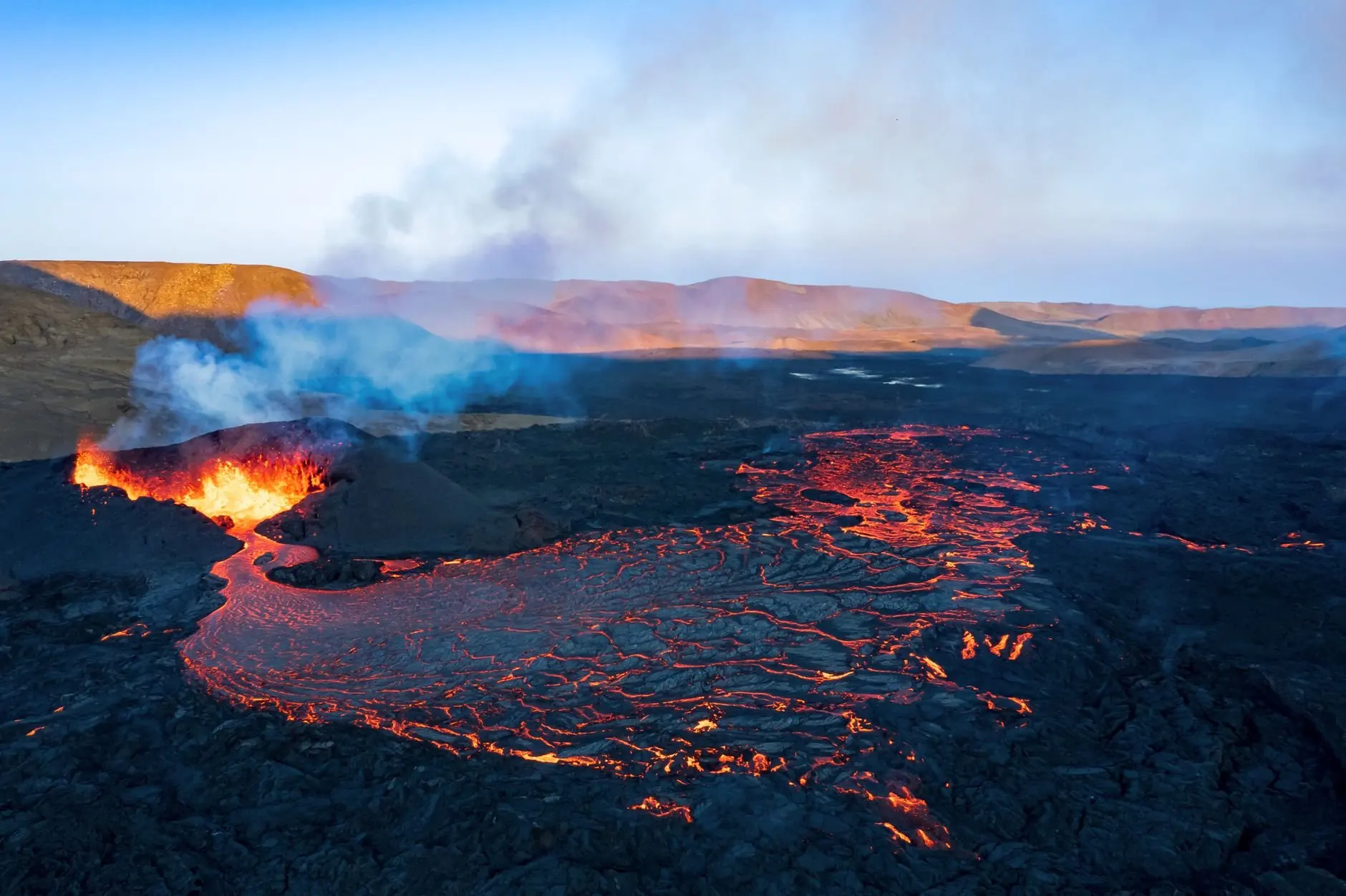
| Iceland | Surtshellir (volcanic tunnels) and Surtsey (volcanic island) are named after him; Rudolf Simek links him to volcanic fire | Treat the volcano link as interpretation layered on the texts, not as something the Eddas state. |
Figures and citations above draw on the Surt entry at norse-mythology.org and the Norse Spirit article on Surt.
Surtr norse mythology centres on a fire giant from Muspelheim who leads his kin against the Aesir and Vanir at Ragnarok and razes the world with a burning sword. Read him as the force that ends the world.
Because the Eddas are medieval written works, it helps to know what separates a source from a retelling. For that background, see this explanation of what are primary sources in history. The sections below start with what Surtr changes in the story, then move to the texts, the Icelandic landscape and the fire realm behind him.
What Surtr changes in the story of Ragnarok
Surtr turns Ragnarok from a battle into an ending. The Surt entry at norse-mythology.org describes Ragnarok as the destruction of the cosmos, and Surt is the figure who leads his kin into battle against the Aesir and Vanir gods. His burning sword is the instrument with which the world is razed before it sinks into the sea. In the Poetic Edda, according to Norse Spirit, he comes from the far south along with the flames, carrying a very bright sword.
That has practical consequences for anyone reading or retelling the myth:
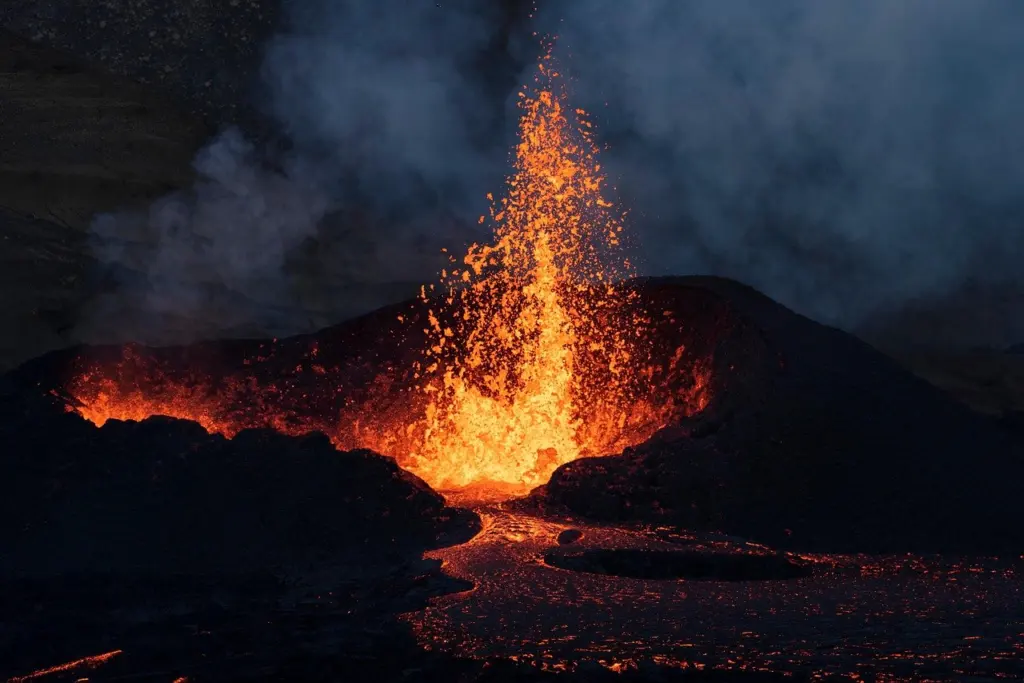
- Make the sword the central image. Both descriptions pair Surt with a blade of fire, and the destruction of the world is carried out through it. A summary that leaves out the sword loses the one attribute every account shares.
- Give Surtr a direction. He arrives from the south, the same extreme southern region as Muspelheim. This keeps the geography of the myth consistent and separates him from the other forces gathering at Ragnarok.
- Follow the Freyr duel for the personal stakes. Surt’s fate is to kill the god Freyr and be slain by him in turn. For the wider circle of gods around Freyr, the guide Norse Mythology Gods: A Compact Guide To Odin, Thor, Loki, Freyja & More (2026) – Scanheritage is the natural next read.
The choice that matters most is how far to push Surtr as a character. The supported material shows a fire giant with a clear route, a weapon and a single named opponent, so a faithful retelling stays close to those three points rather than inventing speeches or motives.
Which source to rely on for Surtr
Two medieval works carry Surtr, and they suit different jobs. The choice depends on whether you want the earliest wording or an ordered narrative.
- Poetic Edda for the earliest wording. The citations given for Surt are Völuspá stanza 52 and Vafþrúðnismál stanzas 50-51. Völuspá is a narrative poem that, according to Baidu Baike’s Edda entry, recounts the creation, destruction and rebirth of the world and humankind. The same entry says the Poetic Edda manuscript was found in 1643 and was probably written between the 9th and 13th centuries. In the Poetic Edda a völva discloses information to the god Odin, and Surt features in what she reveals. Readers who want that god’s wider story can turn to Odin: The All‑Father’s Secrets, Myths, and Legacy in Norse Mythology – Scanheritage.
- Prose Edda for the sequence. The Prose Edda was written by Snorri Sturluson (1178–1241) in the early 13th century and is an interpretive work on the Poetic Edda, per the same Baidu Baike entry. Gylfaginning chapter 4 has Surt’s sword of flame standing guard over Muspellsheim, the fiery realm, and chapter 51 recounts his actions at Ragnarok, with brief mentions in chapters 18 and 75, as Norse Spirit lays out. The norse-mythology.org citation likewise points to Gylfaginning 4 and 51.
- Modern summaries for orientation. Use them to find the passages quickly, then read the Edda text itself before quoting a detail. Summaries differ in how much they smooth over the gaps between poem and prose.
If you only have time for one passage, read Gylfaginning chapter 51 for the fullest Ragnarok account, then Völuspá stanza 52 to see how much shorter and sharper the poem is. The prose writer was interpreting the older poetry, so differences in detail between them reflect two layers of telling, not necessarily two competing myths.
Surtr and the Icelandic volcanic landscape
Surtr has been linked to volcanoes by modern scholarship and by place names, but the Eddas themselves describe fire and a sword, not an eruption. Historian Rudolf Simek has proposed that Surt corresponds to the volcanic fire of the Underworld, according to norse-mythology.org. The same page notes that, given the sheer amount of volcanic activity that characterises Iceland, such imagery would have resonated with early Icelanders.
The landscape also preserves his name. Norse Spirit reports that Surtshellir, a group of volcanic tunnels in western Iceland, was named after Surt, and that Surtsey, a volcanic island in an archipelago south of Iceland, means the island of Surt.
- Use the Simek proposal as a lens. It helps explain why a fire giant carries such weight in an Icelandic-recorded mythology, but it remains a proposed correspondence.
- Read the place names as afterlife, not origin. Naming a tunnel system or an island after Surt shows the figure was familiar enough to label volcanic features. It does not show that volcanoes produced the myth.
- Keep text and landscape apart in your own writing. State what the Eddas say about the sword and the south first, then add the volcanic reading as interpretation.
Muspelheim and the fire-and-ice setting
Surtr belongs to Muspelheim, and that realm explains both his arrival and his weapon. He arrives from Muspelheim, the extreme southern region of heat and fire, according to norse-mythology.org, and the Prose Edda has his sword of flame guarding that fiery realm, as Norse Spirit notes.
Muspelheim also has a role at the beginning of the cosmos. Viking Styles repeats the tradition that the giant Ymir was born when fire from Muspelheim met ice from Niflheim. Read together, the two ideas place fire at both ends of the story: it helps make the first living being, and Surtr later brings the world down with it. That is a reading across passages rather than a claim any single text makes, so present it as a pattern, not as a doctrine.
Frequently asked questions
Is Surt the same figure as Surtr?
Yes. Surt is the spelling used by several English-language sources, and this guide uses Surtr for the same fire giant of Muspelheim.
Does anyone survive Surtr’s fire?
Yes. According to Norse Spirit, only the human couple Líf and Lífþrasir escape the fire and go on to repopulate the Earth.
Who was Freyr, the god Surtr is fated to fight?
Freyr was the son of Njord and the brother of Freya. Viking Styles says he was originally of the Vanir but was accepted among the Aesir, and that he was often associated with peace, pleasure and a good harvest.
How many poems make up the Poetic Edda?
The Poetic Edda comprises 35 poems, divided into 14 mythological poems and 21 heroic poems, according to Baidu Baike.