

| Evidence | What is attested | Planning use |
|---|---|---|
| Hide costume | Berserkers wore ritual costume from the hide of a totem animal: bear for berserkers, wolf for úlfhéðnar | Treat bear and wolf as the core animal motifs |
| Torslunda plates | Bronze dies for helmet decoration from Öland, Sweden (500s–600s), showing a warrior in a wolf skin beside a weapon dancer | Best real image for a wolf-warrior design |
| Haraldskvæði | Poem likely written around 900 that describes berserkers graphically | Cite it for early textual evidence |
| Ynglinga Saga 6 | Snorri Sturluson describes Odin’s warriors going armorless into battle, as crazed as dogs or wolves | Link berserkers to Odin through this text, not through a rune or emblem |
| Object types | Runestones, tapestries, coins and pendants carry animal-warrior imagery | Look for these object types when checking a design’s roots |
| Mushroom rage | No historical evidence, according to Jackson Crawford | Do not present it as part of berserker identity |
Figures and descriptions above draw on Norse Mythology for Smart People and the Asgard Alaska overview of berserker evidence.
Berserker viking symbols rest on animal imagery, chiefly bear and wolf, attested in poems, sagas and a few objects. Anything beyond that, such as mushroom-fuelled rage, lacks historical support.
Most accounts of berserkers are retellings of medieval texts and finds, so it helps to know what are primary sources in history before trusting a symbol sold as authentic.
Practical decisions for using berserker imagery
The evidence supports a narrow set of motifs, and that narrowness is the main guide when choosing a design, writing a caption or building a display. Strong claims need an animal hide, a named object or a named text behind them.
- Choose bear or wolf imagery for a defensible design. The hide of a totem animal is the attested costume, so a bear or wolf figure has a documented basis in a way an invented sigil does not.
- Prefer the Torslunda wolf-skin warrior when you need a real model. It is a physical object from Öland, not a modern drawing, and it is the clearest visual match for the wolf-wearing fighters the texts call úlfhéðnar.
- Tie Odin to berserkers through frenzy, not insignia. Odin is described as the giver of óðr, a word covering ecstasy, fury and inspiration, which explains the connection without needing a particular mark.
- Skip drug-related imagery. The Eddas and sagas never explicitly mention drugs or potions for berserkers, so mushroom symbols add a modern idea to an ancient subject.
- Label reconstructions as reconstructions. If a design cannot be traced to a find or text, say plainly that it is a modern interpretation.
The sections below set out the finds and texts that justify those choices.
Attested animal imagery
Bear and wolf: what the motifs mean
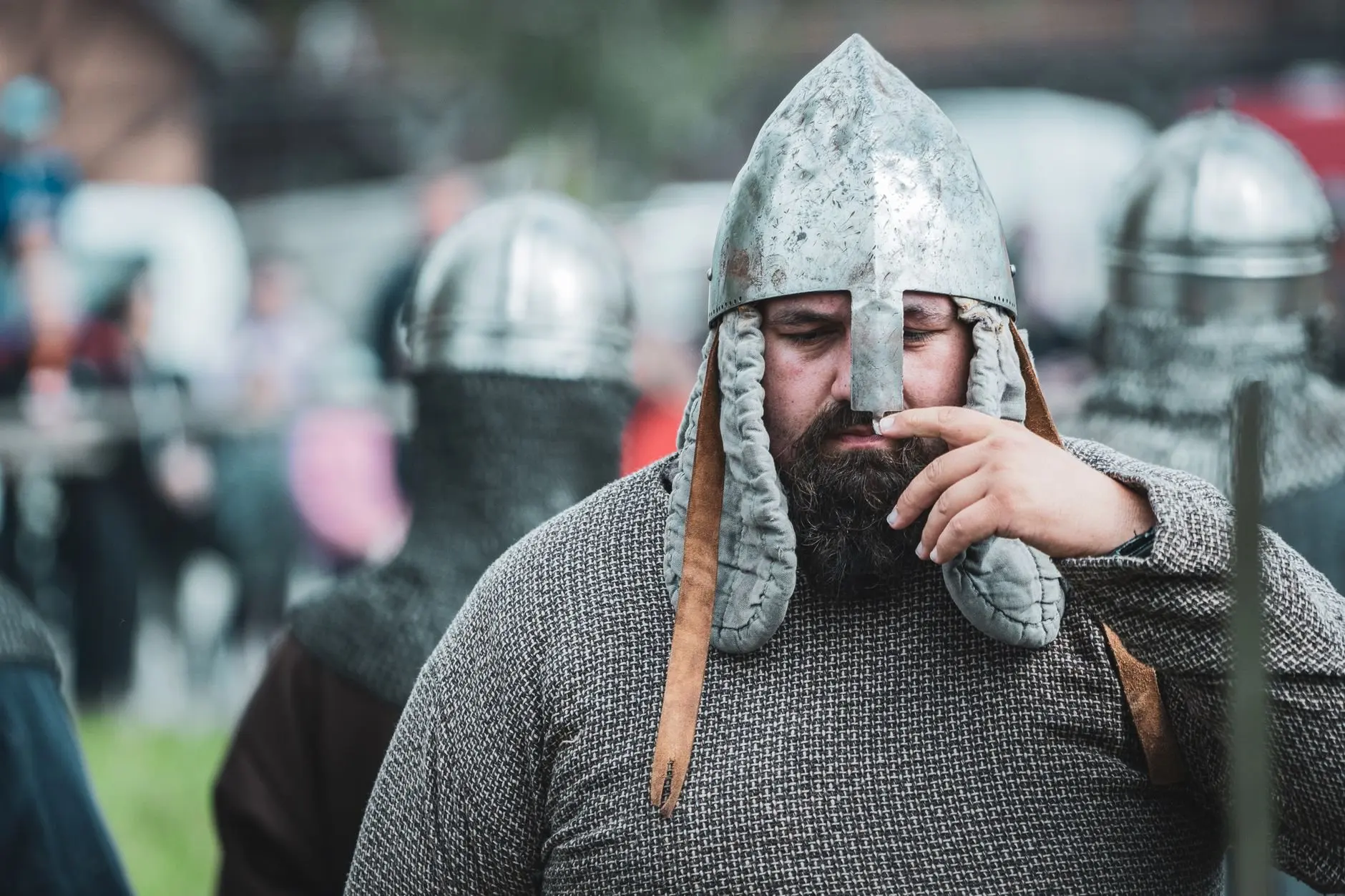
Bear and wolf motifs mark a warrior who took on an animal’s identity. According to Norse Mythology for Smart People, berserkers and úlfhéðnar dressed in a ritual costume made from the hide of the totem animal, with the bear for berserkers and the wolf for úlfhéðnar. The Old Norse word berserkr itself carries the idea. English borrowed it directly, and one popular history notes a play on words, “bear shirt” or “bare shirt”, that works the same way in English and Old Norse.
That double reading matters for interpretation. The bear reading fits the hide costume, while the “bare” reading fits the account of fighters who went into battle without armor. Both readings are discussed for the word, and neither turns the word into a drawn emblem.
The wolf side is documented in saga prose too. Vatnsdæla saga describes berserkers who wore wolf skins, which supports the link between wolves and the term, though the saga does not describe any drawn emblem.
Torslunda plates and weapon dancers
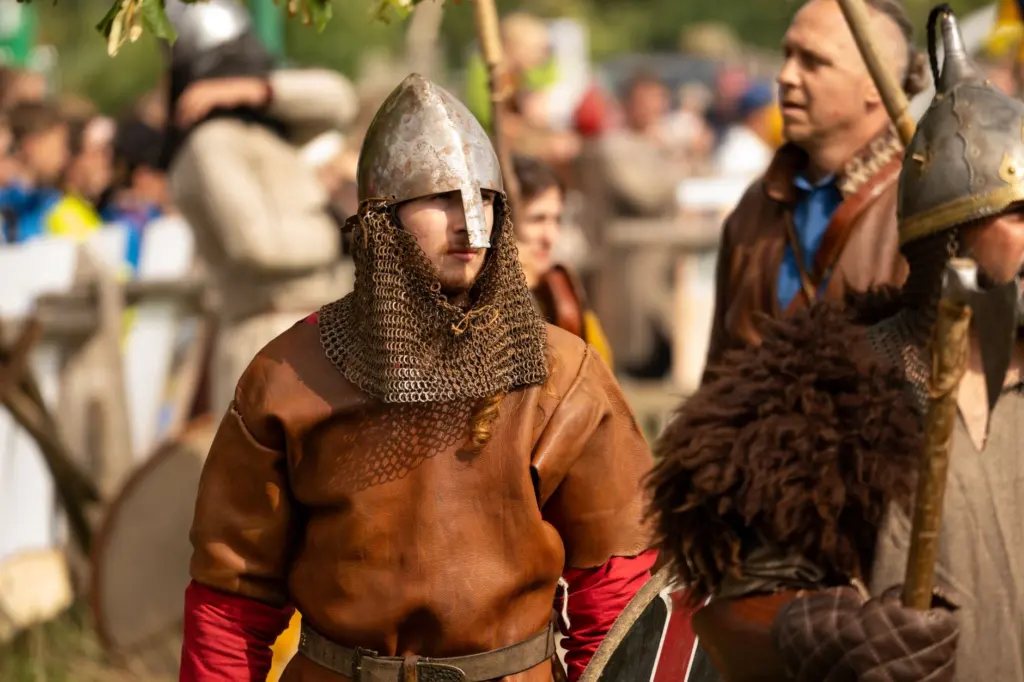
The Torslunda plates are the most useful physical evidence for the topic. They are bronze dies for helmet decoration found on Öland, Sweden, and dated to the 500s–600s, according to Asgard Alaska. A warrior in a wolf skin stands beside a weapon dancer on the original. Norse Mythology for Smart People describes the weapon-dancer plate as Migration Period bronze from Öland.
The Migration Period label makes the plates an earlier Scandinavian precedent rather than a Viking Age record, so describe them as evidence of a long-standing wolf-warrior image, not as proof of any specific Viking raider. The same overview states that archaeological evidence includes depictions of weapon dancers, as animal-skin or naked male figures holding swords and spears.
Other object types
Animal-warrior imagery turns up on several kinds of object. Runestones, tapestries, coins and pendants all have depictions of animal warriors, so the motif was not confined to one medium. A later medieval carving, a Lewis chess rook dated c. 1150–1200, shows a berserker biting his shield. The popular account of the Isle of Lewis set describes the figure as having mad eyes, a padded coat and a helmet. Use it as a medieval depiction of the berserker idea, not as a Viking Age grave find.
Textual references to berserkers
The written record gives the clearest picture of who berserkers were thought to be, and it comes from several centuries and genres. Court poetry is the earliest layer. A court poem from about 900 describes berserkers, and the Haraldskvæði, likely written around that time according to Neil Price as cited by Asgard Alaska, describes a group of them graphically. Hrafnsmol is described in a popular history as one of the oldest known poems mentioning berserkers.
Prose sources add detail. In Ynglinga Saga chapter 6, in Heimskringla, Snorri Sturluson says Odin’s men went armor-less into battle and were as crazed as dogs or wolves, as quoted by Norse Mythology for Smart People. Snorri wrote later than the poems, so his account is a retrospective literary description. Outside Scandinavia, a Byzantine account from the tenth century, attributed to Constantine the Purple-Born, describes Varangian Vikings dancing in animal skins and masks before battle. The same popular history also mentions a Christian monk who watched the Vikings from the walls of Paris during Rollo’s 885 siege and described a berserker-like frenzy.
Law texts show how communities viewed such behaviour: the Icelandic law code Grágás punished anyone who “went berserk” with outlawry. That is a reason not to romanticise berserkers as an honoured, uniformed order.
Odin, frenzy and the warrior background
Berserkers are tied to Odin through the concept of óðr. Odin is the Allfather of the northern gods and the giver of óðr, which the same source glosses as ecstasy, fury and inspiration. Warrior-poets such as Egill Skallagrímsson and Starkaðr are also linked to Odin’s men, which suggests the battle-frenzy tradition overlapped with verse-making.
Trance practices are attributed to pre-Christian Germanic warrior-shamans, including fasting, exposure to extreme heat, and ceremonial “weapons dances”. These are descriptions of ritual technique, not drawn symbols, which is why the weapon dancer on the Torslunda plate matters: it is an image of the dance itself.
Modern symbols and claims that are invented
The clearest modern inventions are behavioural claims that cling to the imagery. The popular idea that berserkers fought in a mushroom-induced rage has no historical support: Jackson Crawford, as reported by Asgard Alaska, finds no historical evidence for it. The Eddas and sagas never explicitly mention drugs or potions in relation to berserkers. Botanists and Norse scholars also note that Amanita muscaria has side effects, including nausea and a delayed onset, that would hinder fighting, as reported in a popular history.
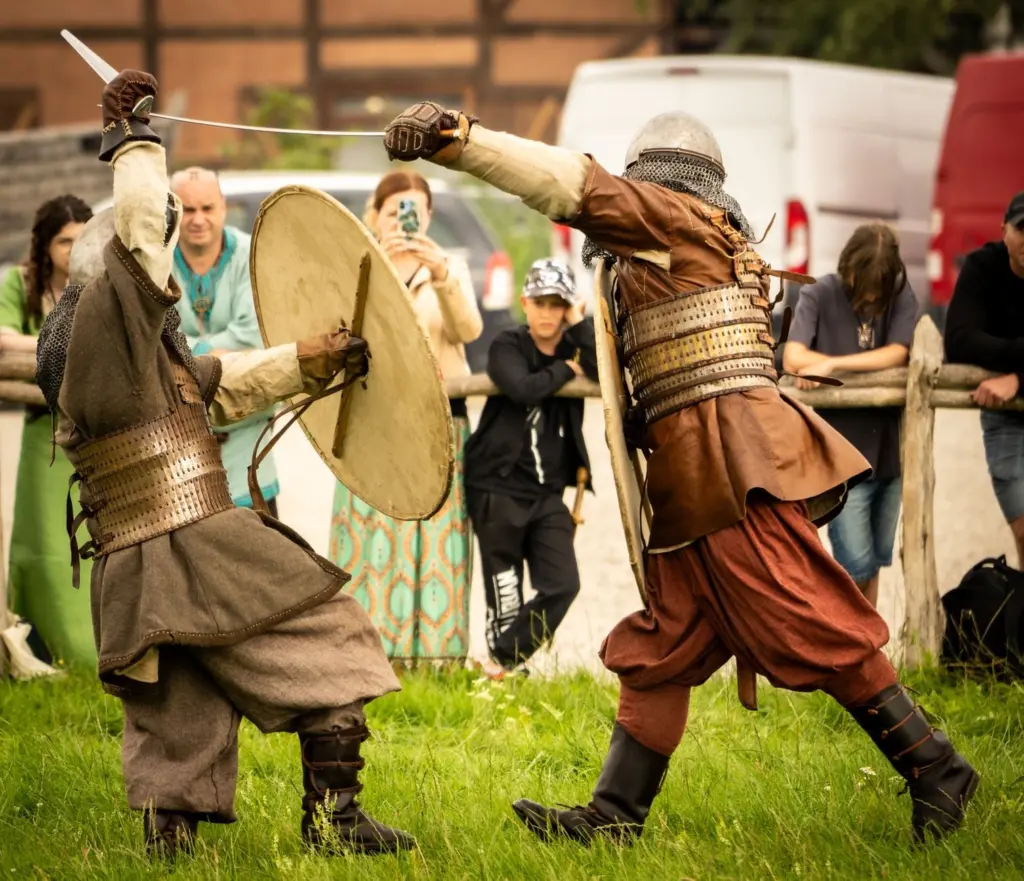
A second pitfall is attaching the label to a famous episode. The Anglo-Saxon Chronicle never calls the lone fighter at Stamford Bridge in 1066 a berserker, so that story should not be used as berserker evidence.
The same caution applies to symbols sold today. A rune-style logo, a mushroom emblem or a branded “berserker mark” is a modern design unless it can be traced to an object or text discussed above.
Checking a design before you use it
- Ask which object it comes from. A Torslunda plate, a runestone or a pendant is a traceable source; a catalogue description is not.
- Check the date. The Torslunda plates are dated to the 500s–600s and the Lewis rook to about 1150–1200, so neither is a record of a single Viking Age practice.
- Separate the text from the image. The poems and Ynglinga Saga describe behaviour and costume, so a drawn emblem presented as their illustration has been added later.
- Flag anything involving drugs. That motif has no textual footing.
For the wider setting these warriors fit into, see Jotunn In Norse Mythology: Giants, Origins, And Their Role In The Cosmic Drama (2026 Guide) – Scanheritage and Thor: God Of Thunder — Myths, Powers, And His Role In Norse Cosmology (2026 Guide) – Scanheritage.
Frequently asked questions
Did berserkers have their own symbol?
The evidence points to animal-hide costume and weapon-dancer imagery rather than a single emblem. Bear and wolf are the animals tied to berserkers and úlfhéðnar, and Odin is the god linked to their frenzy.
Who were the úlfhéðnar?
They were the wolf-hide counterpart of berserkers, wearing the hide of the totem animal. Vatnsdæla saga describes berserkers wearing wolf skins, and the Torslunda plate shows a warrior in a wolf skin.
Does the word berserkr mean bear shirt?
That reading is widely given, alongside “bare shirt”. The wordplay works in both English and Old Norse, and English borrowed the Old Norse word directly.
Were berserkers fuelled by mushrooms?
No supported evidence says so. The Eddas and sagas never explicitly mention drugs for berserkers, and Jackson Crawford finds no historical evidence for the claim.