

| Topic | What the myths show | Planning use |
|---|---|---|
| The word “giant” | A poor English translation that unifies several Old Norse terms (jǫtunn, þurs, risi); no clear size threshold applies | Read jötnar as a category of beings, not as a measure of height |
| Kinship with gods | The gods repeatedly fight jötnar but are also descended from them | Do not assume every giant is an enemy |
| Jötunheim | The home of the jötnar, whose name means giant-home | Treat it as a setting for halls, meals, contests and disputes |
| Named giants | Ymir, Þrymr and Útgarða-Loki each anchor a distinct kind of story | Start with these three before wider reading |
| Surviving texts | Most accounts were written down in Iceland after the conversion to Christianity | Weigh the Edda texts as late records of older traditions |
These points draw on a Spoken Past overview of Jötunheim and a Norse mythology essay on the word jötunn.
In jotunn norse mythology, a jötunn (plural jötnar) is a being usually translated “giant”, but the category covers monstrous and god-like figures alike, and the gods both fight them and descend from them.
Because the Edda texts were written down late, it helps to know what are primary sources in history before judging them. For the wider Viking Age setting, see Viking History Timeline: From Raids To Kingdoms — Key Events (c. 700–1100) – Scanheritage.
What the kinship of gods and giants changes
No, jötnar are not always enemies of the gods. The relationship runs through conflict and family at once, so a single story of a god fighting a giant tells only part of the picture. According to the Spoken Past account, the gods repeatedly fight jötnar, but the gods are also descended from them. The practical consequences for a reader are these:
- Do not default to “heroes versus monsters”. A fight between Thor, one of the Æsir, and a giant is one episode in a longer relationship, not a statement that giants are simply evil.
- Look for family ties first. Borr married Bestla, a daughter of the jötunn Bölþorn, which links Odin, Vili and Vé to the giants through their mother. The gods and the jötnar therefore share a family history from the outset.
- Expect a wide range of characters. Some jötnar are immense or monstrous, while others look and behave much like the gods. A giant who feasts in a hall is as typical as one who threatens the world.
- Remember what the gods’ world is made of. Odin and his brothers killed the giant Ymir and made the world from his body, with earth from flesh, seas from blood and mountains from bones. The cosmos the Æsir defend rests on a giant’s death.
This is why the angle of giants as kin and rivals of the gods explains more than a simple enemy model. The named figures below show how that works in practice.
Which giants matter most
Four giants cover most of what a newcomer needs: Ymir for creation, Þrymr for a famous theft, Útgarða-Loki for contests of strength and cunning, and Surtr for the end of the world. Each shows a different side of the jötnar.
Ymir, the first frost-giant
Ymir emerged from the meeting of rime and warmth in Ginnungagap, as the first great being of the frost-giant line. After the gods killed him, they shaped the world from his body. The Spoken Past overview notes that in Grímnismál 40–41 the gods use Ymir’s eyebrows to form Midgard. Snorri’s Gylfaginning adds a flood of Ymir’s blood that destroys the frost-giants apart from Bergelmir and his household, so the giant line continues through a survivor. Ymir is the best example of how the myths tie giants to the physical world.
Þrymr (Thrym), owner of a wedding hall
Þrymr is remembered as the thief of Thor’s hammer, and he owns a hall large enough for a wedding feast. The hall matters as much as the theft. It shows a giant who hosts and bargains from a settled household, not a creature that only raids. Read Þrymr when you want a story where the giants’ social world is visible.
Útgarða-Loki and his fortress
Útgarða-Loki presides over a fortress where contests are staged before a company of onlookers. His story suits readers interested in how the myths use giants to test the gods, since the setting is a public challenge, not a battlefield. Pair him with Þrymr to see two different giant courts.
Surtr and the fated end
Surtr is a giant foretold to play a critical role in the fated end of the world, as described by Ancient Origins. He completes a pattern that begins with Ymir. A giant’s body supplies the world at the start, and a giant is expected to figure in its ending.
Jötunheim as a setting
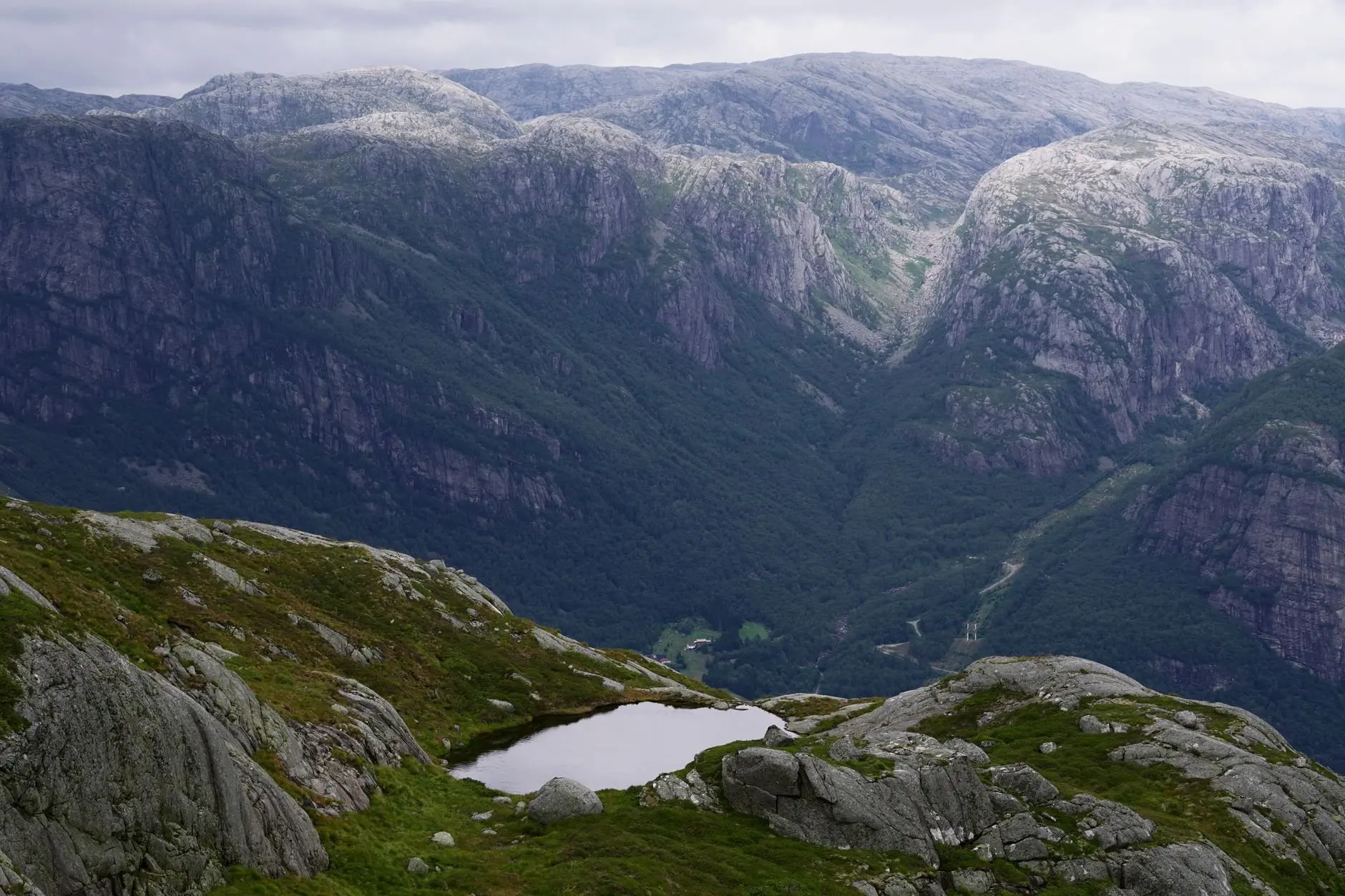
Jötunheim is the home of the jötnar, the beings usually called giants in Norse mythology. Its name is built from jötunn, plural jötnar, and heimr, meaning a home or world, so it translates roughly as giant-home. Treat it as a place with structure, not a blank wilderness, and the stories read more clearly.
The Spoken Past overview points to the details that give the realm texture:
- Halls and social life. Halls give the jötnar settings for meetings, meals, challenges and disputes. These are the details that make Jötunheim more than an empty wilderness.
- A boundary river. Vafþrúðnismál 15–16 names the river Ífingr as a boundary, said to remain open and never freeze.
- Eastern waters. In Hymiskviða, the jötunn Hymir lives beyond the Élivágar.
- Different routes in. Eldar Heide’s 2014 study proposes that otherworlds can be approached through different supernatural passages, which is a useful reminder that Jötunheim need not be a single fixed location on a map.
When you read a quest into Jötunheim, ask which hall, river or boundary the poem names. The answer usually explains what the visitor is being tested on.
How the Edda sources shape the picture
Nearly everything about the jötnar comes from texts written after the stories began, so the Edda citations carry a condition. Most surviving accounts were written down in Iceland after the conversion to Christianity. The famous Codex Regius collection was written around 1270, centuries after the traditions it records, according to the Spoken Past overview. Snorri Sturluson’s Prose Edda was assembled in the 13th century by this Icelander, as the Mimisbrunnr guide to Edda translations notes.
Three practical consequences follow for anyone citing the giants:
- Cite the poem or section, not just “the myths”. Naming Grímnismál, Vafþrúðnismál, Hymiskviða or Gylfaginning shows which text supports a claim and keeps the Poetic Edda and Snorri’s prose apart.
- Choose a full translation for the Prose Edda. The Mimisbrunnr guide singles out Anthony Faulkes’s 1987 version as the only English translation that approaches completeness, which makes it the safer choice for checking Snorri’s giant material.
- Expect Christian framing. Christianization did not result in the stamping out of every extant pagan memory, but stories were reframed within a Christian narrative, according to the essay on the word jötunn. A giant episode may therefore reflect both older tradition and the writer’s own setting.
What the word jötunn covers
A jötunn is a member of the group of beings that English calls giants, and the label fits only loosely. The word “giant” is a poor English translation designed to unify a few disparate Old Norse terms, among them jǫtunn, þurs and risi. Using “giant” for all of them hides distinctions the Old Norse words may carry.
Size is a weak test. The same essay says there is no clear threshold for how large an individual must be to be called a giant, and risar are often only a few feet taller than humans. This agrees with the picture of immense, monstrous jötnar alongside others who look and behave much like the gods. When you meet the word in a translation, the better question is who the figure is related to and where they live, not how tall they are.
That link between family and place explains why Jötunheim and the god-giant marriages matter more than any physical description. A jötunn is defined by belonging to a lineage and a realm, which is also why Ymir, the first of the frost-giant line, serves as the starting point for the rest.
Where to go next
If you want to follow Norse imagery beyond the myths, Berserker Viking Symbols: Origins, Meanings, and Modern Uses (2026 Guide) – Scanheritage looks at symbols associated with Viking warriors. Read it alongside this article to separate mythic figures from the later symbols built around Norse culture.
Frequently asked questions
Is a jötunn the same as a giant?
Only roughly. “Giant” is a convenient English word covering several Old Norse terms, and a jötunn is not defined by great size.
Where do the jötnar live?
Their homeland is Jötunheim, a name meaning giant-home. Individual giants such as Hymir are placed in particular spots, for example beyond the Élivágar in Hymiskviða.
Why did the gods kill Ymir?
The Edda material presented here says Odin and his brothers killed Ymir and made the world from his body. It describes the act as the creation of the world and does not frame it as a simple feud.
Do the Edda texts record original pagan belief exactly?
Not exactly. They were written down in Iceland after the conversion, and Christianization reframed some stories without erasing pagan memory, so they are late records of older traditions.