

A visitor who expects small talk with strangers in Norway often meets silence instead. Norwegian culture and traditions favour modesty, informality and time outdoors, so reserve usually signals comfort, not coldness.
The customs below are easy to misread, and each section corrects one common assumption. For the wider picture of how to plan a cultural heritage trip, start with the travel planning guide.
Everyday customs visitors often misread
Most first-time confusion comes from reading Norwegian restraint as unfriendliness. According to the Norway culture guide at elon.io, small talk with strangers is minimal, silence is comfortable and people do not gush. The restraint is a different idea of politeness. A short, sincere exchange fits better than an effusive one.
| Common assumption | What the evidence supports | Planning use |
|---|---|---|
| Quiet strangers are unfriendly | Small talk with strangers is minimal and silence is comfortable | Do not fill pauses; a brief greeting is enough |
| Bosses and elders need formal address | Everyone says du to everyone, including boss, professor, stranger and prime minister | Use the informal form without worrying about disrespect |
| Shoes can stay on indoors | Shoes come off at the door in homes, almost without exception | Expect to remove shoes whenever you enter a private home |
| National celebrations mean military parades | The national day is marked with children’s processions, not military parades | Plan for a family-centred event, not a show of force |
The customs in this table come from the elon.io Norway culture guide.
These are general defaults, not a script for every household. Their practical value is that they let you read a situation correctly. Silence at a shared table or an unceremonious first name from a senior person is normal here. It is not a snub.
- Greet briefly, then let quiet stand. Pressing a reserved stranger for conversation is more likely to feel intrusive than welcoming.
- Use du by default. Because the informal form is used across every rank, formal titles can sound stiff.
- Treat the doorway as a boundary. Take your shoes off before stepping further into a home.
- Keep praise measured. Gushing compliments sit awkwardly where people do not gush themselves.
Janteloven: a social code, not a law
Janteloven is not a legal rule despite the “-loven” ending. It is an unwritten social code against standing out. The elon.io guide renders it roughly as du skal ikke tro at du er noe, or “you are not to think you are anything special”. The Dano-Norwegian author Aksel Sandemose coined the term, according to the same guide.
The idea fits with the habit of saying du to everyone. Neither is a written regulation, and both flatten the visible differences between people. Janteloven describes what is discouraged, which is boasting and putting yourself above others. It does not mean Norwegians have no ambition or pride.
For a visitor, the sensible approach is to understate. Describe your achievements plainly if asked, and skip the self-promotion. Do not mistake that modesty in others for a lack of accomplishment.
Festivals and the seasonal calendar
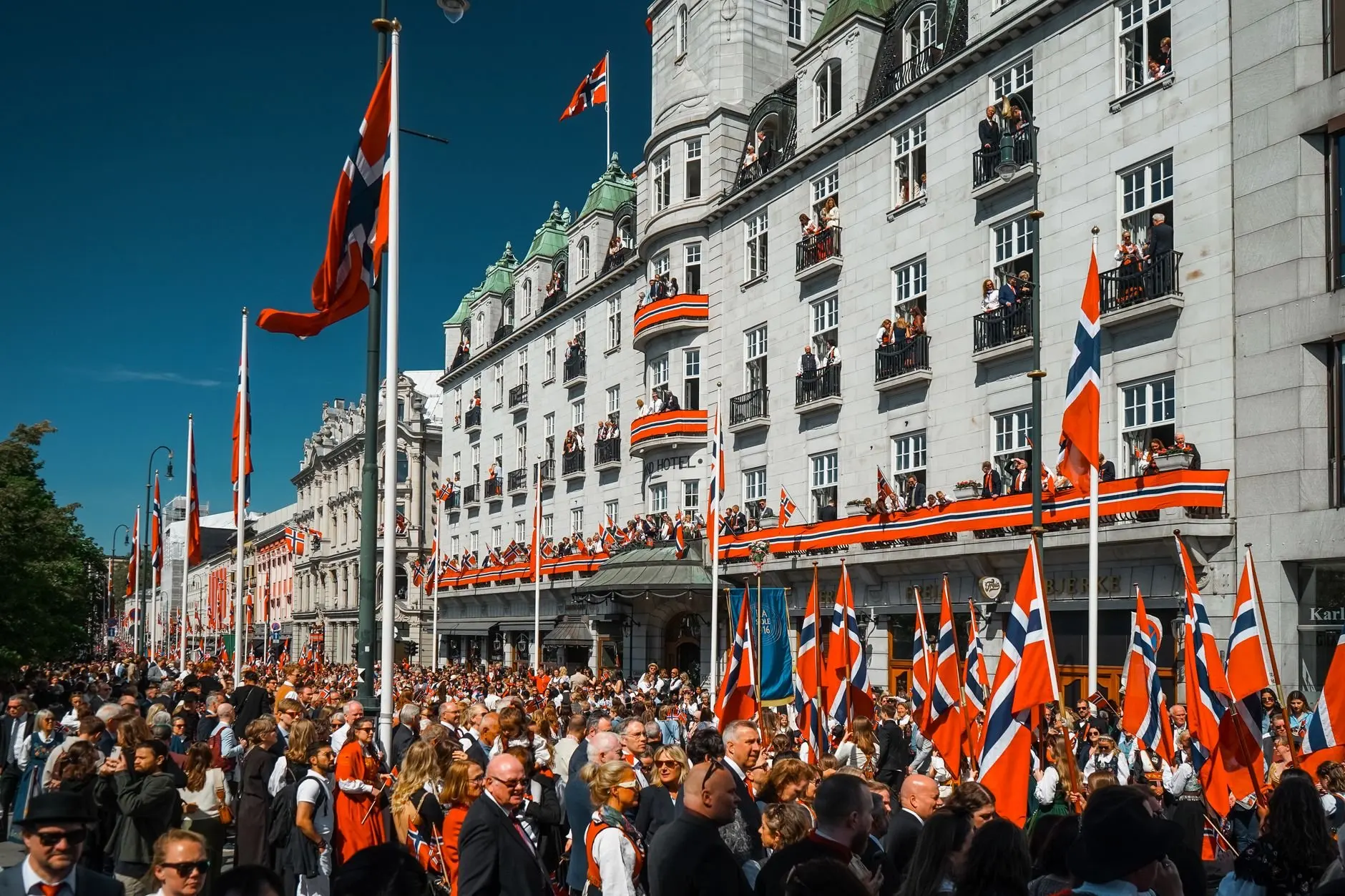
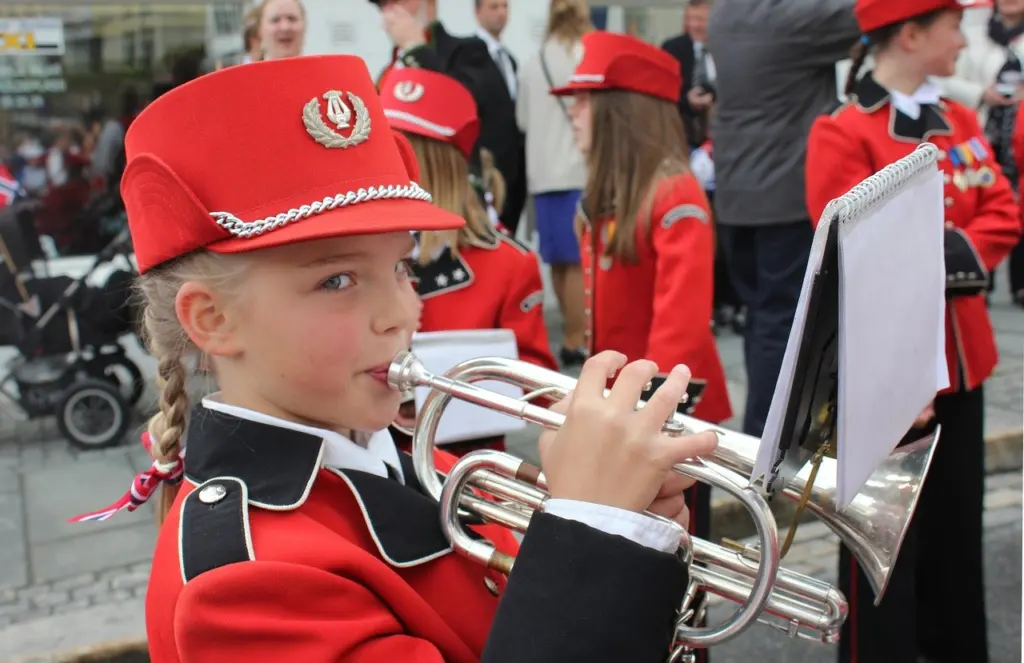
The best-known festival is Constitution Day on 17 May, which the MyHeritage blog on Norwegian traditions says has occurred every year since 1814. The elon.io guide describes it as celebrated with barnetog (children’s processions), marching bands and flags, not military parades. Plan to be in a town centre early if you want to see the processions. The day is built around families and children.
Other occasions tend to be quieter or more regional, and the MyHeritage blog covers several:
- Constitution Day, 17 May. This is the national day and the occasion when folk costume is most visible.
- Midsummer. Bonfires were historically popular and were intended to ward off evil spirits.
- St. Olaf’s Day, July. This is one of the other Christian holidays that remain popular.
- St. Lucia Day, early December. It is another popular Christian observance, as is Carnival Sunday.
- Christmas Eve. It is more commonly observed than Christmas morning, apart from religious ceremonies. Expect the main gathering on the evening before.
Food on the table
Farikal, a stew of lamb or mutton and cabbage, is considered Norway’s national dish, according to the Norway culture overview. It makes a sensible first regional dish to try when you want something that is distinctly Norwegian rather than generic.
Bunad, rosemaling and regional identity
The bunad is the traditional Norwegian costume, and each region has slightly different versions. Colours, embroidery, jewellery and patterns often represent specific regions. Bunads are commonly worn at weddings, formal celebrations and especially on Constitution Day. Seeing one is a reason to look closely at regional detail, because the dress carries local identity as well as tradition.
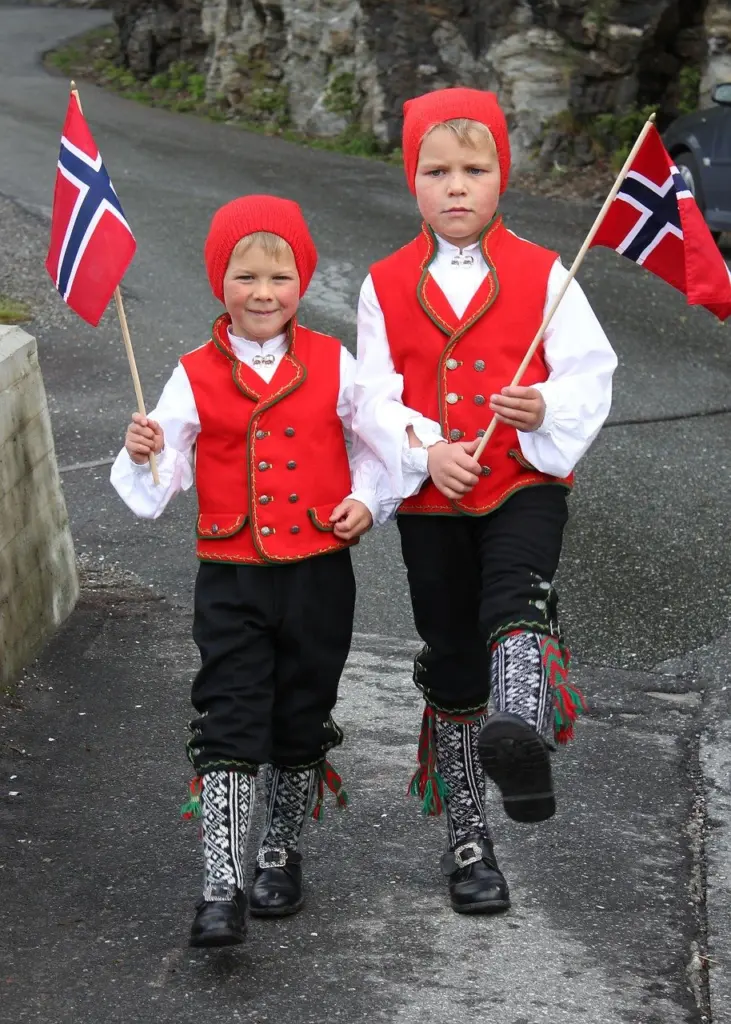
Museums are the most reliable way to study this heritage in depth. A Valdres museum exhibition pays tribute to pioneers in Norwegian folk costume design and displays a selection of bunads from the past 150 years. The Norwegian Institute of Bunad and Folk Costume lists upcoming costume and textile events in Norway and abroad. Check it before you travel if textiles interest you.
Rosemaling and related crafts
Rosemaling is a stylized floral painting style, and the MyHeritage blog notes that Hardanger embroidery shares styles with it. The practical reading is that Norwegian folk decoration is one visual family across paint and thread. Floral patterns on a painted object and on embroidered cloth are related, not separate traditions.
Sami culture
Sami culture is a distinct heritage and should not be folded into Norwegian folk costume. The Valdres exhibitions page includes a topic on South Sami cultural heritage, which shows that museums present it in its own right. When you visit, look for exhibits and programmes labelled as Sami and learn from them directly.
Friluftsliv, cabins and communal work
Friluftsliv literally means “free-air life”. The elon.io guide defines it as the cultural devotion to being outdoors, covering hiking, skiing, fishing and time in nature in any weather. A common saying captures the attitude: Det finnes ikke dårlig vær, bare dårlige klær, or “there is no bad weather, only bad clothing”. Take the saying as practical advice. Plan outdoor days around suitable clothing, not around the forecast.
The same guide says a huge share of Norwegians have access to a cabin, called a hytte. No exact figure is given, but the point is that time in nature is woven into ordinary life rather than treated as a special trip.
Dugnad
Dugnad is unpaid communal work done together for the common good. If a neighbourhood or club invites you to join one, it is an invitation to belong rather than a chore, and joining in is generally the respectful response.
Seeing the heritage in person
Folk customs sit alongside built heritage. If you want to see Norwegian wooden architecture, the guide to Heddal Stave Church: Norway’s Majestic Wooden Landmark — A Visitor’s Guide (2026) – Scanheritage and the article on Hopperstad Stave Church: Discovering Norway’s 12th‑Century Timber Masterpiece – Scanheritage cover two stave church visits.
A trip that combines a museum costume exhibition, one national or seasonal celebration and an outdoor day gives a balanced view. Each shows a different side of how heritage works in daily life.
Frequently asked questions
| Question | Answer |
|---|---|
| What are key Norwegian customs? | Visitors most often notice reserved manners with strangers, the informal du for everyone, shoes off in homes, communal dugnad work and a habit of spending time outdoors in all weather. |
| What is Janteloven? | It is an unwritten social code, coined by author Aksel Sandemose, that discourages thinking you are anything special. It is a cultural attitude, not a statute. |
| What festivals do Norwegians celebrate? | Constitution Day on 17 May is the national highlight. Midsummer bonfires, St. Olaf’s Day in July, St. Lucia Day in early December and Christmas Eve are also observed. |
| Do people wear bunads only on 17 May? | No. Bunads are worn especially on 17 May, but also at weddings and formal celebrations. |