

| Question | What the evidence supports | Planning use |
|---|---|---|
| Who Týr is | A battle-god of Norse mythology, known mainly through the Eddas. Snorri calls him the bravest and most valiant, with great power over victory in battles. | Lead with war and courage, his best-attested domain. |
| The lost hand | His right hand was lost when Fenrir was bound. It had been placed in the wolf’s mouth as a pledge of good faith. | Use this episode as the anchor for his oath connection. |
| Law and oaths | The pledge ties him to keeping one’s word. Snorri adds that he is not considered a promoter of settlements between people. | Say “oaths” when quoting the texts. Treat “law” as an interpretation built on the pledge. |
| Name and weekday | His name goes back to Proto-Germanic Tiwaz, and the weekday Tuesday derives from Týr or Tiwaz. | Use for etymology and for modern traces of the god. |
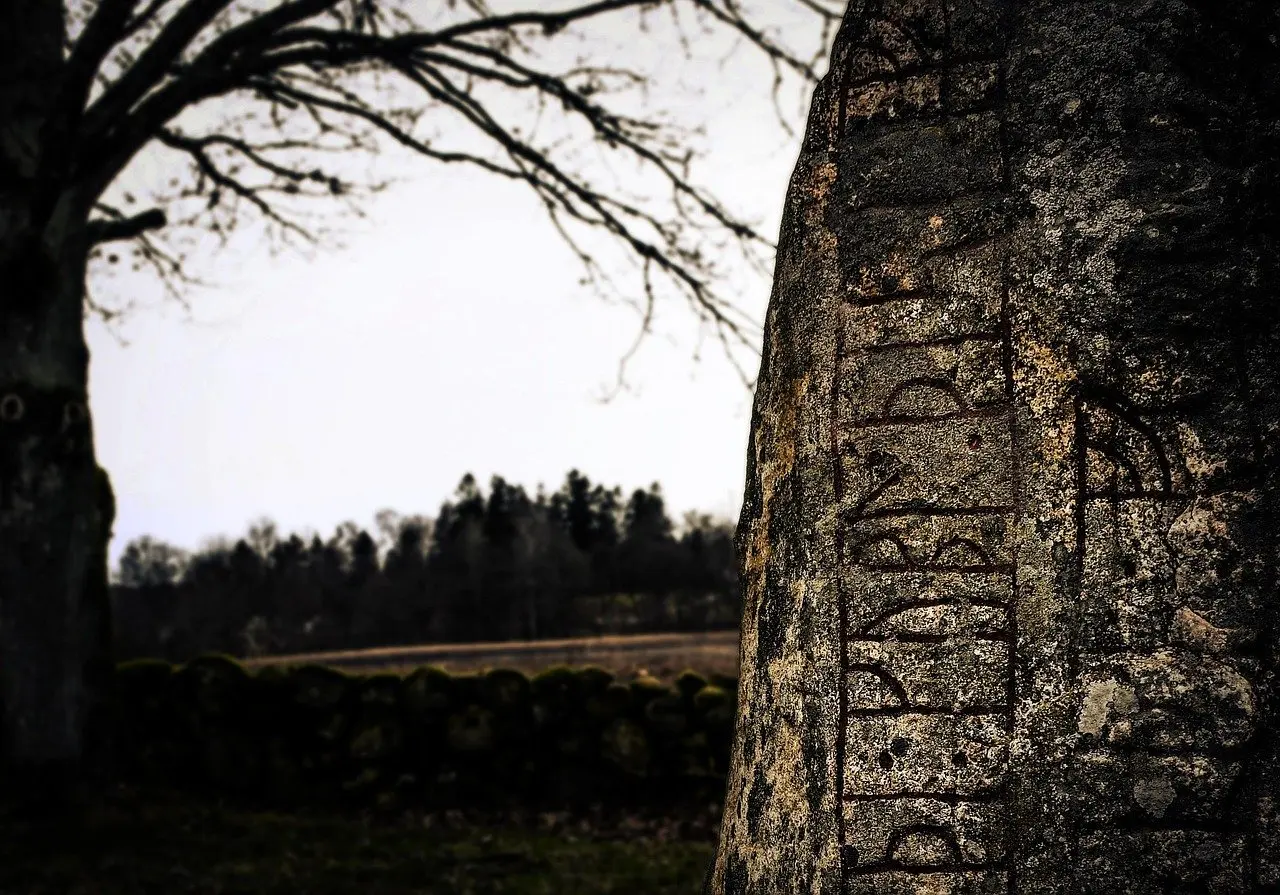
| Tiwaz rune | Týr has a corresponding t-rune with possible magical attributes. | Keep magical claims cautious and attributed. |
| His fate | Fenrir stays bound until Ragnarök. Snorri names the hound Garm as Týr’s slayer. | Place Týr in the Ragnarök story rather than treating the hand myth as his whole biography. |
The table summarises the World History Encyclopedia’s entry on Týr, which gathers the Eddic references to the god.
Týr is the Norse war god tied to oaths, and tyr norse mythology rests on the Eddas: he lost his right hand as a pledge of good faith when the gods bound Fenrir.
Readers new to source criticism can start with what are primary sources in history, which explains how to weigh medieval texts like these.
What Týr’s story means for law, oaths and war
Týr is best understood as a god of binding promises and of courage in battle. The “god of law” label is a modern reading of how the texts treat him, not a title the sources hand down. The distinction matters whenever you quote him.
Oaths and the pledge
The link between Týr and oaths comes from the Fenrir story. The gods could not persuade the wolf to accept a fetter without a guarantee, so Týr’s hand was placed in the wolf’s mouth as a pledge. A god who stakes his own body on a promise makes a natural emblem for the weight of an oath. The story does not describe him presiding over a court or issuing legal rulings.
Peacemaking and its limits
Snorri complicates a tidy “law god” picture. In Gylfaginning 24-25 he says Týr is not considered a promoter of settlements between people. In Lokasenna, stanza 38, Loki mocks Týr’s peacemaking and his lost hand. Together these passages show that Týr’s reputation was for steadfastness and bravery, not for mediation. Both are Eddic sources, so they read as contemporary-style testimony rather than later invention.
War and victory
Snorri’s Gylfaginning 25 describes Týr as the bravest and most valiant of the gods, with great power over victory in battles. Roman writers also matter here: the interpretatio romana equated him with Mars. That equation is the strongest outside signal that war was central to how he was understood.
Choosing how to describe him
- Quote the pledge for oaths. The hand in the wolf’s mouth is the clearest text-based reason to link Týr with keeping one’s word.
- Frame “law” as interpretation. Use it where you are explaining why the pledge made him a fitting emblem, and say so plainly.
- Cite Snorri for courage. The bravest-and-most-valiant description in Gylfaginning 25 supports a battle-god portrait directly.
- Avoid calling him a mediator. Snorri’s remark and Loki’s taunt in Lokasenna both point away from that role.
The Fenrir episode: how Týr lost his hand
Týr lost his right hand when the gods bound the wolf Fenrir. Fenrir is a child of Loki and the giantess Angrboda, and the Midgard serpent and Hel are his siblings. Readers who want the giants’ background can continue with Ymir in Norse Mythology: The Primeval Giant Who Shaped the World (A 2026 Guide) – Scanheritage.
The binding rope, Gleipnir, was made by the dwarves out of six things. Fenrir would accept it only if a god left a hand in his mouth as a guarantee, and Týr was the god who did so. When the wolf could not break free, the hand was the price. Fenrir was to stay bound until Ragnarök.
The episode explains two things at once: why Týr is one-handed and why his name is tied to a promise that was kept at personal cost. It also shows the pitfall of reading the myth as a straightforward lesson in honesty. The gods obtain the pledge by deceiving the wolf about what the fetter would do, so the story carries a real moral tension. The pledge is kept by Týr’s body while the promise implied by the gods is not. That tension is part of why the myth is used to discuss oaths rather than simply to celebrate them.
Ragnarök and Týr’s fate
Völuspá, stanza 44, links Fenrir’s escape to Ragnarök, which is why the lost hand is a setup for the end of the world rather than a closed episode. Snorri names the hound Garm, guardian of the underworld realm of Hel, as the slayer of Týr. For the realm that Garm guards and the wolf’s sister who rules it, see Hel In Norse Mythology: The Dark Goddess Who Rules The Underworld – Scanheritage.
For anyone summarising Týr, this gives a useful arc: a god who gives up a hand to hold back the wolf, and who is later named among those who fall when the wolf is loose.
Name, Tiwaz rune and Tuesday
Týr’s name and the Tiwaz rune share an origin, and the weekday Tuesday preserves the same name. This is the part of the evidence that survives outside the poems.
The name
The World History Encyclopedia traces Týr to Proto-Germanic Tiwaz, with Old English Tīw and Old High German Ziu as related forms. It adds that the name comes from the same Indo-European root as Zeus in Greek and Jupiter in Latin, a reconstructed form written dyēus. That shared root is a linguistic link, and it does not show that Týr once held the same rank as those gods.
The Tiwaz rune
The Tiwaz rune is the rune that shares a common origin with Týr’s name and corresponds to the letter ‘t’, according to a popular overview of Týr. The Encyclopedia notes that Týr has a corresponding t-rune with possible magical attributes, and points to Sigrdrífumál, stanza 6, where Sigurd is told to call twice on Týr when writing runes. Treat any magical meaning as a possibility, since the evidence is a single poetic instruction.
Tuesday
Týr or Tiwaz gave English the weekday Tuesday, and the same source gives tirsdag in Danish and Norwegian and dies Martis in Latin. The Latin form fits the Roman equation of Týr with Mars. The same overview reports that Roman writers listed Mercury, Hercules and Mars as the main Germanic gods, which shows how a Mars-like figure sat near the centre of Roman descriptions of Germanic religion.
Art and what it adds
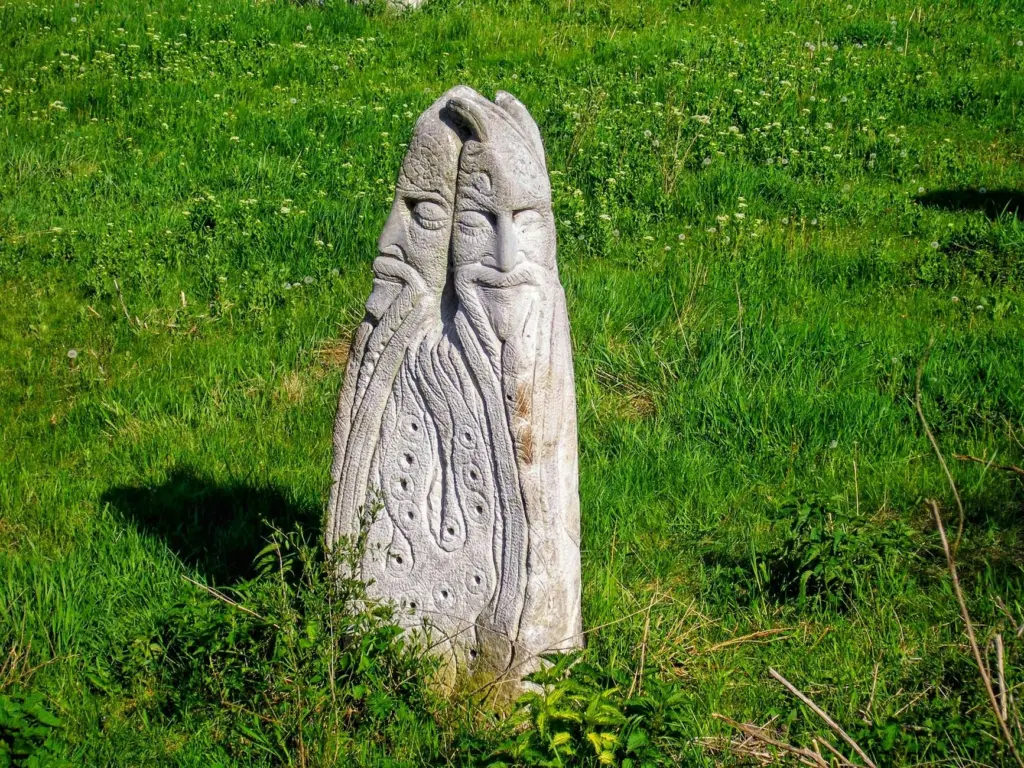
Material evidence is thinner than the textual record. The overview notes that similar one-handed gods were depicted in artwork across Northern Europe for centuries, which suggests the missing hand was a recognisable visual signal. It does not prove that each image shows Týr, so cite such images as comparison rather than as identification.
Texts that preserve Týr
Týr is known mainly from the Poetic Edda and Snorri’s Prose Edda, and the two do different jobs. The Poetic Edda gives scattered poem-level references; the Prose Edda gives systematic descriptions such as the Gylfaginning passages above.
One Poetic Edda edition includes 36 texts, mostly preserved in medieval manuscripts, especially the thirteenth-century Icelandic codex known as the Codex Regius. The poems themselves are believed to contain material from the 9th-10th century, according to the World History Encyclopedia. That gap between composition and manuscript matters: a thirteenth-century copy is evidence for what was written down then, not a photograph of earlier belief.

Using the sources well
- Cite the poem and stanza. Völuspá stanza 44, Lokasenna stanza 38 and Sigrdrífumál stanza 6 each support a different point and should not be merged.
- Prefer an edition’s text over summaries. Encyclopedia entries are useful for finding the passages, but the poems themselves carry the wording.
- Separate poem from commentary. Snorri’s statements about Týr are a medieval author’s systematisation, so label them as his account.
Frequently asked questions
What epithets does Snorri give Týr?
The Prose Edda says Týr can be referred to as the one-handed As and the feeder of the wolf, both of which point back to the Fenrir episode.
Did Fenrir have other names?
Some manuscripts call him Hróðvitnir, meaning “fame wolf”, and Vánagandr, meaning “monster of the river”.
Does Sigrdrífumál prove Týr was a rune god?
No. The stanza tells Sigurd to call twice on Týr when writing runes, but the World History Encyclopedia notes the invocation might just serve alliteration, so it supports only a possible link.
Where do Týr-related place-names appear?
Scandinavian place-names connected to Týr come mostly from Denmark, including Tislund, Tisbjerg and Tissø.
Who is Týr’s father?
Hymiskviða, stanza 5, has Týr speak of the kettle of his father Hymir, which connects him to the giants as well as the gods.