

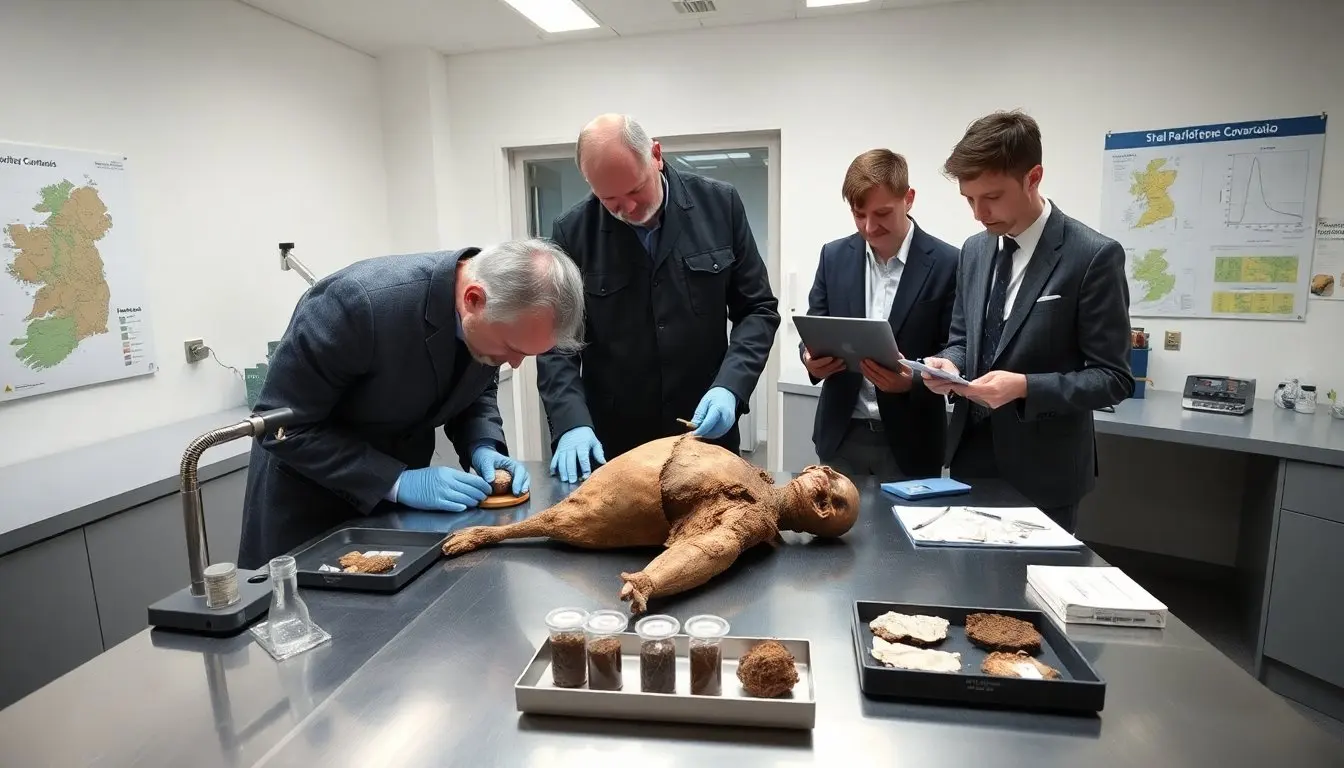
Irish bog bodies offer direct evidence of past lives. Irish bog bodies appear in peatlands after centuries under water and peat. Archaeologists study bones, skin, hair, and clothes. Scientists date each find and record context. The finds reveal how people lived, ate, and died. This article explains where archaeologists find these remains, how peat preserves them, and what the bodies reveal about Iron Age society.
Key Takeaways
- Irish bog bodies are human corpses preserved in peat bogs across Ireland, notably in counties Offaly, Meath, and Laois, providing valuable archaeological insights.
- Peat bogs preserve skin, hair, and internal organs through acidic, cold, and low-oxygen conditions, allowing scientists to study diet, health, and cause of death using advanced forensic methods.
- Many bog bodies show signs of violent deaths such as strangulation or blunt trauma, indicating possible ritual sacrifice, execution, or punishment in Iron Age society.
- Analysis of clothing, stomach contents, and isotopes reveals details about daily life, diet, trade, and regional mobility during the Iron Age in Ireland.
- Bog bodies also help confirm historical records on rituals, legal boundaries, and social structures, highlighting the complexity of Iron Age cultural practices.
- Museum displays of Irish bog bodies connect the public with tangible evidence of past human experiences, preserving and interpreting Ireland’s prehistoric heritage.
What Is A Bog Body And Where In Ireland Are They Found?
A bog body is a human corpse that the peat preserved. The peat slows decay by creating cold, acidic, and low-oxygen conditions. Irish bog bodies include skin, hair, and internal organs in rare cases. Hunters, farmers, and travelers became bog victims. Excavations and chance finds reveal locations across Ireland. County Offaly produced several finds. County Meath and County Laois also yielded important examples. Archaeologists record the findspot, peat depth, and nearby features. They map peat bogs and search areas with past human activity. Peat cutters sometimes uncover bodies while cutting turf. Farmers and construction crews sometimes report finds. Museum records show clustered discoveries near ancient roads and wetland edges. Local place names sometimes hint at old burials. Field reports list bog mounds, hollow areas, and preserved wooden stakes. Irish bog bodies tend to come from low-lying central plain bogs and coastal peatlands. Researchers compare find distribution with Iron Age population centers. This comparison helps them understand who the bog bodies were and why they ended up in peat.
How Peat Bogs Preserve Human Remains — Science Behind The Preservation
Peat bogs preserve tissue through acid, cold, and lack of oxygen. Sphagnum moss and decomposing plant matter produce tannins. Tannins tan the skin and hide like natural leather. Low oxygen slows bacteria and insect activity. Cold temperatures further reduce decay rates. The peat environment favors preservation of skin, hair, nails, and stomach contents. Bones can become softened by acid and may survive less well than soft tissue. Scientists use radiocarbon dating to determine when each person died. They sample peat layers above and below the body to confirm context. Stable isotope analysis of hair and bone shows diet and travel. Pollen and plant fragments in peat tell about season and environment at death. Forensic techniques reveal wounds, binding marks, or strangulation signs. Histology and chemical tests detect stomach contents and meal timing. DNA testing can sometimes identify genetic ancestry or kinship. Conservation work keeps wet tissue stable after excavation. Curators store finds in cool, humid conditions and treat materials to prevent cracking. Researchers publish lab results and field notes. Those reports allow peers to verify dates, cause of death, and preservation state. This scientific chain produces reliable data on each Irish bog body.
What Bog Bodies Tell Us About Iron Age Society, Death Rituals, And Daily Life
Irish bog bodies reveal social patterns and belief systems. Many bodies show evidence of violent death. Neck wounds, blunt trauma, and strangulation appear on several individuals. Such trauma suggests execution, sacrifice, or ritual killing. Some bodies show careful clothing and hair, which suggests respect or ceremony before deposition. Other bodies show signs of neglect or hurried placement, which suggest punishment or emergency burial. Stomach contents reveal diet and season. Meals often include grains and local plants. Occasional exotic seeds indicate trade or travel. Hair isotope values reveal local childhood diets for most individuals. A few individuals show nonlocal signatures, which suggest movement between regions. Tools and clothing recovered with bodies show textile skills and material use. Leather, woven cloth, and plant fiber fragments indicate everyday technology. Wooden stakes and platform remains near some finds suggest deliberate placement. That placement points to ritual or law enforcement. Local oral traditions sometimes preserve memory of bog deaths. Legal records from medieval and early modern times show that wetland boundaries had ritual and legal value. Bog finds hence confirm textual sources on punishment and sanctuary. Demographic data from bog bodies show a range of ages and both sexes. The presence of women, men, and adolescents indicates that multiple social roles faced similar fates. Researchers use this evidence to assess social norms, power structures, and mobility. Museums display many Irish bog bodies and offer interpretive labels. Those exhibits bring human detail to archaeological reports. The bodies force observers to confront past violence and past care. They also provide baseline data for Irish prehistory and for comparisons across northern Europe.