

| Fact | Value and condition | Planning use |
|---|---|---|
| Fire | Set on fire in early June 1992; the church burned to the ground and only the remains of the framework were left | Treat the visit as a look at a rebuilt monument, not a surviving medieval one |
| Reconstruction | Fully rebuilt as an exact replica of the original by 1997; consecrated at the end of August that year | Judge the carpentry as modern work on a medieval pattern |
| Original objects | Only a wish stone on one wall and the altar cross remain from the original church | Look for these two items to see genuine older material |
| Setting | A small wooded area in the Fana area of Bergen | Allow time for a quiet forest approach rather than a street-side stop |
| Rarity | About 1,000 stave churches were built; 28 survive | Choose a surviving church instead if medieval fabric is your priority |
The figures come from the travel guide Hoblets on the Go and from Fjord Tours.
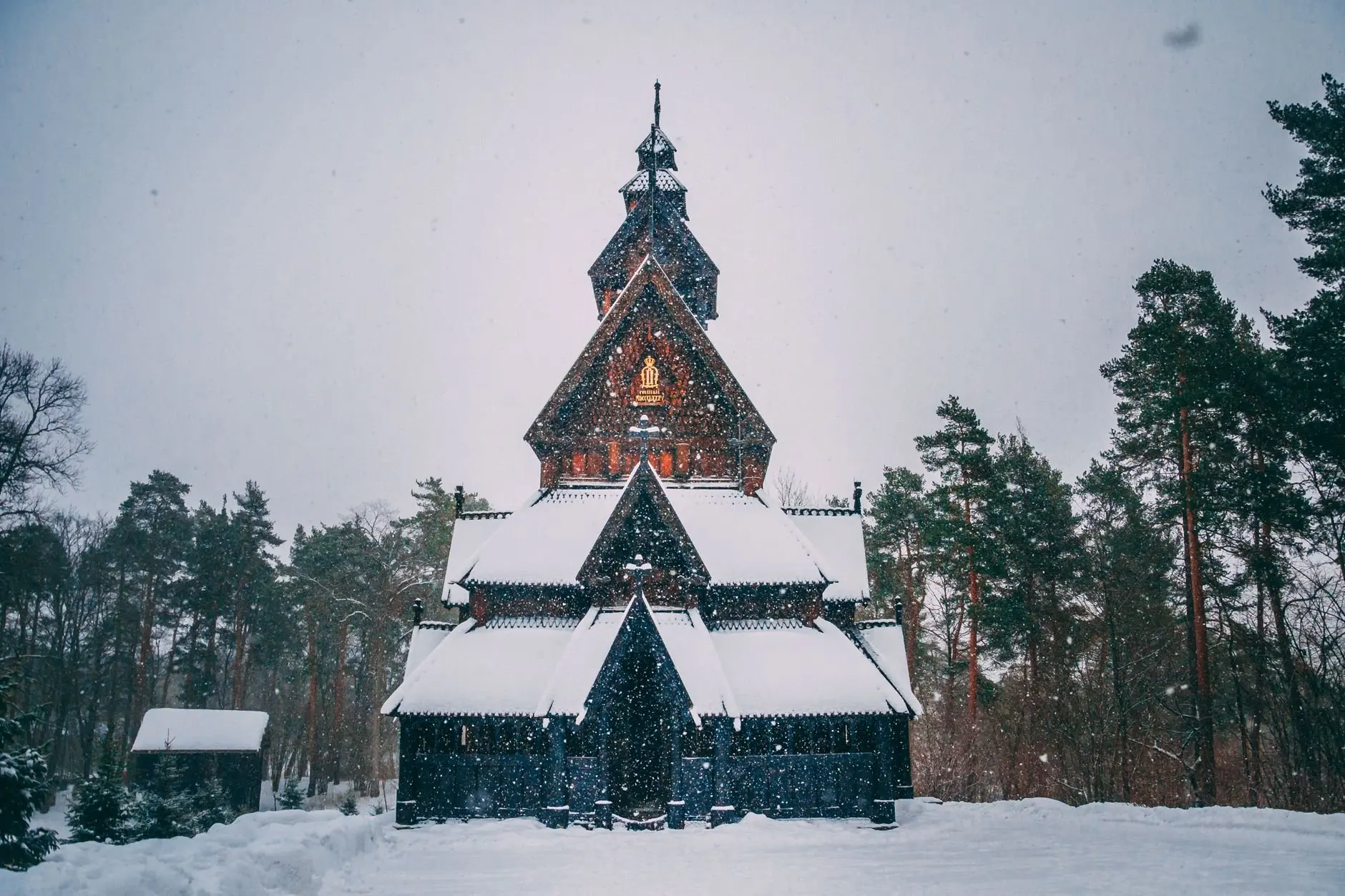
Fantoft Stave Church in Bergen is a replica, not a surviving medieval building: it burned to the ground in early June 1992 and was fully rebuilt by 1997, with only a wish stone and altar cross surviving from the original.
The site works best as a case study in loss and reconstruction. If you want the principles behind that, start with what is heritage conservation, then come back to see how they apply to one timber church.
What the 1992 fire means for what you see
The church was set on fire in early June 1992 and burned to the ground, leaving only the remains of the framework. That single event decides how a visitor should read the site today: nearly everything in front of you was made after the fire, not in the medieval period.
- Treat it as a rebuild. Describe it as a reconstruction in conversation, photo captions and travel notes. Calling it a medieval church would misstate what stands there.
- Judge the craft, not the age. The value of the visit lies in how faithfully a lost form was reproduced and how the work was done, not in weathered original timber.
- Use the loss as context. A church that burned to the ground shows how vulnerable timber heritage is. That makes the rebuilt building a reminder of why protection and record-keeping matter.
Reading the site this way sets expectations before you arrive. The next question is how much of the church can honestly be called original.
Original fabric and replica
Fantoft is not an original church in the sense of surviving medieval structure. The only remaining objects from the original are a wish stone and the altar cross. The building around them was rebuilt as an exact replica of the original.
That distinction is at the heart of conservation ethics. A replica reproduces form, proportion and appearance, but it cannot carry the age of the timbers that were lost. Whether a rebuild counts as repair, restoration or something else depends on the definitions in use, and the guide to conservation vs preservation vs restoration sets those terms out clearly. Seen through them, Fantoft sits closer to reconstruction than to preservation of original material.
The two surviving objects deserve attention for the opposite reason: they are the true historic material on the site. Small objects like these raise their own care questions, which the guide on how do museums preserve artifacts covers. Do not expect the replica to stand in for them. If you only have time for one thing at the church, find the wish stone on its wall and think about what it has outlasted.
How the rebuild worked
A craft with no recent practice
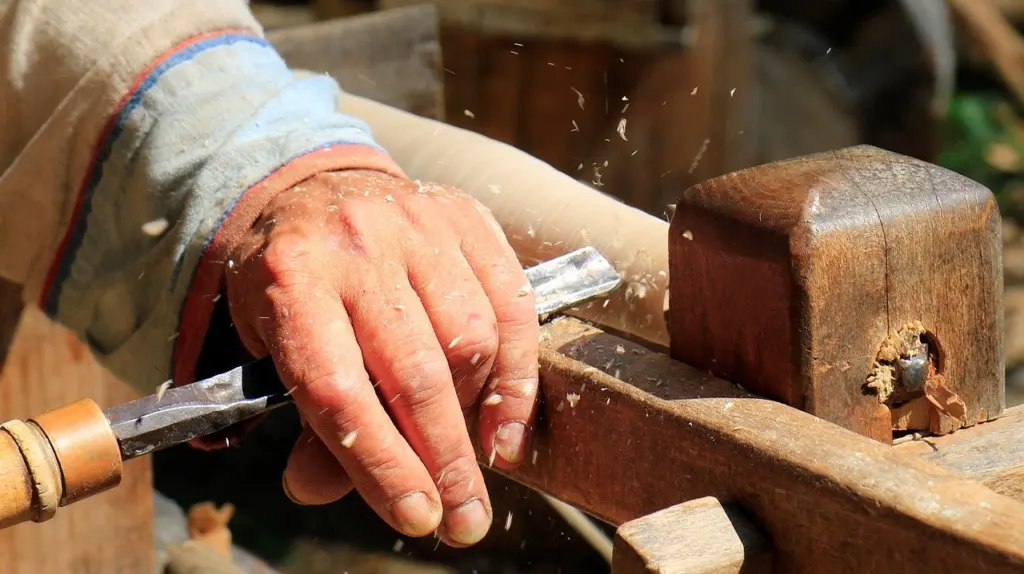
According to Hoblets on the Go, no one had built a stave church in Norway for a very long time before the rebuild, so the builders faced a real challenge. For a visitor, this means the finished carpentry is a modern achievement. It was produced without a recent tradition of new stave construction to lean on, so it is worth looking at as modern work as much as a copy of something older.
From framework to consecration
The timeline is short and clear. The church burned in early June 1992. It was not until 1997 that the church was fully rebuilt as a replica, and at the end of August that year it was consecrated. The consecration matters because it marks a return to use as a church, not only the completion of a heritage object.
The supplied evidence does not itemise the techniques used on site, so avoid repeating detailed claims about specific tools, timber species or hidden modern reinforcement unless the site operator confirms them. What is supported is the outcome: an exact replica, finished in 1997, built on a medieval pattern that no recent builder had worked on.
Stave church construction and carving
Frame and walls
Fjord Tours explains that all Norwegian stave churches have corner posts, known as staves, a timber framework, and planks forming walls. That is the feature to look for when you stand in front of Fantoft: the building is defined by its posts and plank walls rather than by masonry. These churches were constructed during the 12th to 14th centuries, so the form Fantoft copies belongs to that medieval period.
Roofs and carvings
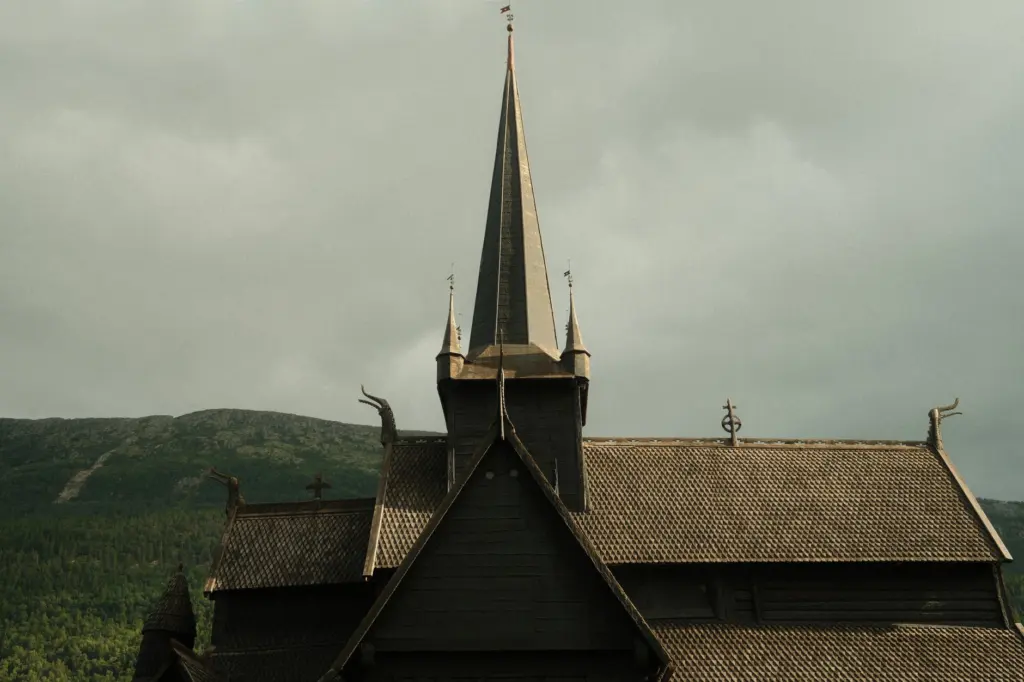
The roofs of stave churches are multi-layered and steeply pitched, designed to shed snow in harsh Nordic winters. Carvings often feature Viking motifs such as dragons and serpents alongside Christian symbols, reflecting what the same guide describes as a fusion of pagan Norse and Christian traditions. The practical reading is simple: the steep, tiered roofline tells you about climate, and the carved heads tell you about belief.
Context also raises the stakes. Of approximately 1,000 stave churches built, only 28 survive today. Losing one to fire is therefore significant, and it explains why a faithful rebuild was attempted at all.
Visiting Fantoft in Bergen
Fantoft is a reconstructed stave church in the Fana area of the city of Bergen, and it sits in a small wooded area. Bergen is the second-largest city in Norway and a coastal destination, so the church fits easily into a city stay. Before you go, confirm current opening hours, access arrangements and any entry charge with the site operator or Bergen visitor information, since this guide does not give them.
- Go if you value the story. The fire, the rebuild and the question of what counts as original make Fantoft a strong stop for anyone interested in heritage conservation.
- Go for the setting. The wooded location suits a slower visit, and it is a good place to compare the posts, steep roofs and carvings described above with what you can actually see.
- Choose another church if you want medieval timber. Only 28 stave churches survive, so a visitor set on original fabric should pick one of those rather than a replica.
- Take photos with the right caption. Label images as the reconstructed church, so that friends or readers do not mistake a 1997 replica for a medieval survivor.
Frequently asked questions
When was the rebuilt church finished?
The reconstruction was fully completed in 1997, and the church was consecrated at the end of August that year.
What survived from the original church?
Only a wish stone on one wall and the altar cross remain from the original. After the fire, the framework remains were all that was left of the building itself.
Why was the rebuild difficult?
No one had built a stave church in Norway for several hundred years, so the builders could not rely on recent practice.
What defines a stave church?
Corner posts called staves, a timber framework and plank walls define the type. Steep, multi-layered roofs and carvings that mix Norse and Christian motifs are common features.