


Facing a scaffolded church and wondering what is heritage conservation? It is the care of places and objects so their meaning and material last, using the least change that keeps them safe.
Conservation starts with understanding why something matters, then chooses actions that protect that value. Pick the route below that matches your interest. Each route ends at a deeper guide, and the ideas underneath all of them are set out in the principles of heritage conservation.
- Learn the vocabulary. Start with the sections on what conservation covers and on how conservation, restoration and preservation differ.
- Understand who sets the rules of good practice. Read the section on ICOMOS, ICCROM and charters.
- Follow a building. Go to the historic buildings route if your interest is churches, houses or civic structures.
- Follow an object. Go to the collections route for museums, archives and fragile finds.
- Follow a designation. Go to the listing and protection route to see how heritage listing works.
- Plan a visit. Finish with the checklist for reading conservation work on site.
What heritage conservation covers
Heritage conservation is the organised care of cultural places, buildings, landscapes and objects so that what they mean, and the material that carries that meaning, survives for later generations. It is a decision-making discipline as much as a craft. Choosing whether to act, how far to go and what to leave alone is as important as the repair itself.
The decision-making starts with significance. A university course in heritage conservation at the University of Nova Gorica describes heritage assessment as the process of defining the meaning and significance of a place. That order matters. A cracked wall, a faded painting and a worn threshold can all be read as damage or as evidence of use. Knowing what a place is valued for tells you which of those marks to keep and which to treat.
For readers new to the field, the practical consequence is that conservation answers are rarely universal. The same material problem can call for different responses in different places because the value being protected is different. A site prized for its original fabric calls for a different approach from one prized for its continuing function or setting.
Different kinds of heritage, one logic
The word heritage covers far more than old buildings. If you want to see how the field divides its subject, the guide to types of cultural heritage sets out built, movable, landscape and natural categories and how each is cared for. Heritage is also not only physical. Practices, skills and traditions are protected through safeguarding rather than repair, and the explanation of what is intangible cultural heritage shows how that differs from conserving objects and buildings.
Whatever the category, the same sequence applies: understand the place or object, work out what makes it significant, decide the least intervention that protects that significance, and record what was done. That sequence is the backbone of the sections that follow.
ICOMOS, ICCROM and the charters behind good practice
Much of the shared language of conservation comes from international bodies and the texts they produce. ICOMOS, the international council on monuments and sites, is known for its charters. The Nova Gorica course includes ICOMOS charters and other doctrinal texts among its readings, which shows how central those documents are to training. ICCROM, the intergovernmental centre for conservation based in Rome, contributes training, research and publications.
Advisory roles in World Heritage
The two bodies also hold a formal role. The IUCN library names ICCROM, ICOMOS and IUCN as the Advisory Bodies to the World Heritage Convention. For readers, that means the guidance behind World Heritage nominations and monitoring is shaped by these organisations. A manual published in 2013 in the same library listing provides guidance for States Parties and all those involved in the care of World Heritage cultural properties. It is worth knowing about if you want to see how site managers are expected to think.
Where ICCROM’s thinking is documented
ICCROM’s own history is recorded by Jokilehto, whose 2011 account covers the organisation’s first decades, 1959-2009, as listed in the Nova Gorica course reading list. The same list includes the Management Guidelines for World Cultural Heritage Sites, which ICCROM published in Rome in 1993 with Feilden and Jokilehto as authors. These are specialist texts rather than beginner reading, but their presence on a course list shows which sources the field treats as standard.
Charters, laws and what binds whom
A charter is a statement of agreed principles, and it guides professionals rather than acting as a statute. Laws apply where a country or region has enacted them. In practice, a conservator working on a protected building follows the law of the place and draws on charters and doctrine for reasoning. If you are reading a conservation report, the useful question is which document is being relied on, because that tells you how the terms in it are meant.
Conservation, restoration and preservation side by side
These three words are used loosely in everyday speech, but in the field they carry different emphases. The table puts them side by side so you can recognise which one a project description is really about.

| Term | Plain-language emphasis | Question it asks | Planning use |
|---|---|---|---|
| Conservation | The wider care of a place or object, including understanding, protecting and managing change | What does this place need to keep its value? | Use it as the umbrella term when reading a heritage plan or visitor leaflet |
| Preservation | Keeping something as it is, with minimal alteration | How do we stop further change? | Expect little visible work; look for protection, monitoring and controlled access |
| Restoration | Returning something to an earlier known condition or appearance | Which earlier state are we recovering, and is there evidence for it? | Expect visible repair or replacement, and ask which period was chosen and why |
The wording of the terms is treated as a matter of international doctrine, as the Nova Gorica course outline lists the meaning of conservation, restoration and preservation under terminology. Charters and national laws each fix their own wording, so check the definition in the document that governs a project before comparing two cases.
The difference between restoration and conservation
Restoration is a set of interventions, while conservation is the wider responsibility within which restoration is one possible choice. A conservation approach may decide that the right action is to stabilise and leave a surface as found. A restoration decision goes further and commits to recovering an earlier appearance. That commitment needs evidence and a justified choice of period, because recovering one stage of a building’s life can remove traces of others.
The field’s thinking on this has a long history. The same course outline places the conservation movement and the critical debates inspired by Ruskin and Morris in its study of restoration theory, and lists Brandi’s Teoria del Restauro of 1963 as a foundational text. It also teaches the methodology of restoration separately for archaeological sites, works of art and historic buildings. That separation is a useful clue: restoration of a painting, a ruin and a house raises different questions, so no single rule fits all three.
For a fuller treatment of how the three terms differ in use, see the guide to conservation vs preservation vs restoration.
Route for historic buildings
Choose this route if your interest is churches, houses, town halls or ruins. Historic buildings are conserved in use, which makes them different from museum objects. People live in them, heat them and open them to visitors, so conservation has to work alongside everyday wear and modern expectations.
Feilden’s Conservation of Historic Buildings, first published in 1982 with a third edition in 2003, appears on the Nova Gorica reading list as a standard work on the subject. Its place on a university reading list shows that building conservation is treated as a technical specialism with its own literature, and not as general maintenance.
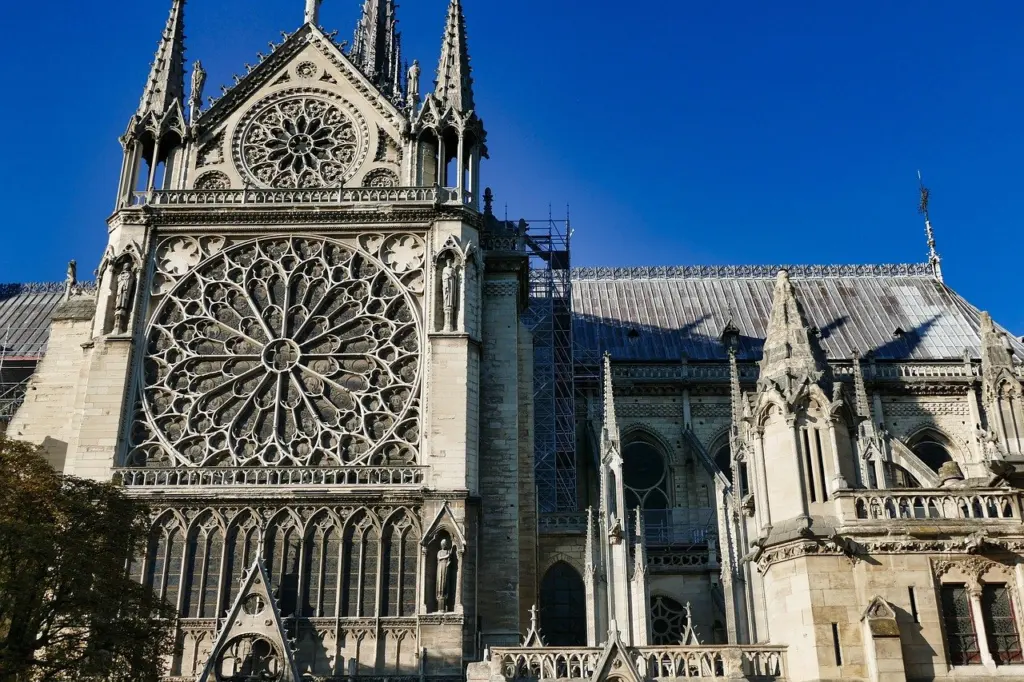
Reading scaffolding as a clue
Scaffolding on a stone building usually means access for inspection, cleaning, repair or replacement of damaged elements. It is a prompt to ask which of those is happening. If a site displays an information board, it often explains the scope and the reasoning. A project that states what is being repaired and what is being left untouched is generally easier to trust than one that describes only a finished, renewed appearance.
Keeping buildings comfortable without harming them
Many historic buildings face pressure to use less energy. The right response depends on the building’s materials and the value being protected, and some modern fixes can cause damage. The guide to energy efficiency in historic buildings explains how to weigh those choices before altering walls, windows or roofs.
A case study to read before a trip
If you prefer to learn conservation through a single place, Fantoft Stave Church: From Medieval Roots To Modern Rebirth — History, Fire, And Visiting Tips (2026) – Scanheritage shows how a building’s history, its losses and its later rebuilding shape how it is understood and visited. A site like this makes the restoration question concrete: what you see is not simply the original.
Route for collections and objects
Choose this route if your interest is paintings, manuscripts, archaeological finds or museum displays. Objects are usually conserved by conservators, professionals who examine, stabilise and treat material and document what they have done. Their work blends technical knowledge of materials with the same significance-led reasoning used for buildings.
If that work appeals as a career, the guide on how to become a conservator covers training and career paths. The Nova Gorica outline shows that restoration methodology is taught for works of art as a distinct area from buildings and sites, which fits the idea that conservators specialise by material and object type.
Care that happens before anything breaks
Most collections care is not dramatic treatment. It is steady management of the surroundings and handling of the objects. The guide to what is preventive conservation explains how humidity, light and pests are controlled, and why that approach reduces the need for later intervention. For most collections it is the most important activity, because it protects many objects at once.
Day-to-day practice in museums covers handling, storage and display. The article on how do museums preserve artifacts follows an object from the store to the gallery and explains the choices made along the way.
Finds that need specialist treatment
Some materials need very particular handling. Items recovered from bogs, wells or shipwrecks can be stable underwater and fragile once exposed to air. The guide to how are waterlogged artifacts conserved explains why those finds are treated in stages and cannot simply be dried.
Route for listing and protection
Choose this route if you want to know why some places carry a formal designation and others do not. Heritage listing is the process by which a country, or an international body, recognises a place and attaches protection or management expectations to it. Conservation work is then carried out inside that framework.
International recognition
For World Heritage, the Nova Gorica course asks what is OUV, and what are the requirements for inscription and management of World Heritage nominations. OUV stands for Outstanding Universal Value, and the outline shows that inscription is tied to both that value and to management requirements. A listed place is therefore expected to be looked after as well as admired. The step-by-step process is explained in the guide on how does a site become a unesco world heritage site.
National systems and local rules
Most protection that affects ordinary buildings comes from national or regional law. The Nova Gorica outline treats national and regional protection through the legal frameworks of different countries, which is a reminder that criteria and categories differ from one country to another. To compare systems, look for the national heritage agency of the country concerned and read the criteria it publishes, because a grade or category in one place does not map neatly onto another.
Two guides take this further. The article on what is a listed building explains grades and what listing means for owners, including Nordic equivalents. The guide to how are historic buildings legally protected sets out how legal protection works in practice.
Risks and records
Conservation is increasingly shaped by outside pressure. The IUCN library records a 2017 expert meeting on World Heritage and climate change that brought together 20 international heritage experts on climate change from 15 countries. The meeting shows that climate is treated as a matter for coordinated international expertise and not only for individual site managers.
Climate is one threat among several. The overview of threats to cultural heritage sites covers climate, tourism, conflict and neglect and what each demands of site managers.
Why a record comes first
A reliable record of a place as it stands today supports every later decision, from routine repair to emergency response. Digital methods now produce detailed records of surfaces and structures. The guide to 3d scanning cultural heritage explains how scanning and photogrammetry work and what they can and cannot replace. A scan documents a place; it does not conserve it.
Reading conservation on a visit
You do not need technical training to notice conservation choices. A few habits make visits more informative.
- Read the interpretation. Look for panels or leaflets that say what has been repaired, replaced or left. Open description of intervention is a good sign.
- Look for different materials. Newer stone, patched plaster or replacement timber often show where repair has happened. Ask whether the repair is meant to blend in or to be legible.
- Respect the controls. Barriers, limited lighting, no-touch rules and timed entry usually protect fragile material. They are part of the conservation, not an obstacle to it.
- Ask about the period shown. If a building or room looks complete, ask which period it represents and what evidence supports that choice.
- Note the setting. Landscape, approaches and surrounding buildings often carry part of a place’s value.
These habits connect the vocabulary in this guide to what you can see. When something looks surprising, such as scaffolding left up, a roped-off room or visibly new stone, work out whether it points to preservation, restoration or ongoing care. That is usually enough to understand the reasoning behind it.
Where to start if you are unsure
Start with the principles if you want the reasoning, the buildings route if you are planning to visit, and the collections route if your interest lies in museums. Readers curious about careers can go straight to the conservator guide, and anyone puzzled by designations will get the most from the listing route.
Frequently asked questions
| Question | Answer |
|---|---|
| Which organisations advise on World Heritage? | ICCROM, ICOMOS and IUCN are named as the Advisory Bodies to the World Heritage Convention in the IUCN library listing. |
| Is there official guidance on caring for World Heritage cultural properties? | Yes. The 2013 manual is aimed at States Parties and anyone working on World Heritage cultural properties, and the IUCN library catalogues it. |
| Does heritage conservation always mean repair? | No. Conservation includes understanding significance, protecting material and managing change, so the right action can be to monitor or stabilise and leave a surface as found. |
| How do I compare listing rules between countries? | Read the criteria published by each country’s national heritage agency. University teaching on heritage protection refers to the legal frameworks of different countries, which means categories and requirements do not map directly from one system to another. |