

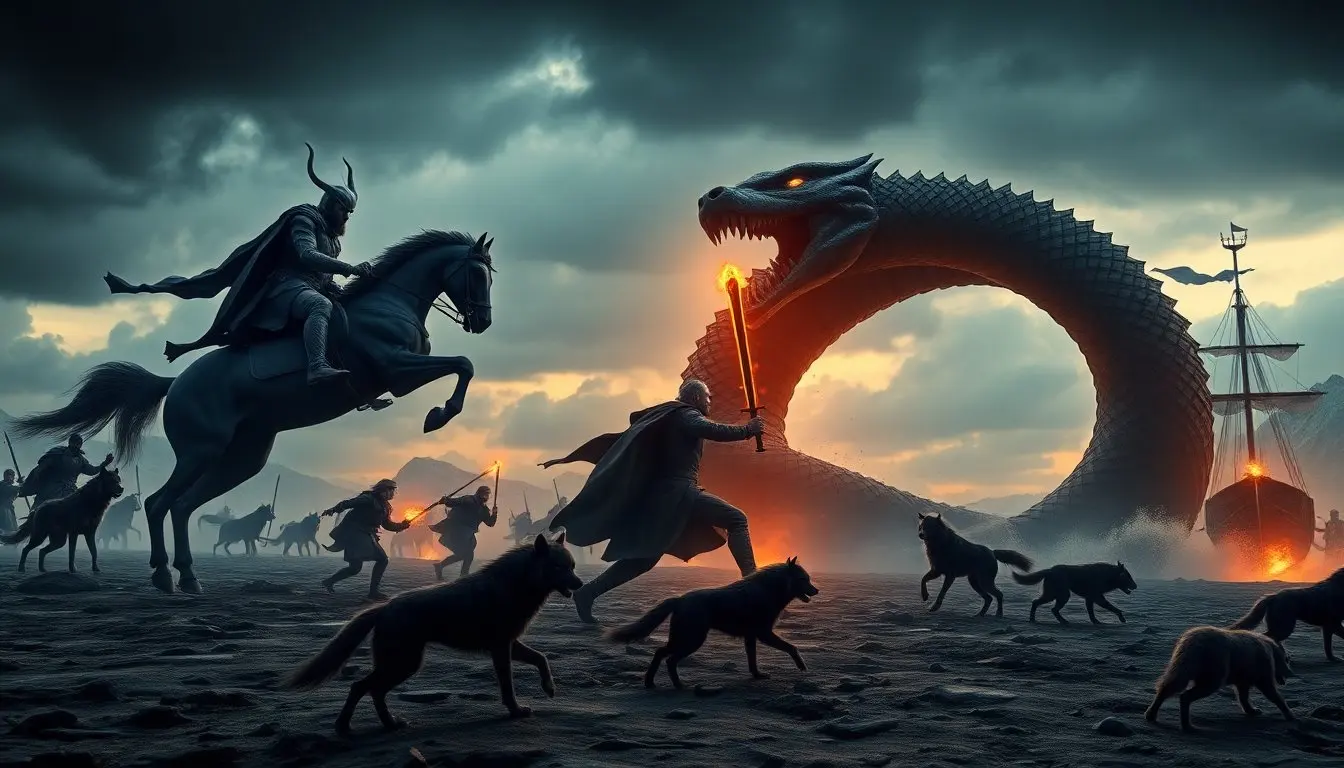
Norse mythology ragnarok describes a final series of events that end the world and bring a new one. Scholars link the tales to old Icelandic poems and later prose. The myths present clear signs, battles, and deaths. They also show how some beings survive and how order returns. This guide states the main sources and outlines who fights, who falls, and who stays alive.
Key Takeaways
- Norse mythology Ragnarok depicts a cataclysmic end followed by a rebirth, emphasizing cycles of death and renewal.
- The primary sources for Ragnarok are the Old Norse Poetic Edda and Prose Edda, which describe omens like Fimbulwinter and battles among gods, giants, and monsters.
- Key figures such as Odin, Thor, Loki, and Heimdall play pivotal roles, with each engaging in fatal duels that shape the myth’s outcome.
- Ragnarok includes vivid symbolic events like wolves consuming the sun and moon, and a great fire led by the giant Surt that destroys the world.
- After Ragnarok, a new world emerges with surviving gods and humans who restore balance and represent hope and continuity.
- The myth teaches moral lessons about honor, fate, and resilience, reflecting ancient societal concerns and values through its narrative of ruin and renewal.
Origins, Names, And Mythic Meaning Of Ragnarök
The Old Norse term ragnarök appears in the Poetic Edda and the Prose Edda. Scholars note variant spellings such as Ragnarǫk and Ragnarøkkr in different manuscripts. The poems present ragnarök as both an end and a renewal. Poets describe portents like the Fimbulwinter and a loosening of moral ties. They link the event to fate and to the breaking of binding oaths. Chroniclers record that the gods know some fate but still act. The myth places emphasis on cycles: death, return, and a new order.
The phrase “twilight of the gods” appears in later modern translations, but Old Norse speakers used clearer legal and poetic terms. Poets used stark images: wolves, serpents, burning skies, and ships made of dead men. These images serve as mnemonic devices. They helped storytellers teach lineage, honor, and loss. The myths likely reflect real historical anxieties about war, harsh winters, and social collapse. They also provide a moral frame: brave action matters even if fate stands firm. In brief, ragnarök functions as a story of ruin and of selective renewal.
Major Characters And Forces In The Final Battle
The myth lists central figures who take part in ragnarök. Gods, monsters, and heroes gather on open fields. Odin, Thor, Freyr, Loki, Heimdall, and others each follow a clear role. Animals and giants join the fight. The sea and the sky both change shape and act as forces.
Odin serves as leader and seeker of knowledge. He rides to battle with the einherjar, warriors chosen by the valkyries. Odin confronts Fenrir, the great wolf, in a fight that ends both lives. Thor acts as the protector. He meets Jörmungandr, the world serpent, and kills it. He then dies from the serpent’s venom. Freyr fights a fire giant without a sword and falls. Loki leads a host of renegades and monsters after freeing himself from chains. Heimdall faces Loki in a duel that ends them both.
Lesser figures also matter. Surt, the fire-giant, rides from the south with a flaming sword. He sets the world aflame. The ship Naglfar carries giants and the dead into battle. Sköll and Hati, the wolves that chase the sun and moon, finally catch their prey, and daylight fails. Each force in the tale plays a clear part: to oppose the gods, to bring disorder, or to complete a destined act.
Key Events Of Ragnarök: Battles, Omens, And Destruction
The story begins with three winters without summers, the Fimbulwinter, which breaks social bonds. Then wolves consume the sun and moon, and stars fall. The sea swells and the earth trembles. Naglfar sails, carrying chaos to the battlefield called Vigrid.
At Vigrid, armies clash in named duels. Odin faces Fenrir. Thor meets Jörmungandr. Freyr fights Surtr’s ally. Heimdall confronts Loki. Many smaller combats also occur. Surt advances and burns the world with his sword. The fire moves from south to north and consumes sea, earth, and sky. The sun darkens. The rivers boil. These events produce clear cause-and-effect images. Each detail serves a narrative purpose: show loss, show payoff for past actions, and mark a transition. The battle ends when fire and flood unmake most life forms and the old order dissolves.
Aftermath And The World Reborn: Survivors, New Order, And Symbolism
After the destruction, the texts state that the world rises again green and renewed. A few gods return or survive: Baldr and Höðr come back from Hel. Odin’s son Vidar and Vali survive to inherit some power. Thor’s sons Magni and Modi survive and claim Mjolnir. Two human survivors, Lif and Lifthrasir, hide in a wood called Hoddmimir’s Holt. They repopulate the human world.
The survivors rebuild a simpler, calmer order. The new sun is the offspring of the old, and the renewed earth bears life. Poets use this ending to express resilience and continuity. The myth ties cosmic loss to human renewal. It also shows that even gods suffer consequences for broken laws and failed bonds. The narrative so supports social values: honor the dead, respect limits, and accept cycles of life and death.