

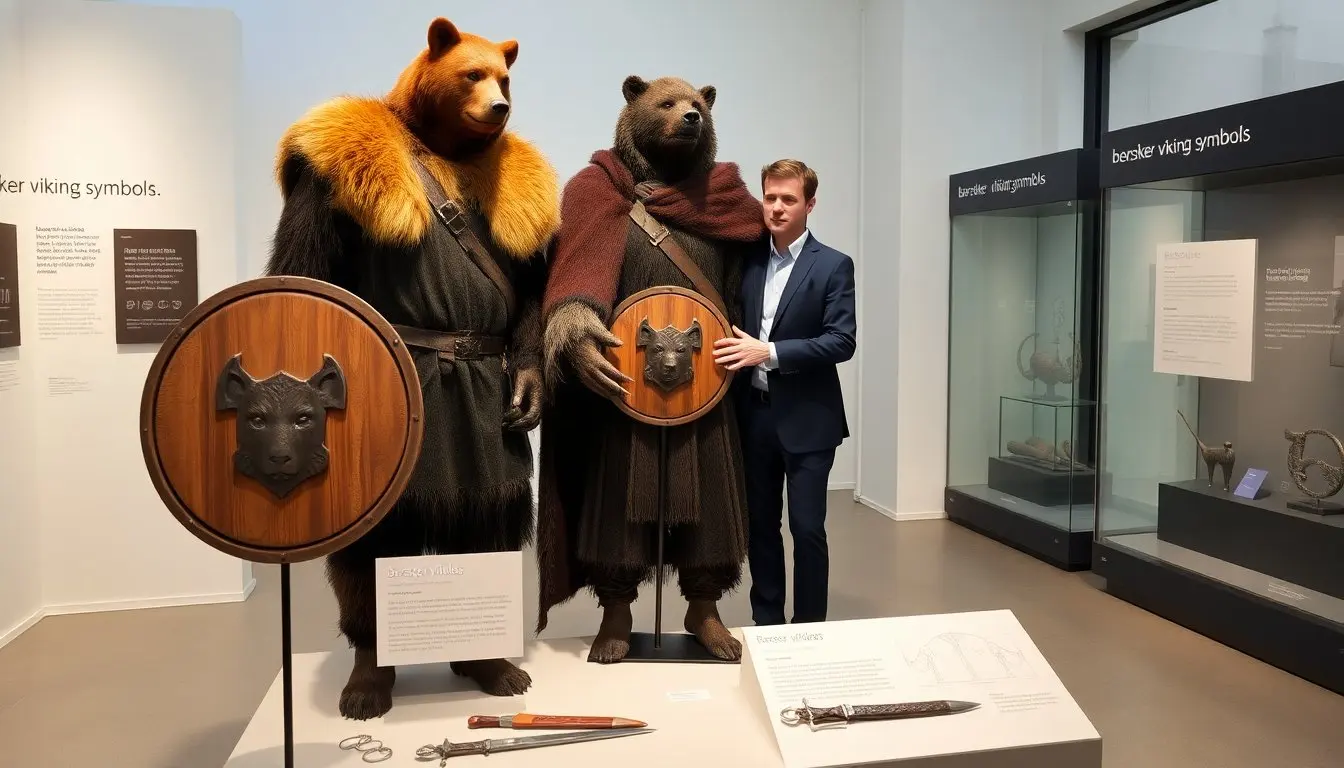
Berserker viking symbols explain how Norse fighters marked identity and power. The term appears early in Old Norse texts. Scholars link the term to ritual, war, and image. This guide lists the main symbols, their likely meanings, and how people use them today.
Key Takeaways
- Berserker Viking symbols represented identity, power, and spiritual roles linked to Norse warriors who showed extreme battle rage.
- Common berserker motifs include animal imagery like bears for strength and wolves for aggression, used on clothing, shields, and amulets.
- Runic inscriptions on weapons and jewelry were believed to provide protection or boost courage in battle, reflecting the mystical aspect of berserker viking symbols.
- Archaeological finds support saga descriptions by revealing warrior graves with animal-themed gear and rune-marked objects indicating a martial and ritual significance.
- Modern use of berserker viking symbols in tattoos, jewelry, and reenactment merges historical interest with personal and cultural identity.
- Museums and researchers emphasize context and caution to differentiate authentic berserker viking symbols from modern myths and artistic recreations.
What “Berserker” Meant And Its Cultural Context
The term berserker described a fighter who entered extreme rage. Scribes wrote the word in sagas and law texts. Scholars read those sources and infer social roles. Berserker viking symbols served as signs of group identity and spiritual practice. Communities used marks to show rank and role in war. Some marks appeared on clothing, shields, and amulets. Oral storytellers repeated details about animal skins and trance states. Craftspeople likely made visible signs for ritual use. Later writers added myth and moral judgment to the image. Modern researchers compare texts, law codes, and burial finds to separate fact from later legend.
Context matters: berserkers are described within a wider Scandinavian warrior culture that emphasized reputation, oath-taking, and displays of courage. The same communities that recorded berserker behavior also maintained laws regulating fighting, slavery, and the spoils of war, which suggests that these fighters operated inside social structures rather than entirely outside them. Anthropologists and historians use comparative evidence—from ritual specialists elsewhere in northern Europe to historic accounts of battle trance—to interpret what the original Old Norse authors may have meant by “berserk” behavior.
Because the literary sources were composed and copied over centuries, modern scholars treat them cautiously. Some passages are explicitly literary or poetic, using heightened language to describe exceptional fighters. Where possible, researchers triangulate saga descriptions with material evidence—grave assemblages, weapon wear patterns, and iconography—to refine understandings of how berserker viking symbols functioned in everyday life and in ritual settings.
Key Symbols Associated With Berserkers
Archaeologists and historians list several recurring motifs in sources tied to berserkers. The most common motifs connect to animal power, runic marks, and personal insignia. People used these signs in fighting, ceremony, and self-fashioning. The study of these marks helps explain how people in the past expressed warrior identity. The rest of this section breaks the motifs into animal imagery and runic or magical marks.
Beyond animal and runic motifs, researchers note other visual markers that may be associated with a berserker identity: distinctive paint patterns on shields, unique metal fittings on weapons or clothing, and combinations of objects placed together in graves that suggest an established role. These combinations—object, inscription, and placement—are often more informative than any single item taken in isolation.
Animal Motifs: Bear, Wolf, And Other Beast Imagery
Artists and storytellers tied berserker viking symbols to bears and wolves. Writers describe fighters wearing bear pelts or wolf cloaks before battle. Craftspeople carved bear and wolf heads on shields and helmets. The bear symbol suggested physical strength and endurance. The wolf symbol suggested aggression and pack behavior. Sources also mention boar and stag imagery in a few coastal sites. Amulets with animal faces appear in graves linked to warrior equipment. These finds suggest that people used animal imagery to claim animal traits. The marks may have also helped allies recognize a fighter in chaos. Modern groups adopt the same animal symbols for heritage displays, tattoos, and reenactment gear. They use the term berserker viking symbols to name those motifs and to link personal identity to perceived ancestral traits.
Interpreting animal symbolism requires nuance. For instance, a bear pelt placed in a grave could reflect personal devotion, a symbolic claim to the bear’s qualities, or simply practical reuse of animal hide. Similarly, carved animal heads on a shield boss could be decorative, emblematic, or intended to evoke protection. Where possible, specialists look at wear patterns, archaeological context, and co-occurring objects to distinguish everyday use from ritualized display. Ethnographic parallels and iconographic studies also help explain how animals functioned as portable symbols of power in Norse visual language.
Runes, Marks, And Magical Insignia Linked To Fury
Runes appear with berserker viking symbols in inscriptions and on metalwork. Craftspeople carved short rune sequences on swords, amulets, and belt buckles. Scribes also mention rune writing used for protection or to stir courage. Some rune rows spell names. Others show cryptic signs that may signal divine favor or trigger a trance. Scholars treat claims of magical fury with caution. They test rune finds against datable contexts and language changes. Several rune-marked objects date to the Viking Age and link to warrior graves. These marks suggest that some fighters sought external aid for battle readiness. Modern users copy rune motifs in jewelry, tattoos, and patches. They often label these items with the phrase berserker viking symbols to show both historical interest and personal meaning.
The study of inscribed objects looks at more than translation: placement, depth of incision, and the pairing of runic signs with imagery reveal intended uses. Short inscriptions invoking protection, the owner’s name, or a deity are common on weapons, while more enigmatic bindrunes and cipher-like marks may have served as personal talismans. Experimental work reproducing rune carving and testing how marks wear over time helps conservators and archaeologists verify authenticity and function.
Archaeological Evidence, Sagas, And Modern Interpretations
Archaeologists report finds that match descriptions tied to berserkers. Grave goods with animal imagery and weapons appear in contexts that suggest a martial role. Metal fasteners with rune marks show wear consistent with regular use. Researchers read sagas for behavioral details and then test those details against material evidence. The saga texts contain poetic language and later redaction, so researchers treat them as partial records. Experimental archaeologists test how animal cloaks and painted shields might affect a fighter in combat. They measure mobility, visibility, and heat load. Those experiments help explain why people might adopt certain items. Modern craftsmen reproduce items found in digs for museums and collectors. Fans of Viking history use the phrase berserker viking symbols when they buy these reproductions. That use spreads simplified images and mixes factual detail with modern aesthetics. Museums work to show context and caution when they display rune-marked objects and animal gear. They label items with proven dates and note uncertain claims. This practice helps viewers separate artifacts from modern myth.
Case studies combining text and material culture illustrate the interpretive process: a burial with weapons and animal-related objects prompts questions about the deceased’s social role; matching saga descriptions may suggest a ritualized warrior identity but cannot on their own confirm it. Interdisciplinary projects—bringing together archaeologists, philologists, conservators, and experimentalists—produce the most reliable reconstructions of how berserker viking symbols were created, used, and understood.
For readers exploring these themes today, the main takeaway is to appreciate both the enduring power of the imagery and the limits of our evidence. Berserker viking symbols remain a compelling window into past identities, but robust interpretation depends on careful context, critical comparison of sources, and transparent presentation by museums and scholars so the line between historic practice and modern reinvention remains clear.