


Shopping for protection viking symbols usually leads to the Vegvisir and the Helm of Awe, yet the best-attested protective objects are Mjölnir pendants and runic inscriptions found by archaeologists. The Vegvisir comes from manuscripts written centuries later.
The split matters whenever a jewellery listing, tattoo design or museum label calls something “Viking”. For a refresher on weighing excavated objects against later texts, see what are what are primary sources in history in the wider guide to historical periods and sites.
Attested finds versus later texts
Evidence for Viking protective symbols comes in two kinds: objects dug up from the ground, and written sources. The two kinds do not carry equal weight. An excavated pendant shows what someone owned, while a manuscript shows only what a later writer recorded. Some texts date from the Viking age itself. The Poetic Edda is a collection of poems, many of them written during the Viking age. Other texts come much later, and the gap changes how far each can be trusted as evidence for Viking practice.
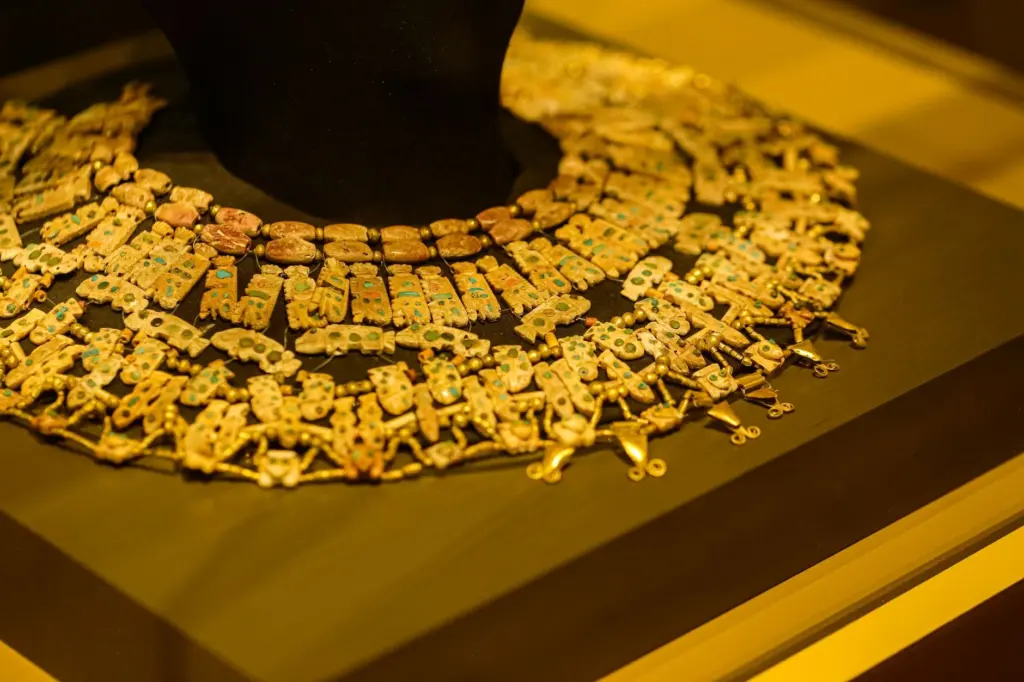
The table below separates the main candidates by what survives and when it was written, so you can see which symbols rest on finds and which on later writing.
| Symbol | What the evidence is | Timing | Planning use |
|---|---|---|---|
| Mjölnir pendants | Over 50 pendants found at Viking graves in Scandinavia and England | Mostly estimated 9th to 11th century AD | Treat as the best-documented protective amulet |
| Runic inscriptions | Runes carved into weapons, jewellery, tools, stones and personal objects | Found on excavated objects | Treat the inscription as attested; the magical reading is a scholarly interpretation |
| Vegvisir | Icelandic books of magical staves: the Galdrabók and the Huld manuscript | Both written a few centuries after the Viking age ended | Treat as a later Icelandic symbol; Viking-age origin is unproven |
| Aegishjalmr (Helm of Awe) | Numerous references in Icelandic sagas | Known through texts | Cite the saga references, not an excavated object |
The pendant counts and dating come from a survey of Viking symbols, and the rune finds are described in a review of protection runes.
Mjölnir amulets and the grave finds
Mjölnir, Thor’s hammer, is the protective symbol with the firmest archaeological footing. Over 50 different Mjölnir pendants have been found at Viking graves in Scandinavia and England, and most are estimated to date from the 9th to the 11th century AD. That spread across two regions shows the hammer was not a local oddity.
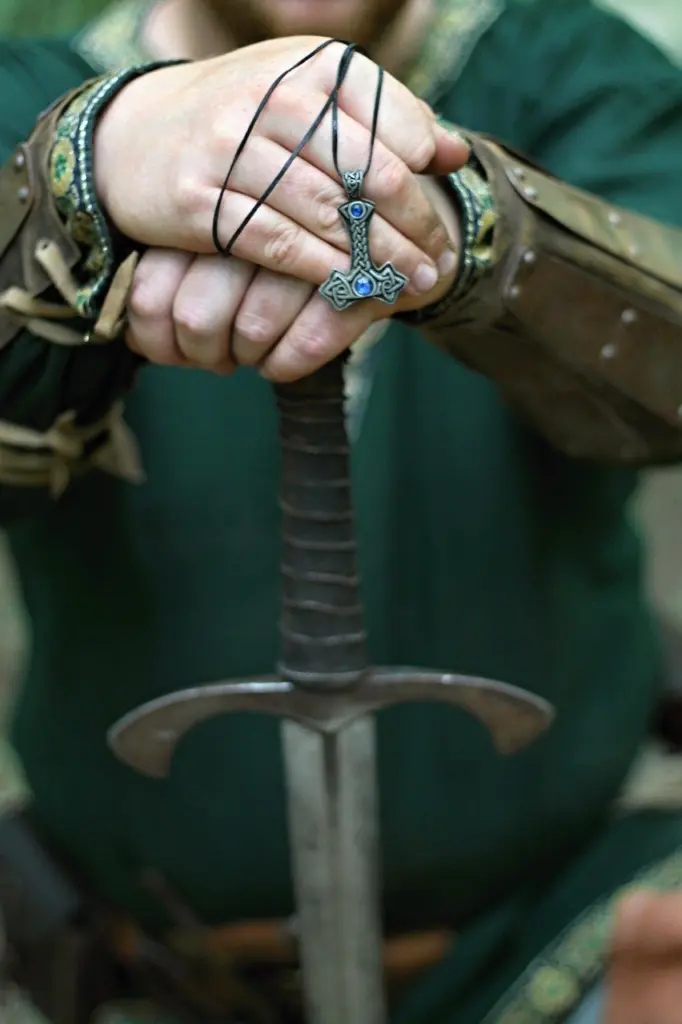
The same survey describes Mjölnir as a common symbol among the North Germanic peoples, often used in jewellery to symbolise protection. It also lists Mjölnir and the Valknut among the symbols that appear often in Viking artwork and artefacts. A pendant is a personal object worn on the body, which fits the idea of a protective charm. A grave is where such objects survive.
If you want a Viking protective symbol with documented support, choose a Mjölnir pendant. A reproduction should copy the form of an excavated find, and a seller’s label should say so.
Runes and runestones as protection
Runes are the other well-supported category. Archaeological discoveries show runes carved into weapons, jewellery, tools, stones and personal objects. Runestones, the carved stones, belong to this wider habit of putting writing on things people used and valued. Many scholars believe runes often functioned as written messages with magical intention.
That qualifier is important. A rune is first of all a letter, and the carving is an inscription. The word “often” in the scholarly view means that some runic objects are protective charms and others are not. Be wary of any claim that a single rune was a dedicated protection sign. The finds support runes on everyday and personal objects, and the magical purpose depends on the particular inscription.
The Vegvisir: a later manuscript symbol
The Vegvisir is called the pathfinder or wayfinder symbol and is associated with navigation, especially at sea. That association is why it is sold as a Viking compass. The manuscripts that carry it are the Galdrabók and the Huld manuscript (Huldar), both Icelandic books of magical staves. Both were written a few centuries after the end of the Viking age.
The same survey adds that there is little concrete evidence the symbol was used, or even invented, in the time of the Vikings, and its authenticity is debated. So the answer to whether the Vegvisir is an authentic Viking symbol is that it is authentic as an Icelandic magical sign of the later period, and unproven as Viking-age. Call it “from Icelandic magical manuscripts” rather than “Viking-age”. That wording is accurate and still honest if you wear or display it.
Aegishjalmr, the Helm of Awe
Aegishjalmr, usually rendered as the Helm of Awe, is a protective and fear-inspiring symbol of the warrior tradition. There are numerous references to it in Icelandic sagas. Its support is textual: you can point to saga passages, but this evidence does not extend to the claim that it was found on Viking helmets or weapons.
Many modern designs of the Helm of Awe are redrawn from later sources, so their line work is not a record of a Viking-age original. A fair description is “a symbol named in Icelandic sagas”. It suits a reader who values the literary tradition more than an excavated find, and it is a poor choice for anyone who needs a documented Viking-age object.
Reading the Eddas and sagas as evidence
Dates of the written sources separate the symbols more clearly than anything else. The Poetic Edda, a collection of poems many of which were written during the Viking age, mentions Yggdrasil, the world tree. The Prose Edda’s references to older symbols, by contrast, were only written about more than a hundred years after the end of the Viking age. The Galdrabók is later still, written centuries after the Viking age had already ended.
The mythology behind these texts also shows what protective symbols were meant to guard against. The beings set against the gods are covered in Norse Mythology Monsters: The Dark Beings Behind Ragnarok And Norse Lore (2026 Guide) – Scanheritage, and the cosmos that Yggdrasil anchors is laid out in The Nine Realms Of Norse Mythology: A Clear Guide To Yggdrasil’s Worlds – Scanheritage.
A quick test helps with any symbol claim:
- Find the earliest source. Ask whether it is an excavated object or a manuscript, and when that source was made or written.
- Compare it with the Viking age. A source from the period carries more weight than one written a hundred years or more afterwards.
- Check the find context. A grave find with a location is stronger than an undated design.
- Separate the inscription from its interpretation. Scholars read many runes as magical, but the object itself shows only the carving.
Seeing authentic objects in museums
Because Mjölnir pendants come from graves in Scandinavia and England, museums in those regions with Viking-age collections are the natural places to look for authentic amulets and rune-carved objects. On a museum label, look for the find-spot, the dating and whether the piece is excavated or a replica. A listed grave find is the evidence this article has treated as strongest.
Treat costume photographs and reconstructions as illustration only. They show how a symbol looks when worn today, and they say nothing about a Viking-age original.
Frequently asked questions
| Question | Answer |
|---|---|
| Why is the Vegvisir called a Viking compass? | It is known as a pathfinder or wayfinder symbol and is associated with navigation, especially at sea. |
| Did Vikings use runes as magic? | Many scholars believe runes often worked as written messages with magical intention, though not every runic object need be a charm. |
| Which Edda was written during the Viking age? | Many poems of the Poetic Edda were written during the Viking age. Prose Edda references to older symbols came more than a hundred years after it ended. |
| How should I judge a jewellery listing that says “Viking”? | Ask for the earliest source of the design. Mjölnir has excavated grave finds behind it, while the Vegvisir comes from manuscripts written a few centuries after the Viking age. |