

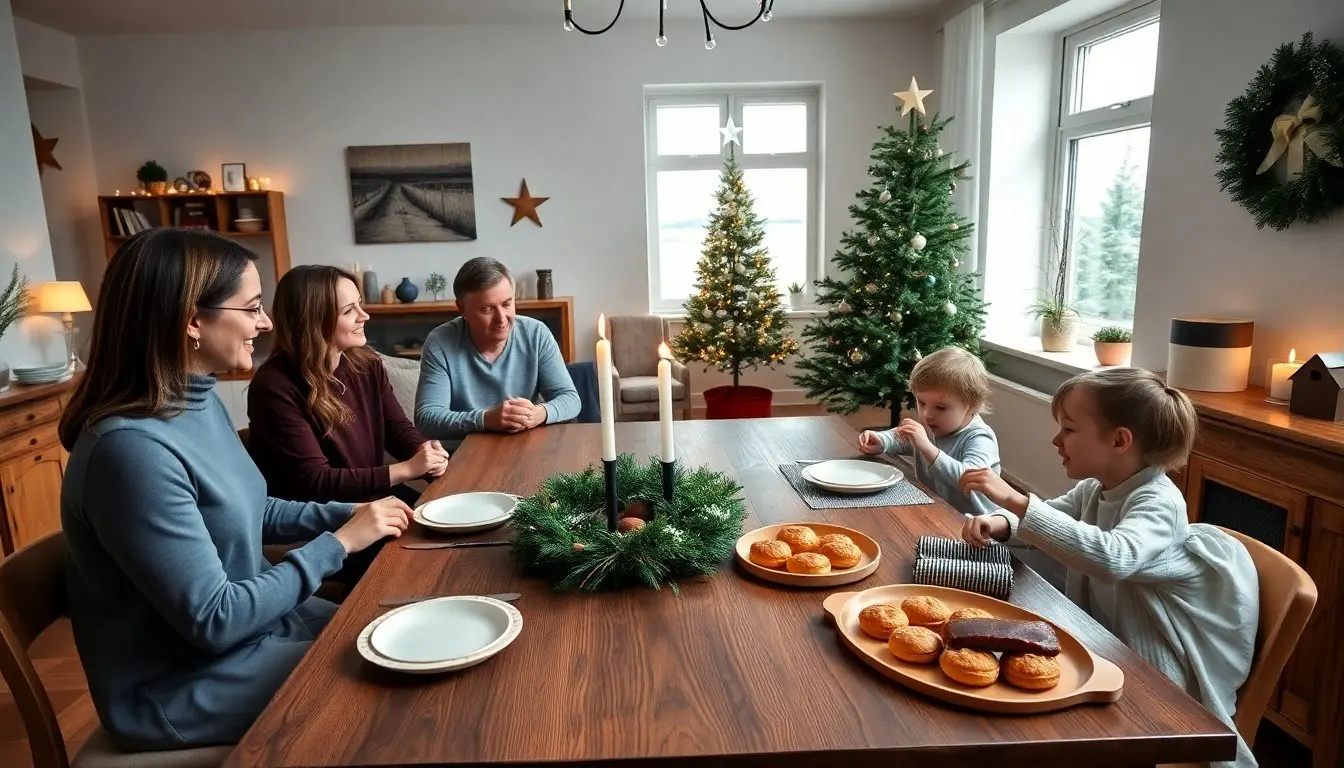
danish christmas traditions shape winter life in Denmark. The phrase points to food, lights, songs, and shared time. It describes rituals families keep year after year. This guide lists main customs and explains what people do from Advent to Christmas Eve. Across cities and countryside, these practices combine a long dark season with practical warmth, social rituals, and a deliberately calm, cozy mood known as hygge.
Key Takeaways
- Danish Christmas traditions emphasize family gatherings, simple decorations, and creating a warm, cozy atmosphere known as hygge.
- The festive season starts with Advent rituals featuring wreaths, calendars, and the popular julekalender TV series that build excitement for Christmas.
- Decorating Christmas trees with lights, paper hearts, and candles plays a central role in Danish holiday celebrations and brightens the long winter nights.
- Traditional Danish Christmas foods like risalamande dessert with a hidden almond, roast pork, and festive pastries are important for family bonding and cultural continuity.
- Christmas Eve is the main celebration day where families sing carols, light candles, share meals, exchange gifts, and engage in community activities that strengthen social ties.
What Makes Christmas In Denmark Distinctive
Danish christmas traditions center on family, light, and home warmth. People plan gatherings for December. They value simple decorations and shared meals. They sing carols and read poems on Christmas Eve. They prefer small, focused celebrations over large public shows. The word jule marks the season and appears in many phrases. The idea of hygge shapes behavior. Families create a calm space and invite close friends. Children watch the julekalender on TV. Adults light candles and cook special dishes. These acts create a clear national character for the holiday.
What distinguishes Denmark’s approach is a consistent preference for intimacy and ritual detail: small homemade ornaments, hand-baked cookies, and evenings spent under candlelight rather than flashy outdoor spectacles. There are regional variations—coastal towns may add more seafood to a Christmas buffet, while inland homes might emphasize roasted meats—but the through-line is the focus on togetherness and slowing down to enjoy simple pleasures. Many Danes also combine older folk traditions, like mentioning nisser (house spirits) in playful ways, with modern touches such as sustainable decorations or community volunteering, so the customs evolve while remaining recognizably Danish.
Advent, Calendars, And Decorations
People in Denmark start the season with Advent rituals. They mark the four Sundays before Christmas. They use wreaths and calendars to count down. Many homes show a clear focus on light and simple style.
Advent Wreaths, Calendars, And Julekalender Culture
Families place an Advent wreath on the table. They light one candle each Sunday. Parents buy paper calendars for children. Kids open a door or envelope each morning. TV stations air a julekalender with short daily episodes. Schools and local shops sell small gifts for calendars. People exchange calendars as a friendly habit. The julekalender creates a daily ritual during December. It keeps attention on the coming holiday.
In addition to ready-made calendars, many households make homemade versions filled with family notes, small sweets, or coupons for activities like sledding or baking. The Advent wreath itself is often a focal point of conversation—wreath-making parties are common, and florists sell ready-made wreaths featuring local evergreens and simple ribbons. The cumulative effect is practical: an easy, visible rhythm that marks the passage of weeks and encourages short, shared moments of attention each Sunday.
Christmas Trees, Candles, And Window Lights
People bring a tree into the home in December. They decorate trees with lights, paper hearts, and simple ornaments. They place candles on windowsills to show light to neighbors. They hang strings of lights and stars in windows. Families often light candles during the evening. Town centers place larger trees for the public. Children help with ornaments and lights. This activity feels intimate and public at the same time. The steady glow changes short winter days into a festive scene.
Traditional decorations often emphasize natural materials—paper cutouts, straw ornaments, wooden figures and handmade hearts—keeping the aesthetic understated rather than ostentatious. Some families still use small wax candles on the tree (with careful supervision), while electric candles and LED strings have become safer common options. Public lighting schemes—from municipal trees to market stalls—extend the private sense of warmth into communal spaces, so walking through a neighborhood feels like moving through a shared celebration.
Traditional Danish Christmas Foods
Food takes a central role in Danish Christmas traditions. People plan multi-course meals and bake often. The menu often blends sweet and savory items. The food links generations and local farms.
Risalamande, Roast Pork, And Festive Pastries
Families serve risalamande as a classic dessert. Risalamande contains rice, milk, cream, and chopped almonds. Hosts hide a whole almond in a bowl. A guest who finds the almond wins a small prize. Many households roast pork with crackling for the main dish. They also serve red cabbage and caramel potatoes. Bakeries sell small almond cakes and butter cookies. People buy warm pastries called aebleskiver for parties. Children eat sweets on special days. Food acts as a clear anchor for memory and social ties.
Beyond those staples, other dishes and habits enrich the season: a smorgasbord-style julefrokost (Christmas lunch) with pickled herring, liver pate, rye bread and snaps is common during December workplace and family gatherings; warm mulled wine or glogg is sipped at markets; and many families preserve small culinary traditions such as spiced cookies, marzipan figures, or a special porridge served on certain days. Recipes and techniques are often passed down—grandparents guiding younger cooks—so preparing the holiday table becomes a vehicle for intergenerational storytelling.
Family, Hygge, And Community Rituals
Families gather on December 24 for the main celebration. They light candles and sing carols before the meal. Adults exchange gifts after the meal. Children open gifts that they believe come from a small mythical figure or from parents. People visit relatives and elderly neighbors during the season. Communities organize markets and concerts in public squares. Neighbors invite each other for coffee and cake on weekends. Schools hold small parties where children perform songs. Charities collect food and gifts for families in need. These acts keep the social fabric strong during winter.
Hygge—often translated as coziness—underpins many of these rituals. It’s visible in candlelit living rooms, communal baking sessions, slow walks to local markets, and evenings spent playing board games by lamplight. Many community groups run volunteer activities, from soup kitchens to tree-lighting ceremonies, which broadens the private warmth to public care. The season also includes quieter observances: some families attend a church service, others set aside time to write New Year wishes, and many choose to unplug for parts of December to focus on close relationships. Together, these practices make danish christmas traditions both rich in detail and deeply social.