

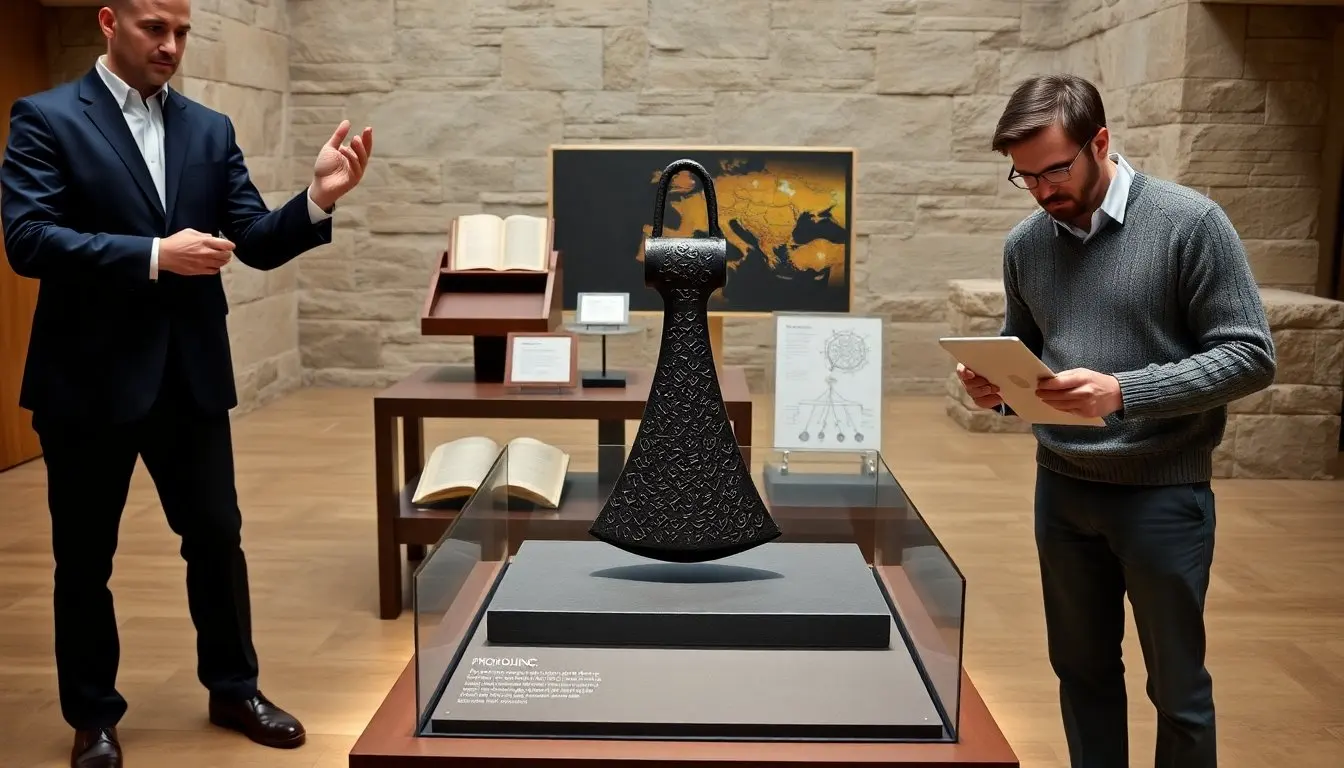
Mjolnir Norse mythology appears at the start of many Old Norse poems and sagas. Scholars treat mjolnir norse mythology as a key object for understanding Norse belief and ritual. This article explains origins, key texts, symbolic use, archaeological finds, powers, limits, and modern influence. It uses clear facts and short explanations. It aims to give readers a direct, reliable overview of mjolnir norse mythology without jargon.
Key Takeaways
- Mjolnir in Norse mythology originated from dwarf smiths Brokkr and Sindri and symbolizes divine power and craftsmanship.
- The hammer is central in the Poetic and Prose Eddas, depicting Thor’s protection against giants and its role in law and order.
- During the Viking Age, mjolnir was used in rituals for protection, blessings, and as a symbol against Christian crosses.
- Mjolnir possesses powers to crush enemies and consecrate spaces but follows ritual rules and limitations for its use.
- In modern culture, mjolnir influences books, films, and religious revivals, symbolizing Norse heritage while requiring careful historical understanding.
Mythic Origins Of Mjolnir
Snorri and the poets trace mjolnir norse mythology back to the dwarf smiths Brokkr and Sindri. The dwarfs forged the hammer as a prize after Loki challenged them. The hammer had a short handle because Loki interfered. Poets describe the hammer as heavy, fast, and faithful to Thor. Scholars link the word mjolnir to a Proto-Germanic root that means “crusher.” Archaeologists and historians note that the hammer appears in burial and ritual contexts. The mythic origin shows how Norse storytellers linked craft, chance, and divine power to make mjolnir norse mythology a central artifact.
Beyond the basic origin tale, scholars read several layers into the story. One line of interpretation treats the myth as a way to frame the hammer as both a manufactured object and a divine weapon: its creation by skilled craftsmen emphasizes the role of technology and craft in religious imagination. The presence of Loki’s trickery—resulting in the short handle—has been seen as an etiological device explaining why the hammer looks as it does in jewelry and iconography. Linguistic study of mjolnir norse mythology explores related Germanic words and regional name-forms, which together suggest an ancient and widespread cultural importance well before the surviving Icelandic prose traditions.
Mjolnir In The Poetic And Prose Eddas
The Poetic Edda and the Prose Edda record key episodes that feature mjolnir norse mythology. Poets place Thor and his hammer at the center of fights with giants. Snorri Sturluson frames the hammer within a system of gods and rituals. Both texts show Thor using the hammer for protection and consecration. The Eddas also present the hammer as a symbol of order and law. Later sagas and skaldic verses repeat those themes. Readers find consistency in the Eddas when they study the uses of mjolnir norse mythology across poems.
Close readings of individual poems add texture: in some lays the hammer is invoked to restore order after chaos; in others the focus is on Thor’s personal relationship with the hammer—its reliability and the ritual gestures tied to its use. The Prose Edda, while written later and with Christian-era authorship, preserves narrative frameworks and explanatory glosses that show how medieval Icelanders understood mjolnir norse mythology within a broader ritual calendar. Comparative work across poems and prose fragments helps reconstruct how the hammer functioned in performance, oath-making, and narrative symbolism rather than as a single, fixed object.
Symbolism And Religious Use In The Viking Age
People in the Viking Age used mjolnir norse mythology as a symbol of protection and identity. Farmers and sailors invoked the hammer in oaths and blessings. Priests and laypeople used the hammer in rites to bless marriages and homes. The hammer also served as a counter-symbol to Christian crosses during conversion. Inscriptions show that some men and women wore the hammer to show belief and social ties. The repeated public use made mjolnir norse mythology a practical sign of religion and status.
Archaeological finds enrich this picture: small hammer-shaped pendants appear in hoards, graves, and domestic contexts across Scandinavia and in regions connected by Viking trade and migration. The distribution and chronology of these finds indicate that wearing a hammer could mark personal piety, group belonging, or a statement of cultural identity in contested religious landscapes. Ethnographic analogy and historical records suggest that visible symbols like mjolnir norse mythology were used during oaths, legal gatherings, and life-cycle events, which made the hammer a polyvalent emblem—both protective amulet and public badge.
Characteristics: Powers, Limits, And Ritual Rules
Texts describe the hammer as able to crush giants and return when thrown. The hammer could also consecrate ground and food. The hammer required a ritual form to bless people and things. Poets and law texts imply that only certain people could use the hammer in rites. The hammer could fail in stories when trickery or fate intervened. Those limits show how Norse authors made mjolnir norse mythology powerful yet embedded in rules. The rules kept the hammer meaningful inside myths and rituals.
Analyzing narratives and law codes together shows a tension between supernatural efficacy and human practice. On one hand, mjolnir norse mythology is an instrument of cosmic force: it hurls storms, foils giants, and mends order. On the other hand, use of the hammer in human rites seems governed by protocols—who speaks the blessing, which gestures accompany the act, and what words or objects are needed to consecrate food or space. Stories where the hammer is tricked or temporarily absent function to underline these limits and to dramatize social or moral lessons, reinforcing that power in Norse thought was effective but accountable to narrative and ritual procedures.
Mjolnir’s Influence In Modern Culture And Revival Movements
Modern writers and artists borrow mjolnir norse mythology for books, films, and games. Comic books made Thor and the hammer popular worldwide. Musicians and sculptors use the hammer as a symbol of Norse identity. Some modern groups adopt the hammer as a religious emblem in reconstructed heathen practices. Museums present mjolnir norse mythology in context and with critical notes. The modern use keeps the hammer visible, but scholars warn against simple readings. Careful study helps people use mjolnir norse mythology with historical awareness.
Contemporary engagement with mjolnir norse mythology spans creative reinterpretation, academic scholarship, and devotional practice. Popular adaptations often amplify certain features—heroic strength or the moral worthiness required to wield the hammer—while reconstructed religious communities aim to base practice on evidence from archaeology and texts. Curators and scholars increasingly emphasize context: pendants, iconography, and literary witnesses should be read together rather than in isolation. That approach encourages responsible cultural use and shows how an ancient object like mjolnir norse mythology continues to inspire debate about identity, heritage, and the boundaries between past and present.