

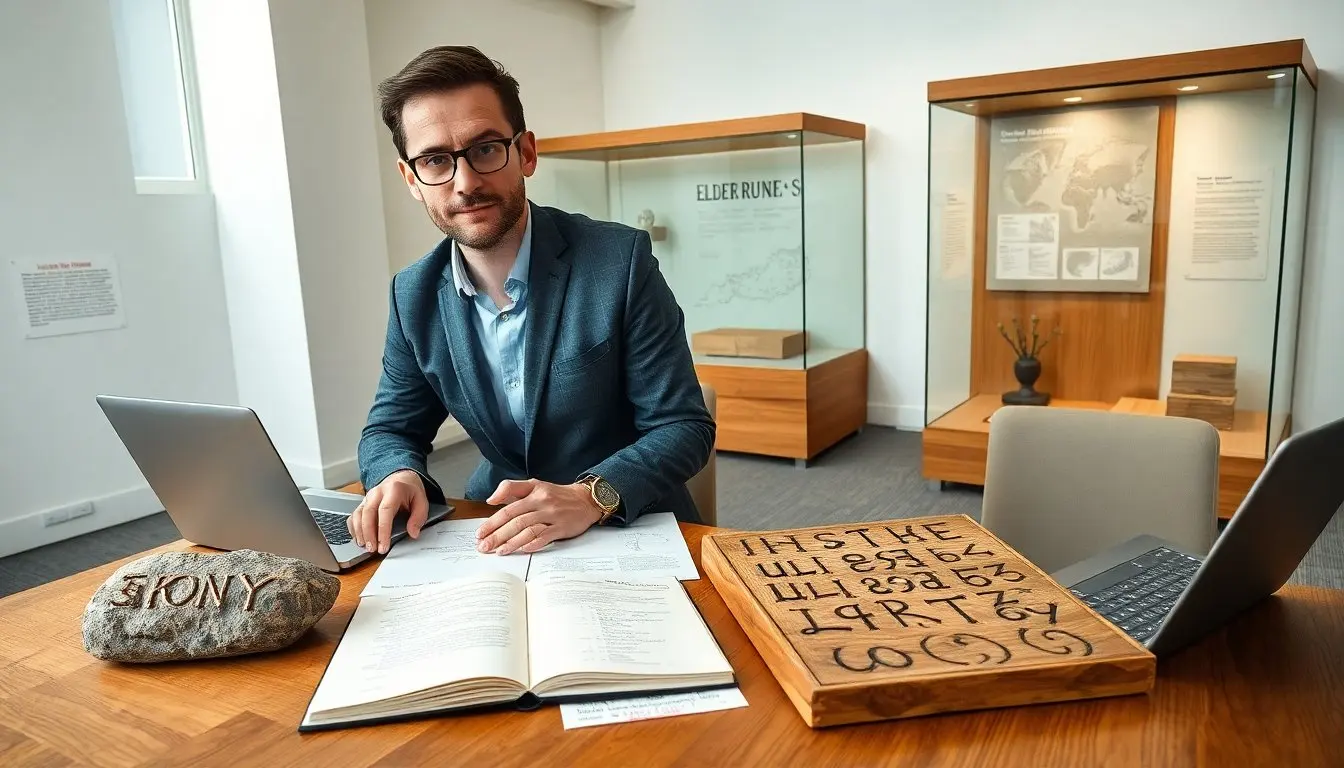
Nordic runes meaning appears in many books and websites. This guide gives clear facts about runes. It explains origin, the Futhark, and common uses. It shows key symbols and simple methods to read them. The guide uses concise language. The guide targets readers who want reliable, direct information on runes and how people use them today.
Key Takeaways
- The Nordic runes meaning originates from the runic alphabet used by Germanic peoples, with the Elder Futhark containing 24 primary symbols.
- Each rune carries both a phonetic sound and a symbolic meaning, such as Fehu representing wealth and Uruz symbolizing strength.
- Historically, runes were inscribed on objects for names, messages, and ritual purposes, reflecting their practical and cultural significance.
- Modern interpretation of Nordic runes meaning includes historical study, artistic design, and personal reflective practices, but it’s important to distinguish between original and modern uses.
- To interpret runes correctly, identify the runic variant, transliterate sounds, consider grammatical context, and compare academic sources.
- Respecting the historical context and testing interpretations are crucial for meaningful engagement with Nordic runes meaning today.
What Are Nordic Runes? Origins, The Futhark, And Historical Context
Nordic runes meaning refers to the symbolic alphabet used by Germanic peoples. Scholars date the earliest inscriptions to around 150 CE, with continued use and variation over the early medieval period. People carved runes on stone, wood, metal, and bone; the survival of inscriptions depends heavily on material and preservation conditions, which is why most long-lasting examples are on stone and metal. The runic alphabet appears in several main variants. The Elder Futhark contains 24 runes and is the oldest widely recognized inventory. The Younger Futhark, reduced to 16 signs, reflects phonological changes in Old Norse. The Anglo-Saxon Futhorc expands the set to about 28–33 signs to represent sounds in Old English.
Archaeologists find runes on graves, weapons, amulets, and household objects. Common functions include naming the maker of an object, marking ownership, recording brief messages, or invoking protection. Christian scribes later added rune references to manuscripts and sometimes used rune-like signs as marginalia. Historians link rune use to Norse, Germanic, and Anglo-Saxon cultures across Scandinavia and the British Isles, and they emphasize that usage patterns shift over time and place.
Linguists map rune shapes to sounds and names. Each rune carries a phonetic value and a name with a meaning; these names are preserved in medieval rune poems and later glosses, which help scholars reconstruct Proto-Germanic roots and semantic fields. For example, the rune Fehu ties to wealth and movable property, reflecting an economy where cattle and valuables were key; Uruz ties to strength and the wild aurochs, and Algiz ties to protection and defense. Researchers treat rune names as part of the cultural record and study how meanings overlap with daily life, ritual, and poetic language. They caution against assuming modern mystical practices accurately reproduce historical intentions.
Today, people study runes for history, language, and art. Museums display rune stones with translations and context for visitors. Language students use runes to trace sound changes and orthographic practice in early Germanic languages. Writers and artists adapt runes for design and storytelling, while some modern practitioners use runes in personal rituals or divinatory systems. Responsible study separates archaeological and philological evidence from later esoteric layers.
Key Runes And Their Meanings — Elder Futhark Symbols To Know
Nordic runes meaning often centers on the Elder Futhark. The Elder Futhark offers a clear starting point for study because its 24 signs are well attested across a range of inscriptions. Learning a core group of runes gives readers a practical basis for identifying signs and tracing how meanings and sounds evolve in later alphabets.
- Fehu (ᚠ): It marks wealth, cattle, and earned goods. It signals gain or loss and connects to economic and social standing in early societies.
- Uruz (ᚢ): It marks physical strength and endurance. It links to vitality and raw power, often associated with the wild aurochs and resilience.
- Thurisaz (ᚦ): It marks a thorn or giant. It signals challenge, defense, or warning, and appears in contexts suggesting caution or confrontation.
- Ansuz (ᚨ): It marks a god or spoken message. It links to communication, revelation, and poetic or authoritative speech.
- Raido (ᚱ): It marks travel and movement. It links to journeys, change of place, and the social and ritual aspects of travel.
- Kenaz (ᚲ): It marks a torch or opening. It links to knowledge, technical skill, and the creative spark of transformation.
- Gebo (ᚷ): It marks gift and partnership. It links to exchange, alliance, and the social bonds formed through reciprocity.
- Wunjo (ᚹ): It marks joy and harmony. It links to well-being, successful relationships, and communal prosperity.
Students learn rune meanings by study and by comparing sources. Many rune poems from medieval sources preserve names and short definitions that illuminate contemporary understandings; these poems come in varying regional forms and sometimes give different emphases. Translators link rune names to Old Norse and Proto-Germanic roots, and comparative linguistics helps reconstruct original senses. Modern authors often add expanded symbolic layers for literary or spiritual use. Readers should note the difference between historical meaning—grounded in phonetics, names, and practical inscriptions—and modern interpretation, which can be metaphorical or systematized for divination.
Anyone studying runes should record sources and dates, note manuscript or artifact provenance, and be aware of editorial choices in transcriptions. They should test translations against inscriptions, consult rune poems and academic commentaries, and avoid assuming one fixed meaning for any rune; meanings shift with context, language stage, and cultural practice.
How Runes Were Used And How To Interpret Them Today
Nordic runes meaning appears in inscription, art, and modern practice. Historically, people used runes for names, memorials, maker’s marks, and short messages. Carvers chose runes for sound and for symbolic effect. They often used bind-runes, where two or more runes join in one mark to save space or create an emblematic sign. They used runes in formulas that repeat protective words or names, and on items intended to be durable or visible in public contexts.
Archaeological context guides interpretation. Scholars read runes with knowledge of language, grammar, and artifact type: a runic line on a grave stone commonly contains a memorial formula and a name, while an inscription on a tool or weapon might give the maker’s name, an owner’s mark, or a short invocation. Understanding the material, find-spot, and associated dating evidence is essential: an isolated sign without context is more speculative. Proper interpretation requires careful comparison to dated examples and peer-reviewed studies.
Modern readers adapt runes for study, design, and personal practice. For study, students transcribe runes into Latin letters and then into a modern language, documenting uncertain readings and alternative restorations. For design, artists use rune shapes as visual motifs but should avoid presenting invented meanings as historical. For personal practice, some people use single runes or rune sets in reflection, journaling, or focused work, often combining historical meanings with contemporary symbolism.
Simple steps help readers work with runes today. First, identify the runic alphabet variant and the likely date range. Second, transliterate each rune to its phonetic value, noting ambiguities. Third, translate the result with attention to grammar, case endings, and likely elisions. Fourth, compare meanings in rune poems, inscriptions, and academic sources to check consistency. Fifth, note the artifact type and date to weigh historical plausibility. Where inscriptions are fragmentary, present multiple readings rather than a single definitive meaning.
People who use runes for personal work should respect historical sources and be transparent about which elements are historical and which are modern additions. They should separate historical fact from modern meaning, test interpretations against primary evidence when possible, and revise conclusions when new scholarship appears. This approach preserves the integrity of the study of Nordic runes meaning while allowing thoughtful contemporary engagement.