

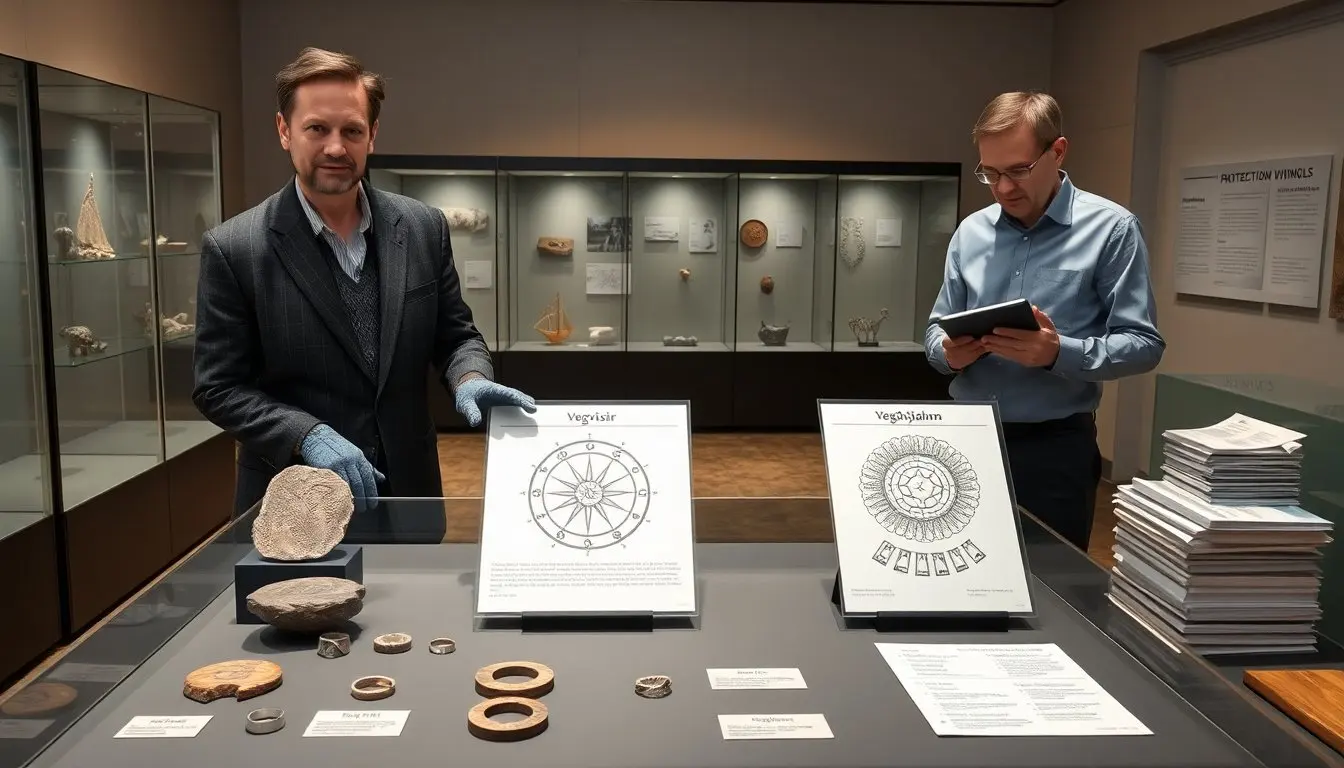
The article explains protection viking symbols and why people used them. It shows common symbols, their meanings, and how people used them in daily life. The text uses clear examples and direct facts. It avoids speculation and focuses on evidence from archaeology and sagas. It gives practical context so readers can recognize these marks on amulets, carvings, and runestones.
Key Takeaways
- Protection Viking symbols served as marks of safety, identity, and community affiliation in daily life and battle.
- The Vegvísir, known as the Viking compass, symbolized guidance and safe travel, often used on amulets and ship fittings.
- Ægishjálmr (Helm of Awe) represented victory and fear, invoked by warriors for protection and courage.
- Archaeological and saga evidence shows these symbols were combined with rituals and practical actions for maximum effect.
- Symbols evolved over time, spreading through trade and adapting to local customs while retaining their protective purpose.
- Modern use of protection Viking symbols reflects historical meanings blended with contemporary interpretations, celebrating strength and safety.
Why Viking Societies Used Protective Symbols
Viking groups used protection viking symbols for safety and identity. Communities carved marks on ships, swords, and houses. Warriors wore amulets when they traveled and fought. Craftsmen and priests placed symbols on tools to mark ownership and purpose. People believed the marks could guard against harm, illness, and bad weather. Writers in the sagas noted that some families traced their luck to specific signs and talismans.
Archaeologists found engraved rings, pendants, and stones that show repeated signs. These items appeared at graves and in hoards. The finds suggest people selected symbols for ritual use and daily wear. Traders carried small amulets across routes, and the symbols spread with goods and ideas. Local rune carvers adapted older signs to local tastes and needs.
The community used symbols to show group bonds. A mark on a banner or shield told others which household or lord a person served. This visual code reduced confusion in battle and forged loyalty. Symbols also marked sacred places. Shrines and altars wore signs that told visitors where to leave offerings. Over time, the use of protection viking symbols shifted from private magic to public identity, but the core intent stayed the same: show affiliation and seek safety.
Scholars stress that people did not rely on any single sign. They combined signs, prayers, and actions. A farmer might carve a mark in his field and then hold a ritual feast. The material evidence supports this mix of practical work and symbolic act.
Examining the material record provides additional nuance. Amulets made of silver and iron are common in Viking-age contexts; their wear patterns and find contexts (for example, from graves or domestic refuse) show they were personal items used over long periods. Runestones and carved wooden objects often place symbols in relationship with inscriptions, names, or scenes, which helps researchers interpret function: some marks appear alongside memorial formulas, while others appear with depictions of ships or animals, suggesting protective or commemorative roles. The distribution of motifs—concentrated around certain trade hubs and coastal communities—also indicates that protection symbols were especially important to travelers and those whose livelihoods depended on risky journeys.
Vegvísir (The Viking Compass): Meaning, Origins, And Use
The Vegvísir appears in later Icelandic grimoires and on wooden objects. People call it the Viking compass because sources say it guided travelers. The Vegvísir shows a central point with eight staves. Each stave points like a compass arm. The image served as a visual aid and a mnemonic for ritual words.
Records show the Vegvísir in a 17th-century Icelandic manuscript. That manuscript states that one who carries the sign will not lose the way in storms or bad weather. Researchers debate whether the sign existed in earlier Viking Age material culture. No clear Viking Age artifact shows the exact Vegvísir pattern, but similar radial symbols appear on brooches and carvings. Comparative study of these radial motifs helps historians trace how later textual sources may have codified or standardized an older, more varied visual tradition.
People used the Vegvísir on ship fittings, personal amulets, and painted shields in later centuries. Sailors and travelers likely invoked the sign before journeys. A captain might mark a mast or life-saving kit with the sign. Farmers might draw the sign on a cart to protect a trip to market. Practical uses extended to rituals for safe crossing of rivers or seas, and to marks placed on boats and livestock to indicate divine or protective concern.
The archaeological record offers indirect evidence for these practices: seeded comparisons between maritime finds (such as decorated steering oars or prows) and ritual texts suggest a continuity of maritime protective imagery. Ethnographic parallels—records of later Scandinavian folk practices—also provide context for how such a sign could function in the life of a community, for example as a portable charm or a painted emblem kept near entrances.
Modern makers reproduce the Vegvísir on jewelry and tattoos. They use it as a symbol of guidance and safe travel. Historians caution that modern meaning can blend new ideas with older ones. Still, the Vegvísir continues to function as a clear, visual statement: the wearer seeks direction and protection on the road. For students and collectors, comparing museum catalog images, manuscript facsimiles, and regional decorative styles helps distinguish older motifs from later reinterpretations.
Ægishjálmr (Helm Of Awe): Symbolism, Ritual, And Modern Interpretations
The Ægishjálmr, or Helm of Awe, appears in saga literature as a sign of victory and fear. Scribes described warriors who used the mark to strike terror in their enemies. The sign shows a circle with radiating arms and triskel-like hooks. People drew the mark between the eyes of a statue or on the forehead of a helmet in stories.
The sagas record rituals that involved the Ægishjálmr. A warrior might recite a chant and touch the mark. The chant might name ancestors or gods and ask for strength. Archaeological evidence for these rituals is limited. Still, the recurring mention in texts suggests the symbol held meaning in warrior culture. The motif also appears in later decorative metalwork and on small personal items, indicating it could move from battlefield lore into everyday protective practice.
Craftspeople used variations of the Helm of Awe on amulets and rings in later centuries. The sign became a short, clear way to claim protection in conflict. It also served as a badge of courage. The Helm of Awe appears on runestones and on metalwork that people used in everyday life, which points to a wider social use beyond battle. When present on grave goods or in memorial contexts, the Helm of Awe may have marked the deceased’s social role as a warrior or the family’s desire to assert strength and protection for the dead.
Modern interest made the Ægishjálmr common on jewelry and prints. People wear the sign to express inner strength and resistance to fear. Historians warn against assuming a single, fixed meaning. Yet the sign remains a strong visual cue for protection. Collectors and students can view images in museum catalogs to compare medieval and modern renderings of the Ægishjálmr. Close visual comparison—looking at line work, material, and accompanying marks—helps distinguish long-lived motifs from modern graphic reinterpretations.
Readers who study protection viking symbols find clear patterns. They see that the community used signs for travel, battle, and home life. They also see that living people adapted these signs over time to match new needs and new meanings. Combining artifact study, textual analysis, and attention to how motifs circulated through trade and craft networks gives the most complete picture of how protection symbols functioned in Norse societies and how they continue to carry meaning today.