

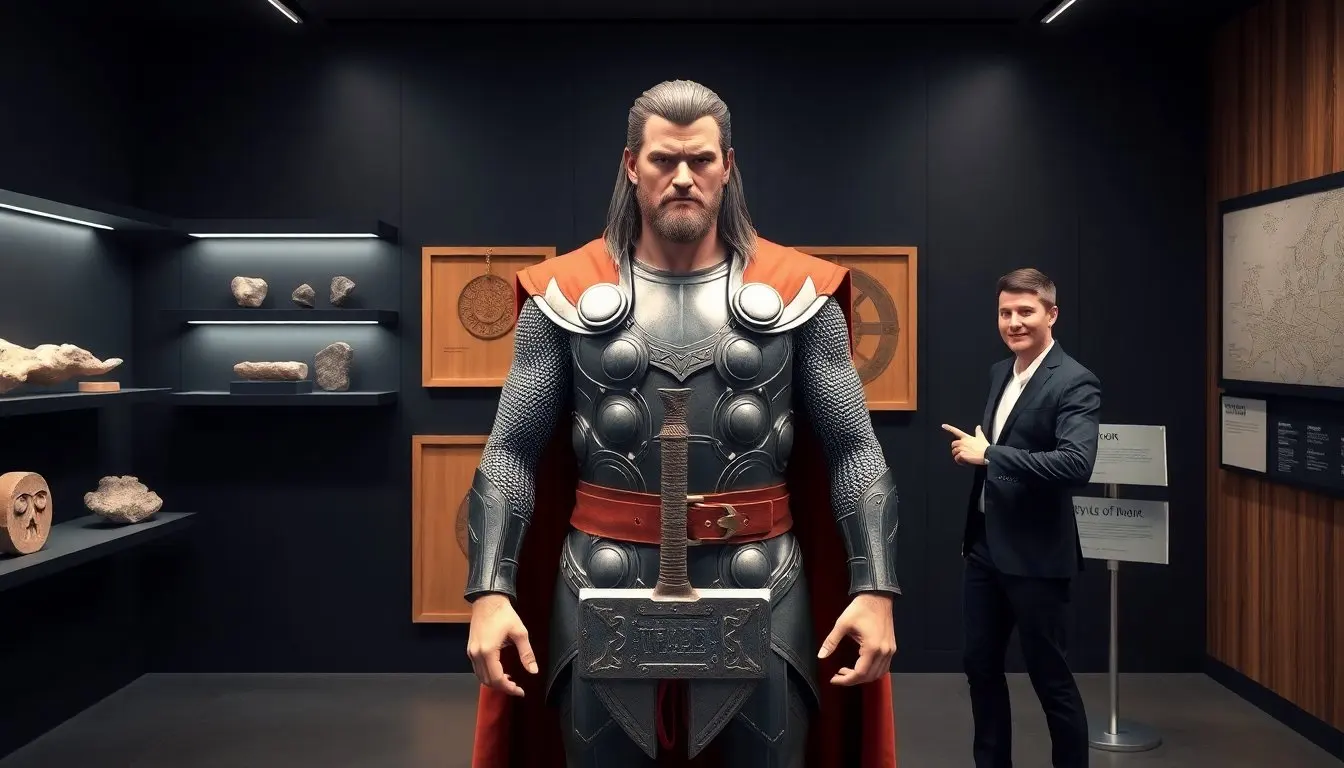
Norse mythology Thor stands as a central figure in Old Norse sources and later folklore. He appears in poems, sagas, and rune stones. Scholars trace his roots to Proto-Germanic belief. He acts as a protector of humans and gods. He wields a hammer called Mjolnir. This guide lists his origins, major myths, powers, and the ways people remember him today.
Key Takeaways
- Norse mythology Thor is a central god known for protecting humans and gods with his hammer, Mjolnir, symbolizing strength and protection.
- Thor originates from Proto-Germanic beliefs and appears in major Norse texts like the Poetic Edda and Prose Edda as the son of Odin and Earth goddess Jörd.
- His myths highlight his strength and cleverness, such as retrieving Mjolnir by disguise and battling the world serpent Jörmungandr at Ragnarök.
- Thor’s hammer served both as a weapon and a sacred symbol of faith, commonly worn as amulets during the Viking Age for protection.
- Modern culture continues to celebrate Thor through literature, art, and media, blending ancient myths with contemporary themes of heroism and family.
Who Is Thor? Origins, Family, And Place In The Norse Pantheon
Thor comes from the Norse pantheon of gods. He appears in the Poetic Edda and the Prose Edda. He acts as the son of Odin and the giantess Jörd (Earth). He marries the goddess Sif. He fathers children, including Móði and Magni. He lives in the stronghold called Þrúðheimr or Bilskirnir in Thrudvangr. He often visits Midgard to guard humans.
Early scholars link Thor to a Proto-Germanic thunder god named *Þunraz. Farmers and sailors invoked Thor for safe travel and good weather. Farmers carved Thor’s hammer on doorways as a sign of protection. Skalds and rune carvers left inscriptions that mention his name. These items show that people worshiped him in daily life, not only in elite circles.
In the Norse hierarchy, Thor serves a practical role. He defends the order that the Aesir try to keep. He stands against giants who threaten humans and gods. He does not rule the cosmos. Odin holds the role of chief deity and fate overseer. Thor focuses on strength, combat, and simple justice. He remains popular in the sagas and in folk belief after the Viking Age.
Thor’s Major Myths And Key Adventures
Thor appears in many clear narratives. One famous story shows Thor traveling to the land of the giants. He loses his hammer, and he must retrieve it. He disguises himself as a bride to trick the giant Thrym. He then reclaims Mjolnir and restores balance. The scene highlights both his strength and his willingness to use cunning.
Another tale records Thor’s fishing trip with the giant Hymir. He attempts to catch the world serpent, Jörmungandr. He pulls the serpent near the boat and prepares to strike, but Hymir cuts the line. The story shows Thor threatening cosmic danger. It also shows that fate can limit even the mightiest god.
Poems describe Thor’s final battle at Ragnarök. He fights Jörmungandr. He kills the serpent, and the serpent kills him. This pair of deaths emphasizes sacrifice and the cost of war. Other short tales show Thor visiting a peasant to test hospitality. The god learns about human limits and norms. These stories present Thor as direct and physical. They also make him accessible. Skalds used humor and blunt scenes to make Thor fit everyday listeners.
Powers, Symbols, And Thor’s Cultural Legacy From Viking Age To Today
Thor shows clear powers tied to thunder and strength. He summons storms and throws his hammer to strike foes. He uses a belt called Megingjörð to double his strength. He rides a chariot pulled by two goats, Tanngrisnir and Tanngnjóstr. He controls raw force and short-term protection.
Mjolnir remains his key symbol. The hammer functions as a weapon and a tool for blessing births and marriages. People used small hammer amulets as a sign of faith and identity. The symbol appears on many finds from the Viking Age. Thor’s hammer also appears on runestones, jewelry, and household items. These artifacts show popular devotion.
Thor’s image shifted after the Viking Age. Christian writers and medieval poets reshaped some scenes to fit new views. Yet folk memories persisted. In the 19th and 20th centuries, artists and writers revived Thor in literature and fine art. In modern media, Thor appears in comics, films, and video games. These depictions blend myth with new themes of heroism and family. They keep the image alive for global audiences.
Scholars use archaeology, linguistics, and texts to study Thor. They compare inscriptions, place names, and mythic poems. They ask how common people used his image. They test which stories likely go back to earlier centuries. This work shows Thor as a figure who bridged ritual, daily life, and poetic performance.
Today, people wear Thor’s hammer as a cultural or spiritual symbol. Museums display objects that connect to him. Schools and podcasts teach his myths to new listeners. The stories continue to matter because they present a clear model of duty, strength, and public protection.